1
Scalable Solution for Critical Environments
Humidity Control
Increasing heat densities in data centers are leading to more hot spots and higher return temperatures to the precision
air conditioners. When hot spots exist in close proximity to the air conditioner, temperature and humidity readings
can be misleading to the overall room conditions. As temperature increases, the relative humidity (R.H.) level (the
amount of moisture the air can hold at a given temperature, shown as a percentage) decreases. If the air conditioner is
set to control on R.H., it will over humidify based on the higher return air temperature and lower R.H.. There are two
methods of preventing this over-humidification. The most accurate way to achieve this is by changing the humidity
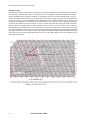
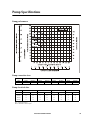
set point on the controller to dew point control. You can see from the horizontal line in the psychrometric chart that
the dew point does not change as the dry bulb temperature increases from 75°F (23.8°C) to 85°F (29.4°C). However,
humidifying the room to maintain 45% R.H. would result in excess moisture content in the room. Another way to prevent over-humidification from hot spot fluctuations is through temperature and humidity averaging. This ensures that
an outlying condition does not affect the overall room conditions. Individual hot spots should be addressed using heat
removal architectures to address the problem at the rack level. See APC White Paper #55 for more information on air
distribution architechtures.
4
APC NetworkAIR™ FM-DX