1
10-11-2004
8:22
Pagina 1
MKA4CAT0UKSIII
Tecnico-SIII-MG
www.masterguard.de
Tecnico-SIII-MG
10-11-2004
8:22
Pagina 2
Series SIII
from 60 to 800 kVA
UPS CATALOGUE
Tecnico-SIII-MG
10-11-2004
8:22
Pagina 1
Uninterruptible Power
Supply Systems
UPS Catalogue • 2005
Series SIII
from 60 to 800 kVA
Scope
2
System description
2
Device description
3
General requirements
5
AC/DC converter
5
Control unit, IGBT inverter
8
Electronic static switch
9
Monitoring and control, interfaces
10
Mechanical data
16
Environmental conditions
16
Technical data (60 to 200 kVA)
17
Technical data (250 to 800 kVA)
21
Options
25
Parallel configurations
27
Appendix: Planning and Installation
33
MKA4CAT0UKSIII/Rev. 11-11/2004/UK
1
Tecnico-SIII-MG
10-11-2004
8:22
Pagina 2
MASTERGUARD Series S III
UPS Systems from 60 to 800 kVA
1 Scope
This specification describes a
continuous duty three-phase, solid
state, insulated gate bipolar transistor
(IGBT) uninterruptible power supply
(UPS) system. The UPS shall
automatically provide continuity of
electrical power, within defined limits
and without interruption, upon failure
or degradation of the commercial AC
source. The continuity of conditioned
electric power shall be delivered for
the time period defined by the battery
system. The inverter, and other
mission critical converters within the
UPS, are driven by vector control
algorithms (covered by patents 95
P3875, 95 P3879 and 96 P3198)
running on dedicated digital signal
processor (DSP) systems.
to ensure the complete protection of
the loads.
The UPS shall automatically provide
continuity of electrical power, within
defined limits and without interruption,
upon failure or degradation of the
commercial AC source. The duration of
autonomy (i.e. back up power time) in
the event of network failure shall be
determined by the battery capacity.
2 System description
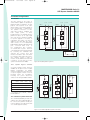
This specification describes a static
UPS in intelligent double conversion
configuration, as shown in Figure 1.
The systems shall operate on a
microprocessor-based IGBT inverter.
The vector control technology will
enhance the performance of the
inverter. In order to increase system
redundancy, an independent electronic
static bypass shall be integrated into
the UPS. By adding system
components, such as parallel kits,
central output cubicles, CROSS
switches, safety and disconnecting
devices, system bypass switches, in
addition
to
software
and
communications solutions, it shall be
possible to set up elaborate systems
2.1 The system
The UPS shall provide high quality AC
power for electronic equipment loads
and shall offer the following features:
• Increased power quality
• Full noise rejection
• Full compatibility with all types of
loads
• Power blackout protection
• Full battery care
2
Maintenance Bypass
Fuse
Reserve
Mains
Regular
Mains
Reserve switch
Load
switch
Fuse
Output switch
Rectifier
Inverter
Electronic
Bypass switch
Electronic
Battery switch
Battery Fuse
Battery switch
LIFE.net
Connectivity
bundled.
Basic signalling
Battery Fuse
Battery System
Figure 1. Series SIII single block system
MKA4CAT0UKSIII/Rev. 11-11/2004/UK
Optional remote
Connectivity
(IP; SNMP; J-BUS;
PROFIBUS;Etc.)
Tecnico-SIII-MG
10-11-2004
8:22
Pagina 3
MASTERGUARD Series S III
UPS Systems from 60 to 800 kVA
2 System description
2.2 Models Available
The Series SIII range shall include the
following three-phase input/output
models:
MODEL
Series SIII/60
Rating (kVA)
60
MODEL
Series SIII/250
Rating (kVA)
250
Series SIII/80
80
Series SIII/300
300
Series SIII/100
100
Series SIII/400
400
Series SIII/120
120
Series SIII/500
500
Series SIII/160
160
Series SIII/600
600
Series SIII/200
200
Series SIII/800
800
3 Device description
Series SIII is the result of an innovative
research and development programme
designed to offer users the most
reliable power supply at a minimum
cost.
3.1 Components
The UPS shall consist of the following
major components:
• Rectifier/battery charger/electronic
battery switch
• IGBT inverter
• Digital signal processor (DSP)
• Electronic static switch and reserve
supply
• Manual maintenance bypass switch
• Matching battery cubicles
3.2 Microprocessor control and
diagnostics
Operation and control of the UPS shall
be provided through the use of
microprocessor-controlled
logic.
Indications,
measurements
and
alarms,
together
with
battery
autonomy, shall be shown on an
illuminated, forty character liquid
crystal display (LCD). The procedures
for start up, shutdown and manual
transfer of the load to and from bypass
shall be explained in clear step-by-step
sequences on the LCD display.
3.3 Intelligent double conversion
operating modes
Series SIII shall adopt intelligent double
conversion technology which allows
the UPS to operate in double
conversion or digital interactive mode
according to the selected priority.
The UPS will operate as follows:
3.3.1 Double Conversion Mode
3.3.1.1 Normal
The UPS inverter continuously
supplies the critical AC load. The
rectifier/charger derives power from
the commercial AC source and
converts it into DC power for the
inverter
whilst
simultaneously
maintaining the battery in a fully
charged and optimum operational
condition (for more details see section
5.11 “Battery Management”). The
inverter converts the DC power into
clean and regulated AC power which is
supplied to the critical load through the
static transfer switch. The static switch
monitors and ensures that the inverter
tracks the reserve supply frequency.
This ensures that any automatic
transfer to the reserve supply (due to
an overload etc.) is frequency
synchronised and does not cause
interruption to the critical load.
3.3.1.2 Overload
In the event of an inverter overload,
manual stop or failure the static switch
shall automatically transfer the critical
load to the reserve supply without
interruption.
3.3.1.3 Emergency
Upon failure or reduction of the
commercial AC source (see tables 11
and 12 for tolerances), without
switching, the inverter shall supply the
critical load, drawing power from the
associated battery. There shall be no
interruption to the critical load upon
failure, reduction or restoration of the
commercial AC source. While the UPS
is powered by the batteries,
indications shall be provided of actual
autonomy time remaining as well the
duration of the mains failure.
3.3.1.4 Recharge
Upon restoration of the commercial
AC source, even where batteries are
completely
discharged,
the
rectifier/charger
shall
restart
automatically, 'walk in' and gradually
take over both the inverter and battery
recharge loads. This function shall be
fully automatic and shall cause no
interruption to the critical load.
3.3.2 Digital interactive mode
If priority has been set to digital
interactive mode, intelligent double
conversion technology shall allow
Series SIII to continuously monitor the
condition of the input supply including
its failure rate to ensure maximum
reliability for critical users. On the
basis of the analysis performed, it shall
decide whether to supply the load
through the direct line or the
conditioned line.
This operational mode, which allows
significant
energy
savings
by
increasing the overall AC/AC efficiency
of the UPS (see section 11.6), is
primarily intended for general purpose
ICT applications. However, it does not
provide the same output power quality
as when the UPS operates in double
conversion mode. Therefore it will be
necessary to verify whether this mode
is appropriate for special applications.
Digital interactive mode is not available
for parallel systems.
3.3.2.1 Normal
The operating mode will depend on
the quality of the mains supply in the
short-term past. If the line quality has
remained within permitted tolerance
parameters in this timeframe, the
direct line will provide continuous
supply to the critical AC load through
the static switch. The IGBT inverter will
remain in constant operation and
synchronisation with the direct line.
MKA4CAT0UKSIII/Rev. 11-11/2004/UK
3
Tecnico-SIII-MG
10-11-2004
8:22
Pagina 4
MASTERGUARD Series S III
UPS Systems from 60 to 800 kVA
3 Device description
This ensures that the load can be
transferred to the conditioned line
without break in supply where there is
a deviation from the selected input
power tolerance levels. If the direct
line failure rate has been outside
permitted parameters, Series SIII shall
supply the load from the conditioned
line. The battery charger supplies the
energy necessary for maintaining
maximum charge to the battery.
3.3.2.2 Inverter stop or overload
4
If the inverter is stopped either by the
operator or as a result of an overload,
there is no transfer to the conditioned
line and the load continues to be
supplied by the direct line. The mains
voltage and frequency values must be
within the tolerance limits specified.
In the event of an overload with a
duration in excess of the maximum
capacity specified, the load is
transferred to the conditioned line,
which will supply it for a specific time
depending on the level of overload.
In the event of an overload and an
unsuitable mains supply, Series SIII
shall transfer the load from the direct
line to the conditioned line (assuming
Series SIII was operating from the
direct line) and the inverter shall
continue to supply the critical load for
a period dependant on the degree of
the overload and the UPS features.
Visual and audio alarms alert the user
to the problem.
3.3.2.3 Emergency (due to mains
supply failure or variance beyond
tolerance limits)
If Series SIII is supplying the load via
the direct line and the mains supply
varies beyond tolerance levels
(adjustable using the software from ±
2% to +10% -8%), the load will be
transferred from the direct line to the
conditioned line. The load is powered
from the mains via the rectifier and
inverter, (provided the input mains
remains within the tolerances stated in
tables 11 and 12). Should the input
mains falls below the lower limit the
batteries shall be used to power the
load via the inverter. The user is alerted
to the battery discharge by visual and
audio alarms and the remaining
autonomy is displayed on the LCD.
During this process, it is possible to
extend the remaining autonomy by
switching off non-essential loads.
MKA4CAT0UKSIII/Rev. 11-11/2004/UK
3.3.2.4 Return to normal conditions
3.4.1 Vector control
When the mains supply returns to
within tolerance limits, Series SIII will
continue to supply the load via the
conditioned line for a period of time
dependant on the direct line failure
rate (the conditioned line draws power
from the mains not the battery). When
the direct line has stabilised, Series SIII
returns to normal operation. The
battery charger automatically begins to
recharge the battery, so that maximum
autonomy is guaranteed in the
shortest possible time.
To ensure the quick and flexible
processing of measuring data, special
arithmetic algorithms shall be
implemented
in
DSP,
rapidly
generating controlled variables as a
result. This will thus render possible
the real-time control of the inverter
electronics, resulting in obvious
advantages concerning the performance
of the power components. These
advantages will be:
3.3.3 Maintenance bypass
If for any reason it is necessary to take
the UPS out of service for maintenance
or repair, the UPS shall be fitted with
an internal maintenance bypass switch
which enables a load transfer to a
reserve supply with no interruption to
power to the critical load. Bypass
isolation shall be complete, all
serviceable components such as
fuses, power modules etc. shall be
isolated. Transfer/retransfer of the
critical load may be accomplished by
automatic synchronisation of the UPS
to the reserve supply and paralleling
the inverter with the reserve source,
before opening or closing the bypass
switch as appropriate.
• Improvement of short circuit
behaviour, as individual phases can
be more quickly controlled
• Synchronism or phase angle
precision between UPS output and
reserve supply even in the case of
a distorted mains voltage.
• High flexibility in parallel operation:
parallel blocks may be housed in
separate rooms.
Several algorithms included in the
Vector Control firmware are covered
by patents owned by MASTERGUARD
(95 P3875, 95 P3879 and 96 P3198).
3.4.2 Redundancy, preventive monitoring
If the battery is taken out of service for
maintenance, it is to be disconnected
from the rectifier/charger by means of
a switch situated in the UPS cabinet.
The UPS will continue to operate and
meet the performance criteria specified
with the exception of the stand-by
period. In such a case, the overload
performance from the conditioned line
may also be affected, depending on the
actual input voltage level.
In order to maximise the reliability of
the system, the control unit shall
monitor a wide number of operating
parameters for the rectifier, inverter
and battery. All vital operating
parameters, such as temperatures,
frequency and voltage stability at the
system output, load parameters and
internal system values shall be
constantly monitored and controlled
for irregularities at all times. The
system shall react automatically
before a critical situation arises either
for the UPS or the load, in order to
ensure the supply of the load even in
these difficult conditions.
3.4 Control and diagnostics
3.4.3 Telediagnosis and telemonitoring
Control of the power electronics modules
shall be optimised in order to provide:
In all the above modes of operation,
the UPS may be monitored and
controlled from a remote location such
as a service centre, in order to
maintain the reliability of the system at
nominal levels. Even during complete
shutdown of the UPS, information
relating to the operating parameters
shall not be lost thanks to non volatile
RAMs, which will store the
information for up to 10 years.
3.3.4 Operation Without Battery
• optimum three-phase supply of the
load
• controlled battery charging
• minimum phase effects upon the
supply network.
By using digital signal processors
(DSP) Series SIII shall implement the
most advanced digital control.
Tecnico-SIII-MG
10-11-2004
8:22
Pagina 5
MASTERGUARD Series S III
UPS Systems from 60 to 800 kVA
4 General Requirements
4.1 Applied standards
4.2 Safety
MASTERGUARD operates in accordance
with TUEV Cert procedures a Quality
Management System which complies
with EN ISO 9001:2000 for the design,
manufacture, sales, installation, maintenance
and service of uninterruptible power
supply systems. The MASTERGUARD
Environmental Policy and Management
Systems comply with EN ISO 14 001
and MASTERGUARD is committed to
implementing a policy of continuous
improvement to production processes
and pollution reduction. Series SIII
shall carry the CE mark in accordance
with the Safety and EMC Directives
73/23, 93/68, 89/336, 92/31 and
93/68. Series SIII is designed and
manufactured in accordance with the
following international standards:
In terms of general and safety
requirements, the UPS conforms to
standard EN50091-1-2 governing use
in restricted access locations.
• EN50091-1 general and safety
requirements
The Series SIII output neutral shall be
electrically isolated, except for RFI
filters, from the UPS chassis. The input
and output neutral connections are the
same, i.e. they are solidly tied
together. Therefore the UPS shall not
modify the state of the upstream
• EN50091-2
EMC
requirements
• IEC EN62040-3 operating requirements.
4.3 EMC and surge suppression
Electromagnetic effects shall be
minimised in order to ensure that
computer systems and other similar
electronic loads shall neither be
adversely affected by nor affect the
UPS. The UPS shall be designed to
meet the requirements of EN 50091-2.
The manufacturer and customer in
partnership agree to ensure the
essential EMC protection requirements
for the specific resulting installation.
neutral, in any operating mode, and
the neutral state of the distribution
downstream from the UPS is imposed
by the mains one. Series SIII should be
used in installations with grounded
neutral; for further details please
contact MASTERGUARD Technical
Support.
4.5 Materials
All materials and components
comprising the UPS shall be new and
of current manufacture.
4.4 Neutral connection and grounding
5
5 AC/DC Converter
5.1 General/Input
The three-phase current taken from
the commercial AC source shall be
converted to a regulated DC voltage by
a rectifier available in both 6-pulse and
12-pulse versions. Above 200kVA
Series SIII will be available with a 12
pulse rectifier (consisting of two 6pulse thyristor rectifiers operating at a
phase shift of 30°) and harmonic filters
as standard. In order to protect the
power components within the system
each phase of the rectifier input shall
be individually fitted with a fast-acting
fuse.
The rectifier battery charger shall be
operable with the following types of
batteries:
• Sealed Lead Acid
• Lead Acid
5.2 Voltage regulation, temperature
compensation
The rectifier output voltage shall
operate within narrow parameters. In
order to ensure optimum battery
charging
regulation
shall
be
automatically adjusted to the ambient
temperature.
Imput AC
Voltage
The rectifier shall be capable of
supplying the inverter with DC voltage
at rated power, even if the input
voltage is below the nominal voltage
tolerance specified. This will not
require the discharging of the batteries.
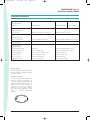
This connection is illustrated in Figure 2.
(Nominal Voltage)
100%
85%
75%
Time
Battery DC
Voltage
(Folat Charge Voltage)
• NiCd
2.27 Vpc
The selection of the optimum charging
method shall be completely managed
by the microprocessor.
2.0 Vpc
T1
T2
Time
Figure 2. Rectifier behaviour during reduction of the commercial AC source.
MKA4CAT0UKSIII/Rev. 11-11/2004/UK
Tecnico-SIII-MG
10-11-2004
8:22
Pagina 6
MASTERGUARD Series S III
UPS Systems from 60 to 800 kVA
5 AC/DC Converter
5.3 Soft start
After applying the input voltage the
rectifier starts a programmable current
soft start (1-90 seconds). This
procedure results in a gradual and soft
walk-in of the current taken from the
input voltage supply network. This
ensures that any standby generator is
gradually introduced into the UPS
input, as shown in Figure 5. To avoid
the simultaneous start-up of different
rectifiers, it is possible to programme a
hold-off dedicated start delay (1-180
seconds)
for
each
unit.
In addition, the UPS includes an ‘on
generator’ function which, when
activated via floating contact, provides
the possibility, of inhibiting either
battery charging, synchronisation of
the inverter to the direct line supply or
transfer to the direct line.
5.4 Power factor (available only for
60-500kVA range)
6
The rectifier/battery charger control
provides an algorithm for input power
factor optimisation.
When batteries are fully charged, the
battery care algorithm puts them on
stand-by (see section 5.11 “Battery
Management”). It is in this condition
that the rectifier enters its PFC mode
(Power-Factor Control). In this mode it
is able to perform a dynamic real-time
maximisation of the input power
factor, compensating mains utility
fluctuations. The PFC makes it
possible to reach PF > 0.92 (>0.9 for
twelve-phase configurations) under
normal operating conditions. This
means time-average PF > 0.9 for most
typical applications.
Example: assuming a typical utility
MTBF of 200h and a 10h period for full
battery recharge results shall be:
PF
PF
PFAVG
= 0.75
10 hours
= 0.92
190 hours
= (0.75*10+0.92*190)/200 = 0.91 200 hours
5.5 Residual ripple filtering
The rectifier output shall have a
residual voltage ripple of < 2% RMS,
with batteries disconnected.
5.6 Total harmonic distortion (THD)
of input voltage
The maximum voltage THD permitted
on the rectifier input (either from the
MKA4CAT0UKSIII/Rev. 11-11/2004/UK
AC
Imput
Current
Hold-off
Delay
(1- 180s)
Mains Failure
Current
soft
start
(1-90 s)
Mains OK
Time
Figure 3. Rectifier soft start
utility or generator) shall be 15%
(normal operation is guaranteed up to
8%). The maximum current THD
injected into the mains shall be 30%
but will be reduced to 5% for the units
above 200 kVA which shall have 12
pulse rectifiers and filters provided as
standard.
5.7 Operation with diesel generator
5.8.2 Sealed, low-maintenance lead
acid
accumulators
or
NiCd
accumulators:
Charging at increased charging voltage
and constant charging current. If the
charging current falls short of a lower
threshold value the rectifier shall
automatically return to load voltage
level (two-step charging method).
In order to obtain the required THD on
input voltage, the coordination
between diesel generator and UPS
shall be based on the generator’s subtransient reactance, as opposed to its
short-circuit reactance.
5.9 Overvoltage protection
5.8
Capacity
characteristics
5.10 Shared battery operation
and
charging
The rectifier shall be capable of
supporting the inverter at nominal
power and supplying the batteries with
charging current. After discharge of the
battery the rectifier will power the
inverter and recharge the batteries. The
following charging methods for the
different types of accumulators are
available:
5.8.1 Sealed, maintenance-free lead
acid accumulators:
Charging at constant current up to the
maximum
load
voltage
level.
Thereafter the loading voltage shall be
kept at a constant level within narrow
limits (single-step charging method).
The rectifier/battery charger shall
automatically switch off if the DC
voltage exceeds the maximum value
associated with its operational status.
UPS in parallel configuration can
operate with common batteries (a
maximum of two UPS can share a
common battery bank). In this case the
batteries are recharged in parallel by
the rectifiers of the two UPS. The total
current supplied by the rectifiers is
divided equally, with a maximum
unbalance equal to the programmed
level of battery current limits.
Although this configuration leads to
optimisation of the initial economic
investment, it reduces reliability
advantages, which are usually offered
by parallel UPS systems (see chapter
14 for details).
Tecnico-SIII-MG
10-11-2004
8:22
Pagina 7
MASTERGUARD Series S III
UPS Systems from 60 to 800 kVA
5 AC/DC Converter
5.11 Battery Management
5.11.2 Automatic Battery Test
Using advanced battery care (ABC)
Series SIII series shall increase battery
life by up to 50%. The main battery
care features are described below.
(V) 2.0
The operating condition of the
batteries shall be automatically tested
by the control unit at selectable
intervals, e.g. weekly, fortnightly or
monthly. A short-time discharge of the
battery will be made to confirm that all
the battery blocks and connecting
elements are in good working order. In
order to preclude a faulty diagnosis the
test will be launched 24 hours after the
latest battery discharge at the earliest.
The battery test shall be performed
without any risk to the user, even if the
battery is completely defective. Users
shall be alerted to a detected battery
fault. The battery test shall not cause
any degradation in terms of the battery
system life expectancy.
• Battery discharging alarm (V) 2.20
@ 20°C
5.11.3 Ambient Temperature Compensated
Battery Charger
• Float voltage
The float voltage and battery discharge
alarm shall be automatically adjusted
as a function of the temperature in the
battery compartment (-0.11% per °C ) in
order to maximise battery operating life.
5.11.1 Operating Parameters
When operating with a maintenance
free, valve regulated lead acid battery
(VRLA), the parameters per cell shall
be as follows:
• End of discharge voltage
(V) 1.65
• Shutdown imminent alarm (V) 1.75
• Minimum battery test voltage (V) 1.9
• Nominal voltage
• High voltage alarm
(V) 2.27 @ 20°C
(V) 2.4
5.11.4 Time Compensated End Of
Discharge Voltage
When the discharge time exceeds one
hour, the shutdown voltage shall be
automatically increased, as shown in
Figure 4 for VRLA, to avoid heavy battery
discharge as a result of a light load.
5.11.5 Battery Ripple Current (only
for 60-500kVA range)
When batteries are fully charged the
battery care algorithm places them in
stand-by mode, disconnecting them
from the rectifier. This status prevents
charging current ripple and enhance
battery operating life.
5.11.6 Remaining Battery Life
Series SIII uses sophisticated algorithms
to determine the battery life remaining
based on real operating conditions
such as temperature, discharge and
charging cycles, and discharge depth.
7
Voltage per cell
1.80
1.75
1.70
1.65
0
1
2
3
4
5
6
7
8
9
10
Thime (hours)
Figure 4. End-of-discharge voltage in relation to discharge time
MKA4CAT0UKSIII/Rev. 11-11/2004/UK
Tecnico-SIII-MG
10-11-2004
8:22
Pagina 8
MASTERGUARD Series S III
UPS Systems from 60 to 800 kVA
6 Control Unit, IGBT Inverter
6.1 AC voltage generation
6.4 Total Harmonic Distortion
From the DC voltage of the intermediate
circuit the inverter shall generate
sinusoidal AC voltage for the user load
on the basis of pulse-width modulation.
By means of the digital signal processor
of the control unit the inverter IGBTs
shall be controlled so that DC voltage is
divided up into pulsed voltage packets.
A transformer shall be provided at the
output of the inverter. Through this
transformer and a low-pass filter the
pulse-width modulated signal shall be
converted into sinusoidal AC voltage.
The inverter shall provide harmonic
neutralisation and filtering to limit the
THD to on the voltage to less than 3%
with a linear load. For reference nonlinear load (as defined by EN62040-3)
the THD shall be limited to less than 5%.
The inverter output voltage on the
three phases shall be individually
controlled to achieve the following
performances:
The sizing of the inverter neutral shall
be oversized on all ratings in order to
cope with the combination of
harmonics on the neutral wire when
driving single-phase reference nonlinear loads. From 60 to 200kVA the
inverter neutral is sized x 1.7 in relation
to the phase, while from 250 to
500kVA it is x 1.4 in relation to the
phase. Further oversizing could be
provided on demand.
6.2.1 Steady state
6.6
The inverter steady state output
voltage shall not deviate by more than
±1% in a steady state condition for
input voltage and load variations within
the quoted limits.
A dry type isolation transformer shall
be provided for the inverter AC output.
The transformer shall have an
insulation class H+. The temperature
limit of the insulation class of the
material shall not be exceeded when
operating at full load and within
ambient temperature limits.
6.2 Voltage regulation
8
6.5 Neutral sizing
6.2.2 Voltage transient response
The inverter transient voltage shall not
exceed Class 1 limits when subjected
to application or removal of 100% load
as defined by EN62040-3.
6.3 Frequency regulation
The inverter output frequency shall be
controlled to achieve the following
performances:
6.3.1 Steady state
The inverter steady-state output
frequency, when synchronised to
reserve supply, shall not deviate by
more than ±0.75% adjustable to
±1.5%, ±2.5%, ±6%.
6.3.2 Frequency slew rate
The frequency slew rate shall be ≤ 1Hz
per second.
6.3.3 Frequency Control
The output frequency of the inverter
shall be controlled by a quartz
oscillator which can be operated as a
free running unit or as a slave for
synchronised operation with a
separate AC source. The accuracy of
the frequency control shall be ±0.05%
when free-running.
MKA4CAT0UKSIII/Rev. 11-11/2004/UK
Output
power
transformer
6.7 Overload
The inverter shall be capable of
supplying an overload of 125% for 10
minutes and 150% for one minute of
the nominal power.
6.8 Inverter shutdown
In the event of an internal failure the
inverter
shall
be
immediately
disconnected from the critical load and
shut down by the control unit. The UPS
device or the parallel-operated UPS
systems shall continue to supply the
load from the reserve supply without
interruption, if it is within permissible
limits.
6.9
Output
voltage
symmetry
The inverter shall guarantee the
symmetry of the output voltages at
±1% for balanced loads and ±3% for
100% unbalanced loads.
6.10 Phase displacement
The phase angle displacement
between the three-phase voltages
shall be:
• 120° ± 1° for balanced loads
• 120° ± 2° for unbalanced loads
(0, 0, 100%)
6.11 Short Circuit
The inverter short circuit capacity of
Series SIII for the first 10ms shall be
>200% for any short circuit
configuration. After the first 10ms, it
shall limit the current to >150% for 5s,
then it shall shut down.
6.12 Automatic upgrade of inverter
rated power
The inverter shall automatically
upgrade its power as a function of
ambient and operating temperatures,
as shown in Figure 5. In the most
common conditions (25°C) Series SIII
shall provide 10% more power than
nominal. In these conditions the
battery charge will be reduced
correspondingly.
For example:
@40°C, Idc tot. = 0.75(Idc inv) + 0.25
(Ibatt)
@25°C, Idc tot. = 0.83(Idc inv) + 0.17
(Ibatt)
Output Power
115
112
110
105
100
Ambient
Temperature
15
Figure 5. Automatic power upgrade
25
30
40
Tecnico-SIII-MG
10-11-2004
8:22
Pagina 9
MASTERGUARD Series S III
UPS Systems from 60 to 800 kVA
7 Electronic Static Switch
7.1 General
The electronic static switch shall be a
fully rated, high speed, solid-state
transfer device and rated for
continuous duty operation. Each AC
phase of the input shall be individually
fitted with fast acting fuses to prevent
cascading failures.
The following transfer and retransfer
operations shall be provided by the
electronic static switch:
• Uninterrupted automatic transfer to
the reserve supply in the event of:
- inverter
output
overload
- DC
voltage
outside
limits
- over-temperature
- inverter failure
• If inverter and reserve supply are
not synchronised at the time of a
necessary transfer, a switching
delay can be set to protect the
critical load. This prevents possible
damage
to
the
load
by
unintentional phase shift. A delay
of 20ms will be preset as a
standard value.
• Uninterrupted manual transfer/
retransfer to and from the reserve
supply shall be initiated from the
control panel.
• Uninterrupted automatic transfer/
retransfer to and from the reserve
supply by activation of the line
interactive mode.
• Uninterrupted automatic retransfer
from the reserve supply, as soon
as the inverter regains the capacity
to supply the load.
• The uninterrupted transfer from the
inverter to the reserve supply shall
be inhibited in the following
situations:
- reserve supply voltage outside
limits
- failure of electronic bypass switch.
• The
uninterrupted
automatic
retransfer may be inhibited in the
following situations:
- manual switching to reserve supply
via the maintenance switch
- failure in output switch behind
inverter
- UPS output overload.
7.1.1 Voltage
The nominal voltage of the reserve line
shall be 230/400VRMS. Any transfer
from inverter to reserve line will be
inhibited if the voltage is beyond a limit
of ±10% (standard setting) of the
nominal voltage.
This automatic retransfer delay time
back to inverter from reserve shall be 5
seconds. The transfer time when out
of synchronisation shall be 20
milliseconds to prevent damage to the
load by phase reversal.
7.1.3 Overload
The electronic static switch shall be
capable of supporting the following
overloads:
125%
for
10 minutes
150%
for
1 minute
700%
for
600 milliseconds
1000% for
100 milliseconds
7.1.4 Manual maintenance bypass
It shall be possible to implement a
manual uninterrupted bypass of the
complete system in order to enable
maintenance work to be carried out on
the system. The reserve supply will
continue to feed the load. In this case
the UPS will be voltage-free as it will
be disconnected from the supply
networks. In this case, maintenance
work on the UPS can be carried out
without affecting the connected
electric load.
7.1.2 Transfer time (double conversion)
The switching time for a transfer from
the inverter to the reserve supply or
vice versa shall be less than 0.5ms
when synchronised. The system shall
ensure that the inverter is stable and
operating normally before permitting a
retransfer of the load back to inverter.
MKA4CAT0UKSIII/Rev. 11-11/2004/UK
9
Tecnico-SIII-MG
10-11-2004
8:22
Pagina 10
MASTERGUARD Series S III
UPS Systems from 60 to 800 kVA
8 Monitoring and control, Interfaces
8.1 General
eight lines x 12 characters, displaying
graphic diagrams and symbols) for
complete UPS monitoring and control.
Complete access to all LCD menus is
possible through navigation push buttons
located below the screen. This navigation
group includes two buttons - “up” and
“down” - for menu scrolling and two
software-assigned push buttons: the
function linked to these two buttons is
displayed on the lower right and lower left
corners of the LCD during navigation.
The UPS shall incorporate the necessary
controls, instruments and indicators to
allow the operator to monitor the system
status and performance, and take action
where
appropriate.
Furthermore,
interfaces allowing extended monitoring
and control, in addition to service
functions shall be available. UPS rated
from 60kVA up to 500kVA feature a
mimic panel with graphical LCD display
as described in the section below, while
UPS rated 600kVA and 800kVA feature a
specific LCD and LED mixed mimic panel
(for further details refer to the User
Manuals pertaining to these models).
A single-line diagram of the UPS is
continuously displayed on the default
page (for reference see figure 1). The
main functional blocks and power paths
of the UPS are displayed using simple
universal technical symbols, instantly
communicating the overall status of the
UPS. The same screen also permanently
displays the output load percentage
8.2 Mimic panel (60 to 500kVA)
The control panel of Series SIII includes a
back-lit Liquid Crystal Display (LCD of
measurement, using three histograms
(one for each output phase). In the case
of the UPS not in normal functioning
mode, it is possible to access the
“Warning and Alarm” summary page
directly from the default page. Warnings
and alarms shall be identified by text
strings and codes. In battery operation,
the display shall switch between warning
code and estimated backup time in
minutes.
After 30 seconds of inactivity (i.e. without
buttons being pressed) the display
reverts to the default page.
The text displayed by the LCD shall be
available in English, Italian, French,
German, Spanish Portuguese, Turkish
and Chinese, selectable by the user.
Graphical LCD
screen
10
Navigation buttons:
left soft-key,
up and down button,
right soft-key
“Inverter Off”
push button
“Inverter On”
push button
“Alarm” LED
“System Normal”
LED
“Reset” push button
(e.g. audible signal
silence for warning
and alarm conditions)
ON
OFF
Commands key lock
“Warning” LED
KEYBOARD
8.3 Start and Stop Inverter push
buttons
Start inverter operation
The Start and Stop push buttons are
integrated into the mimic panel board,
and have the following predefined
functions:
Stop inverter operation
MKA4CAT0UKSIII/Rev. 11-11/2004/UK
The control shall incorporate a safety
feature to prevent inadvertent
operation yet still allow for rapid
shutdown in the event of an
emergency. To stop the inverter the
user must press and hold the Stop
button for two seconds. An audio
alarm shall be activated during this
delay time.
Tecnico-SIII-MG
10-11-2004
8:22
Pagina 11
MASTERGUARD Series S III
UPS Systems from 60 to 800 kVA
8 Monitoring and control, Interfaces
The mimic panel shall be equipped
with a front panel key that allows
users, once the lock is set in the Off
position, to disable any command
which may be entered through the
mimic panel.In this state, if the
operator attempts to perform any of
the following actions, a message
reading “COMMANDS DISABLED”
will appear on the LCD:
Start Inverter
Stop Inverter
Reset Fault
Set/reset Battery Test
Set/reset Autonomy Test
Set/reset Boost Charge
Test PFC
Set/reset Service Input
Set/reset I/O Configuration
LIFE Manual Call
Reset Delay Call
8.4 Keyboard lock
8.5 General Status LED
Three LED indicators it shall render it
possible to obtain a quick and general
understanding of the status of the
UPS, as described below.
OK LED (green)
Normal Operation
When this light is on (not flashing), the system is running normally and neither warnings nor
alarms are present. During mains failures (all other conditions at being nominal level), this LED
will flash.
Warning LED (yellow)
Warning Condition(s) present
This indication shall be activated by the presence of anomalous conditions, which could affect
the nominal functioning of the UPS. These conditions are not originated with the UPS, but may
be caused either by the surrounding environment or by the electrical installation (mains side and
load side). It shall be possible to read the description of the active
warning(s) by browsing the relevant LCD display menus.
Alarm LED (red)
Alarm Condition
When this light is on, immediate attention should be given to the severity of the alarm, and
service should be called promptly. It shall be possible to read the description of the active
alarm(s) by browsing the relevant LCD display menus.
8.6 LCD display menus description
By using the appropriate push buttons
it shall be possible to browse the
following menus:
Rectifier/Charger and Battery
This menu shall display rectifier status,
alarms, voltage, total DC current,
battery current with polarity and
battery temperature. When the
inverter is supplied by the battery, the
module shall display remaining
autonomy time. A change in load shall
cause the autonomy indicator to
instantaneously display the new
autonomy time.
Inverter
This menu shall display alarms, phase
to neutral voltages, frequency
measurements, inverter heatsink
temperature
and
cooling
air
temperature.
Ipk/Irms for each phase of the load
current. It shall be possible to display
the total time the load has been
supplied by the inverter, and by
reserve, the number of mains failures
and the total duration of these failures.
Reserve Supply
This menu shall display alarms, phase
to neutral voltages and frequency
measurements.
Listed below are the most significant
messages which may be displayed by
the graphical LCD in the various
menus. The exhaustive messages list
and menus description is published in
the User Manual.
Load/Static Switch
This menu
shall display alarms,
current
per
phase,
frequency
measurements, load percentage
capacity per phase and the peak factor
MKA4CAT0UKSIII/Rev. 11-11/2004/UK
11
Tecnico-SIII-MG
10-11-2004
8:22
Pagina 12
MASTERGUARD Series S III
UPS Systems from 60 to 800 kVA
8 Monitoring and control, Interfaces
8.6.1 Heading
Alarms/indications
System In Alarm
E.P.O. Active
Auto Test
Life Service Mode
Do Not Insert Bat
Dial In Progress
Data Transf. Active
Slave Connection
Routine Call
Manual Call
Emergency Call
Life Buffer Full
Rescheduled Call
Eprom Checksum Fault
Eeprom Fault
Insuff.Ventilation
Ventilator Life End
Commissioning Mode
Cu Communication Lost
Parallel Reserve Fault
Pob Fault
Alarm Active
E.P.O. Active
Charger Off
Hardware Test
Float Mode
Charge Mode
Equalise Mode
Recharge Inhibit
Battery Test
Rectifier Phase Up
Battery Autonomy Test
Mains Transf.Protect
8.6.2 Rectifier
Alarms/indications
12
Insulation Failure
Input Switch Open
Primary Supply Fail
Phase Sequence Error
Dc Sw Control Fault
User Dc Voltage Low
Dc Voltage Low
Dc Voltage High
Batt. Charge Inhibit
Testing Autonomy
Dc Feedback Fault
Dc Hw Control Fault
Dc Sw Control Fault Block
Rect. Overtemp
Rectifier in PFC Mode
Alarm Active
E.P.O. Active
Battery Connected
Batt. Disconnected
Batt.Breaker Open
Battery Operation
Temperature Alarm
Battery Fault
Battery Fuse Blown
Insulation Failure
Shutdown Imminent
Battery Stand-By
8.6.3 Charger and Battery
Alarms/indications
Battery SCR Fault
Battery Almost Ended
8.6.4 Inverter
Alarms/indications
Alarm Active
E.P.O. Active
Inverter Running
Inverter Fault
Inverter Turning On
Inverter Turning Off
Inverter Not Running
Remote Inv. Stopped
Overtemperature
Shutdown Imminent
Dc Voltage Low
Overload
Load Too High
Inverter Dc Voltage High
Extern Fast Turn Off
Inverter Start Failed
Heat Sink Overtemperature
Transformer Overtemperature
Desaturation
Inverter Voltage High
Inverter Voltage Low
Inverter Frequency Error
Inverter Short Circuit
Dc Component On Ph.1
Dc Component On Ph.2
Dc Component On Ph.3
I3t Overload Ph.1
I2t Overload Ph.2
I2t Overload Ph.3
Max Output Power
Temp. Sensor Fault
MKA4CAT0UKSIII/Rev. 11-11/2004/UK
Tecnico-SIII-MG
10-11-2004
8:22
Pagina 13
MASTERGUARD Series S III
UPS Systems from 60 to 800 kVA
8 Monitoring and control, Interfaces
8.6.5 Reserve
Alarms/indications
Alarm Active
E.P.O. Active
Reserve Valid
Reserve Not Valid
Reserve Not Avail
Res. Transf. Protect
Mains Synchro. Inhibit
Reserve Supply Warning
Backfeed Prot Active
Overload
Phase 1, 2, 3 Not Ok
Reserve Supply Fault
Reserve Hw Fault
Bypass Sens. Fault
8.6.6 Load
Alarms/indications
Alarm Active
E.P.O. Active
Load On Reserve
Load On Inverter
Load On Bypass
Load Not Supplied
Insulation Failure
System Output Sw Open
Sys.Bypass Sw Closed
Output Switch Open
Overload
Load Too High
Bypass Switch Closed
13
MKA4CAT0UKSIII/Rev. 11-11/2004/UK
Tecnico-SIII-MG
10-11-2004
8:22
Pagina 14
MASTERGUARD Series S III
UPS Systems from 60 to 800 kVA
8 Monitoring and control, Interfaces
8.7 Interfaces
8.7.1 Slot card bay (available from 60
to 500kVA)
Series SIII shall be equipped with two slot
bays, available for communication card
options. One of the slots shall be
equipped with the LIFE.net slot modem,
fitted as standard (user removable).
The other slot shall be available
for connectivity options. Please
refer to MASTERGUARD Connectivity
Solutions for further details about the
available slot expansion cards. If no
cards are fitted into the slots, the DB9
ports described in sections 8.7.3 and
8.7.4 can be used for other
connectivity applications.
8.7.2
Computer
relay
interface
Volt-free
contacts
shall
be
incorporated conforming to the
requirements of IBM AS/400 and other
computer types. This interface shall be
via a 9-pin D socket wired as follows:
Pin
Signal
Explanation
1
BYPASS ACTIVE
Bypass mode: contact between pin 1 and pin 4 is closed
2
AC FAIL (NO)
Mains failure: contact between pin 2 and pin 4 is closed
3
AC FAIL (NC)
Mains failure: contact between pin 3 and pin 4 is open
4
SWITCH COM
Common connection for all floating contacts
5
LOW BATTERY
Just before end of discharge (in battery mode): contact between pin 5 and pin 4 is closed
6
UPS OFF
If “mains failure” warning is present, application of 12 V across pin 6 and pin 7 (0 V)
7
SIG GRD (0V)
Reference potential for UPS shutdown
8
SUMMARY ALARM
UPS fault, contact between pin 8 and pin 4 is closed
9
+12V
Internal 12 V, 50 mA voltage source for UPS shutdown (pin 6)
shuts down the UPS
The Floating contacts shall be rated at 24V, 1A.
8.7.3 RS232C
14
Series SIII will be equipped with one D type connector with 9 pins for serial RS232C communication. The connector has the
following pin functions:
Pin
Signal
Explanation
1
Earth
Shield
2
TxD
Send RS232
3
RxD
Receive RS232
4
Not used
5
RS232 GND
6
Not used
7
RTS
8
Not used
9
Not used
Signal ground for receive and send
Clear to send RS232
This RS232 port cannot be used simultaneously with the corresponding slot bay as described in section 8.7.1
8.7.4 Combination interface
Series SIII shall be fitted with a slot modem for LIFE.net connection as standard. If this slot modem is removed, this port
may be used for other connectivity applications.
Pin
Signal
1
Shield
Cable shield
2
SST2_TRS232
Send RS232 (Tx)
3
SST2_RRS232
Receive RS232 (Rx)
4
Not used
5
Not used
6
Not used
7
M_BT
8
Not used
9
Not Used
MKA4CAT0UKSIII/Rev. 11-11/2004/UK
Explanation
Signal ground
Tecnico-SIII-MG
10-11-2004
8:22
Pagina 15
MASTERGUARD Series S III
UPS Systems from 60 to 800 kVA
8 Monitoring and control, Interfaces
8.8 Available signalisations and
control signals
The UPS can handle up to 12
Input/Output control signals (8 inputs,
4 outputs) that can be programmed via
the display and/or PPVIS for a wide set
of functions. Emergency Power Off
(EPO) is programmed as standard: this
command electronically shuts down
the rectifier, the inverter and the
bypass switch. Listed below are the
most significant functions; the
exhaustive list is published in the User
Manual:
Fan (On-Off) In Battery Compartment Battery
Fuse Monitor
Battery Compartment Overheated
Micro Switch UPS Doors
Backfeed Protection
Generator On
Hydrogen Present
Remote Inverter Stop
SBS Bypass Switch Closed
Insufficient Ventilation
SBS Output Switch Open
8.9 LIFE.net
In order to increase the overall
reliability of the system, Series SIII will
be delivered with the LIFE.net
communication
kit,
providing
connection to MASTERGUARD’s
LIFE.net monitoring service.
LIFE.net shall allow the remote
monitoring of the UPS through
telephone lines or GSM link in order to
ensure the maximum reliability of the
UPS throughout its operational life. The
monitoring shall be a real 24-hour, 365
day service thanks to a unique feature
that allows trained Service Engineers
to remain in constant electronic
contact with the service centre, and
therefore the UPS. The UPS shall
automatically dial-up the service
centre at defined intervals to provide
detailed information that shall be
analysed in order to predict near term
problems. In addition, it shall be
possible to control the UPS remotely.
The communication of UPS data to the
MASTERGUARD LIFE Command
Centre shall take be transmitted via
the integrated modem at the following
intervals:
• ROUTINE: settable at intervals o
between five minutes and two
days (typically once a day)
• EMERGENCY: when a problems
occurs or parameters are beyond
tolerance limits
• MANUAL: following a requestfrom
the command centre
The service centre shall analyse
historical data and issue a regular
detailed report to the customer
informing him of the UPS operational
condition and any critical states.
The LIFE.net centre allows the
possibility of activating the LIFE-SMS
delivery system option, where the
customer
may
receive
SMS
notification which will be activated in
the event of one of the following:
• Mains power failure
• Mains power recovery
• Reserve line failure
During the
centreshall:
• Identify
call
the
the
UPS
command
• Load supplied by reserve.
connected
• Request the data stored in the UPS
memory since the last connection
• Request real-time information from
the UPS (selectable)
MKA4CAT0UKSIII/Rev. 11-11/2004/UK
15
Tecnico-SIII-MG
10-11-2004
8:22
Pagina 16
MASTERGUARD Series S III
UPS Systems from 60 to 800 kVA
9 Mechanical data
9.1 Enclosure
The UPS shall be housed in a spacesaving modular enclosure with front
doors
and
removable
panels
(protection as standard to IP 20). The
enclosure shall be made of zintec
coated sheet steel. The doors shall be
lockable.
9.2 Ventilation
Forced redundant air cooling will
ensure that all the components are
operated within their specification.
Airflow shall be controlled according to
demand. The cooling air entry shall be
in the base and the air exit at the top of
the device.
The enclosure shall be installed with at
least 400 mm of free space between
the device and roof of the enclosure in
order to allow cooling air to exit
unhindered.
9.3 Cable entry
Cable entry shall be from the bottom
or bottom-side of the cabinet. Top
cable entry shall be available as an
option.
9.4 Enclosure design
All enclosure surfaces of the enclosure
shall
be
finished
with
an
electrostatically applied epoxy coat.
The coating shall have a thickness of at
least 60 microns. Standard colour of
the enclosure shall be RAL 7035 (light
grey).
9.5 Access to integrated subassemblies
All internal subassemblies shall be
accessible for typical and most
frequent maintenance from the front
of the unit via hinged doors. Rear
access shall not be required for
installation or servicing. The UPS shall
be forkliftable from the front after the
removal of the bottom trim panels.
10 Environmental conditions
The UPS shall be capable of
withstanding any combination of the
environmental conditions listed below.
It shall operate without mechanical or
electrical damage or degradation of
operating characteristics.
10.1 Ambient temperature
10.3 Altitude
0° to 40°C
Maximum average daily temperature
(24 hr) 35°C
Maximum temperature (8 hr) 40°C
The maximum altitude without
derating shall be 1000 metres above
sea level or 1500 metres at 25°C. The
derating shall be 1.2% for every 100
metres above 1000 metres.
10.2 Relative humidity
16
Up to 90% (non condensing) for
temperature of 20°C.
MKA4CAT0UKSIII/Rev. 11-11/2004/UK
Tecnico-SIII-MG
10-11-2004
8:22
Pagina 17
MASTERGUARD Series S III
UPS Systems from 60 to 800 kVA
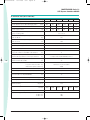
11 Technical data (60 to 200 kVA)
UPS Unit
Rating
60
80
100
120
160
200
11.1 Rectifier input
Nominal input voltage
(V)
400 3Ph (380 – 415 selectable)
Tolerance on voltage assuming float @ 2.27V per cell (%)(1)
±15
Min. input voltage without battery discharge
-25
(%)(1)
Nominal frequency
(Hz)
50/60 (selectable)
Tolerance on frequency
(%)
±5
Maximum input power @400V, Recharge Mode
(kVA)
Power factor @400V, PFC Mode
85
111
139
(±0,02)
168
278
>0.92
Power factor @400V, Float Mode
>0.8
Input current distortion @ maximum input power
(%)
<30
Walk in/Soft start (programmable)
(seconds)
10 (1-90)
Rectifier Hold-Off (programmable)
(seconds)
1 (1-180)
<1
Inrush current / Imax input ratio(8)
Efficiency of rectifier in float(2): Half load
Full load
222
%
%
98.9
98.9
(V)
396
(V)
*(V)
449
475
11.2 Rectifier output
Battery nominal voltage @ recommended
number of cells, see 11.8
Output voltage: Float for SLA @ 20°C
Recharge
*Only for wet stationary lead batteries
Battery float voltage temperature
compensation (direct sensing)
17
-0.11% per °C
Current ripple into battery for a 10 min
autonomy as per VDE0510(3)
<0.05C10
Voltage stability in steady state condition for 100%
load variations or allowed input parameters variations (%)
<1
Voltage ripple in float condition
<2
(%)
DC current supplied to inverter in float
(A)
115
153
190
229
303
379
Battery recharge current setting range
(A)
5-25
5-25
10-40
10-40
15-65
15-65
Maximum DC current
(A)
150
195
245
295
390
490
417
521
11.3 Inverter input
Nominal voltage on float
(V)
449
DC voltage range
(V)
326-540
DC current when inverter at full load (0.8PF)
and battery at end of discharge
(A)
158
210
260
315
MKA4CAT0UKSIII/Rev. 11-11/2004/UK
Tecnico-SIII-MG
10-11-2004
8:22
Pagina 18
MASTERGUARD Series S III
UPS Systems from 60 to 800 kVA
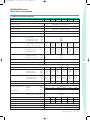
11 Technical data (60 to 200 kVA)
UPS Unit
Rating
60
80
100
120
160
200
Nominal apparent power @ PF 0.8 lagging 40°C
(kVA)
60
80
100
120
160
200
Nominal active power
(kW)
48
64
80
96
128
160
(A)
87
116
145
174
232
290
11.4 Inverter output
Nominal output current
Nominal apparent and active power @ PF >0.8,
lagging or leading, 40°C
See note (7)
Overload at nominal output voltage and
0.8 PF for 10 min
(%)
125
Overload at nominal output voltage and
0.8 PF for 1 min
(%)(6)
150
Short circuit current capacity for 5 seconds (10ms)
(%)
150 (200)
(V)
400 (380/415 selectable) 3Ph + n
Nominal frequency
(Hz)
50/60 (selectable)
Voltage stability in steady state condition
for input DC variations and 100% load variations
(%)
±1
Voltage stability in dynamic condition for 100%
nominal load step variations or DC input variations
(%)
Complies with IEC/EN 62040-3, Class 1
Voltage stability in steady state for 100%
unbalanced loads (0, 0, 100)
(%)
±3
Nominal output voltage
18
Output frequency stability
In synchro with the mains (%)
With internal quartz oscillator (%)
Frequency slew rate
±0.75 (1.5, 2.5, 6 selectable)
±0.05
(Hz/sec)
<1
Output voltage distortion with 100% linear load
(%)
<3
Output voltage distortion @ reference
non linear load as for IEC/EN 62040-3
(%)
<5
Load crest factor without derating
(Ipk/Irms)
3:1
Phase angle precision with balanced loads
(degrees)
<±1
Phase angle precision with 100%
unbalanced loads
(degrees)
<±2
DC/AC efficiency(2):
Half load
Full load
Neutral conductor sizing
Output power upgradability with temperature: At 25°C (%)
At 30°C (%)
At 40°C (%)
MKA4CAT0UKSIII/Rev. 11-11/2004/UK
92.0
93.0
92.5
93.0
93.0
93.5
93.0
93.5
see Chapter 6.5
110
105
100
93.5
94.0
93.5
94.0
Tecnico-SIII-MG
10-11-2004
8:22
Pagina 19
MASTERGUARD Series S III
UPS Systems from 60 to 800 kVA
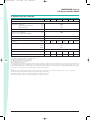
11 Technical data (60 to 200 kVA)
UPS Unit
Rating
60
80
100
120
160
200
11.5 Reserve static switch
Nominal voltage
(V)
400 (380/415 selectable) 3Ph + n
Nominal frequency
(Hz)
Frequency range
(%)
±0.75 (1.5, 2.5, 6.0 selectable)
Voltage range
(%)
±10
(V)
480/277
(%)
(%)
(%)
(%)
125
150
700
1000
Maximum operating voltage
Maximum overload capacity For 10 minutes
For 1 minute
For 600 milliseconds
For 100 milliseconds
SCR
Fuse
50/60 (selectable)
I2t @ Tvj=130°C; 8.3-10ms (A2s)
80k
80k
80k
80k
320k
320k
ITSM @ Tvj=130°C; 10ms (A)
4k
4k
4k
4k
8k
8k
660/250
660/250
660/250
660/350
Pre-arching I t (A s)
4.4k
4.4k
4.4k
10.5k
23.8k
23.8k
I t @ 400Vac (A s)
31.5k
31.5k
31.5k
33.5k
105k
105k
Rating (Vac/A)
2
2
2
2
Transfer time when in synchro (double conversion)
Inverter to reserve
Reserve to inverter
(ms)
(ms)
<0.5
<0.5
Transfer time without synchro
(ms)
<20
Retransfer delay
(sec)
<5
660/500 660/500
19
11.6 System data
Maximum input power @400V, Recharge Mode
(kVA)
85
111
139
168
222
278
Heat dissipation:
PFC Mode
Rapid recharge
Digital interactive
(kW)
(kW)
(kW)
4.2
4.4
1.5
5.6
5.8
2
6.5
6.8
2.5
7.8
8.1
3
9.6
10.0
4
12.0
12.6
5
AC/AC efficiency(2):
Half load double conv.
Full load double conv.
Digital Interactive
(%)
(%)
(%)
91.0
92.0
97
91.5
92.0
97
92.0
92.5
97
92.0
92.5
97
92.5
93.0
97
92.5
93.0
97
62
62
62
64
65
65
1020
1420
1420
875
1290
1290
Noise @ 1 metre as per ISO 3746
(dBA ± 2dBA)
Protection degree with open doors
Mechanical dimensions:
Height
Width
Depth
IP20
(mm)
(mm)
(mm)(4)
1780
820
820
1020
858
1
No of cabinet
Colour
Frame
Bottom panel
(RAL scale)
(RAL scale)
7035
7035
Weight
(kg)
660
660
720
Floor area
(m )
0.68
0.68
0.85
0.85
1.18
1.18
(kg/m2)
980
980
850
1030
1095
1095
Floor loading
Cable entry
2
Bottom/Side
Access
Front
Cooling
Forced Ventilation
MKA4CAT0UKSIII/Rev. 11-11/2004/UK
Tecnico-SIII-MG
10-11-2004
8:22
Pagina 20
MASTERGUARD Series S III
UPS Systems from 60 to 800 kVA
11 Technical data (60 to 200 kVA)
UPS Unit
Rating
60
80
100
120
160
200
103
136
170
11.7 Environmental
Temperature: Operating
Max average daily (24hrs)
Maximum (8hrs)
(°C)
(°C)
(°C)
0-40
35
40
Maximum relative humidity @ 20°C (non condensing) (%)
Elevation without derating
(-1.2% Pn every 100m above 1000m)
up to 90
(m)
1000
(°C)
15-25
11.8 Battery
Optimum battery temperature
DC power
Recommended no. cells:
20
(kW)
52
69
86
VRLA(5)
WET
NiCd
198
198
310
End of discharge voltage
(V)
326
End of discharge current
(A)
158
210
262
315
417
521
Battery current setting range
(A)
5-25
5-25
10-40
10-40
15-65
15-65
(1) @ 192cells and nominal output power;
(2) for tolerance see IEC/EN 60146-1-1 or DIN VDE 0558;
(3) valid for 60-500kVA range only in PFC Mode;
(4) including front handle; without handle 830mm
(5) permitted number of cells = 192-204
(6) only with battery connected
(7) Units rated 60, 80 and 120kVA can supply loads with PF up to 0.8, leading or lagging, at full nominal output power. For the same ratings, loads with PF up
to 0.9, leading or lagging, can be supplied at full nominal output power with limitation in the maximum value of battery recharge current. Please contact
MASTERGUARD Technical Support for further details. For 100, 160 and 200 kVA, for loads with PF> 0.8 or leading please contact MASTERGUARD Technical Support.
(8) Imax input can be deduced from the maximum input power @ 400V, recharge mode
Note:
The data shown are typical and not definable in other ways; furthermore the data refer to 25°C ambient temperature and PF= 1 where not specified.
Not all the data shown apply simultaneously and may be changed without prior warning.
Data apply to the 6-pulse version, if not otherwise specified. For 12-pulse see chapter 13.
If the options described in chapter 13 are added, the data shown in table 11 may vary.
MKA4CAT0UKSIII/Rev. 11-11/2004/UK
Tecnico-SIII-MG
10-11-2004
8:22
Pagina 21
MASTERGUARD Series S III
UPS Systems from 60 to 800 kVA
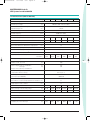
12 Technical data (250 to 800 kVA)
UPS Unit
Rating
250
300
400
500
600
800
12.1 Rectifier input
Nominal input voltage
(V)
400 3Ph (380 – 415 selectable)
Tolerance on voltage assuming
float @ 2.27V per cell
(%)(1)
+15/-12
Min. input voltage without battery discharge
(%)(1)
-21
Nominal frequency
(Hz)
50/60 (selectable)
Tolerance on frequency
(%)
±5
Maximum input power @400V, Recharge Mode
Power factor @400V, PFC Mode
(kVA)
351
421
562
702
842
1123
(±0,02)
>0.9
>0.9
>0.9
>0.9
n.a.
n.a.
97.0
97.4
97.0
97.4
Power factor @400V, Float Mode
>0.8
Input current distortion @ maximum input power
(%)
<5
Walk in/Soft start (programmable)
(seconds)
10 (1-90)
Rectifier Hold-Off (programmable)
(seconds)
1 (1-180)
Inrush current / Imax input ratio(8)
Efficiency of rectifier in float(2):
<4
Half load %
Full load %
97.9
97.9
97.9
97.9
97.9
97.9
97.9
97.9
12.2 Rectifier output
Battery nominal voltage @ recommended
number of cells, see 12.8
Output voltage: Float for SLA @ 20°C
Recharge
*Only for wet stationary lead batteries
21
(V)
480
(V)
(V)*
545
576
Battery float voltage temperature
compensation (direct sensing)
-0.11% per °C
Current ripple into battery for a 10 min
autonomy as per VDE0510(3)
<0.05C10
Voltage stability in steady state condition for 100%
load variations or allowed input parameters variations (%)
<1
Voltage ripple in float condition
<2
(%)
DC current supplied to inverter in float
(A)
391
466
622
777
932
1243
Battery recharge current setting range
(A)
15-80
15-80
20-110
25-135
25-160
30-210
Maximum DC current
(A)
500
600
800
1000
1200
1600
1283
1710
12.3 Inverter input
Nominal voltage on float
(V)
545
DC voltage range
(V)
396-600
DC current when inverter at full load (0.8PF)
and battery at end of discharge
(A)
538
645
855
1069
MKA4CAT0UKSIII/Rev. 11-11/2004/UK
Tecnico-SIII-MG
10-11-2004
8:22
Pagina 22
MASTERGUARD Series S III
UPS Systems from 60 to 800 kVA
12 Technical data (250 to 800 kVA)
UPS Unit
Rating
250
300
400
500
600
800
Nominal apparent power @ PF 0.8,
lagging 40°C
(kVA)
250
300
400
500
600
800
Nominal active power
(kW)
200
240
320
400
480
640
(A)
362
435
580
725
870
1159
12.4 Inverter output
Nominal output current
Nominal apparent and active power @ PF >0.8,
lagging or leading, 40°C
Overload at nominal output voltage
and 0.8 PF for 10 min
(%)
125
Overload at nominal output voltage
and 0.8 PF for 1 min
(%)(6)
150
Short circuit current capacity for 5 seconds (10ms)
(%)
150 (200)
(V)
400 (380/415 selectable) 3Ph + n
Nominal frequency
(Hz)
50/60 (selectable)
Voltage stability in steady state condition
for input DC variations and 100% load variations
(%)
±1
Voltage stability in dynamic condition
for 100% nominal load step variations
or DC input variations
(%)
Complies with IEC/EN 62040-3, Class 1
Voltage stability in steady state for 100%
unbalanced loads (0, 0, 100)
(%)
±3
Nominal output voltage
22
See note (7)
Output frequency stability
In synchro with the mains (%)
With internal quartz oscillator (%)
Frequency slew rate
±0.75 (1.5, 2.5, 6 selectable)
±0.05
(Hz/sec)
<1
Output voltage distortion with 100% linear load
(%)
<3
Output voltage distortion @ reference
non linear load as for IEC/EN 62040-3
(%)
<5
Load crest factor without derating
(Ipk/Irms)
3:1
Phase angle precision with balanced loads
(degrees)
<±1
Phase angle precision with 100%
unbalanced loads
(degrees)
<±2
DC/AC efficiency(2):
Half load
Full load
Neutral conductor sizing
Output power upgradability
with temperature:
93.5
94.0
94.0
94.5
94.0
94.5
94.0
94.5
see Chapter 6.5
At 25°C
At 30°C
At 40°C
MKA4CAT0UKSIII/Rev. 11-11/2004/UK
(%)
(%)
(%)
110
105
100
94.0
94.5
94.0
94.5
Tecnico-SIII-MG
10-11-2004
8:22
Pagina 23
MASTERGUARD Series S III
UPS Systems from 60 to 800 kVA
12 Technical data (250 to 800 kVA)
UPS Unit
Rating
250
300
400
500
600
800
12.5 Reserve static switch
Nominal voltage
(V)
400 (380/415 selectable) 3Ph + n
Nominal frequency
(Hz)
50/60 (selectable)
Frequency range
(%)
±0.75 (1.5, 2.5, 6.0 selectable)
Voltage range
(%)
±10
(V)
480/277
(%)
(%)
(%)
(%)
125
150
700
1000
Maximum operating voltage
Maximum overload capacity For
For
For
For
10 minutes
1 minute
600 milliseconds
100 milliseconds
SCR
I2t @ Tvj=130°C; 8.3-10ms (A2s)
ITSM @ Tvj=130°C; 10ms (A)
Fuse
Rating (Vac/A)
Pre-arching I2t (A2s)
I2t @ 400Vac (A2s)
320k
8k
660/500
23.8k
105k
320k
8k
1125k
15k
1125k
15k
1125k
15k
4500k
30k
660/500 660/1000 660/1000 660/1000 660/1600
23.8k
142k
142k
142k
308k
105k
630k
630k
630k
1332k
Transfer time when in synchro
(double conversion):
Inverter to reserve
Reserve to inverter
(ms)
(ms)
<0.5
<0.5
Transfer time without synchro
(ms)
<20
Retransfer delay
(sec)
5
23
12.6 System data
Maximum input power @400V, Recharge Mode
(kVA)
356
421
562
702
Heat dissipation:
(kW)
(kW)
(kW)
(kW)
17.4
19.5
25.9
32.4
AC/AC efficiency(2):
PFC Mode
Float Mode
Rapid recharge
Digital interactive
Half load double conv.
Full load double conv.
Digital Interactive
Noise @ 1 metre as per ISO 3746
(%)
(%)
(%)
(dBA ± 2dBA)
Height
Width
Depth
Frame
Bottom panel
n.a.
18.7
6.2
21.1
7.4
27.9
10
34.9
12.4
55.7
60.8
19.8
91.5
92.0
92.0
92.5
92.0
92.5
92.0
92.5
91.2
92.0
91.2
92.0
72
75
75
1780
2020
858
1
1780
3860
1058
3
1980
3860
1058
3
97.0
68
68
70
IP20
(mm)
(mm)
(mm)(4)
No. of cabinets
Colour
1123
41.7
45.6
14.8
Protection degree with open doors
Mechanical dimensions:
842
1780
1620
858
1
1780
1620
858
1
1780
1620
858
1
(RAL scale)
(RAL scale)
7035
7035
Weight
(kg)
1880
1880
2080
2580
3960
4820
Floor area
(m )
1.35
1.35
1.35
1.68
3.98
3.98
(kg/m )
1390
1390
1540
1535
1000
1210
Floor loading
Cable entry
2
2
Bottom/Side
Access
Front
Cooling
Forced Ventilation
MKA4CAT0UKSIII/Rev. 11-11/2004/UK
Tecnico-SIII-MG
10-11-2004
8:22
Pagina 24
MASTERGUARD Series S III
UPS Systems from 60 to 800 kVA
12 Technical data (250 to 800 kVA)
UPS Unit
Rating
250
300
400
500
600
800
423
508
677
12.7 Environmental
Temperature: Operating
Max average daily (24hrs)
Maximum (8hrs)
(°C)
(°C)
(°C)
0-40
35
40
Maximum relative humidity @ 20°C (non condensing) (%)
up to 90
Elevation without derating (m) (-1.2% Pn every 100 m above 1000 m)
1000
12.8 Battery
Optimum battery temperature
DC power
Recommended no. cells:
24
(°C)
(kW)
15-25
213
254
339
240
240
375
VRLA(5)
WET
NiCd
End of discharge voltage
(V)
396
End of discharge current
(A)
538
645
855
1069
1283
1710
Battery current setting range
(A)
15-80
15-80
20-110
25-135
25-160
30-120
(1) @ 234 cells and nominal output power;
(2) for tolerance see IEC/EN 60146-1-1or DIN VDE 0558;
(3) valid for 60-500kVA range only in PFC Mode;
(4) including front handle; without handle 830/1030 mm
(5) permitted number of cells = 234-246
(6) only with battery connected
(7) Units rated 250, 300, 400 and 500 kVA can supply loads with PF up to 0.8, leading or lagging, at full nominal output power. For the same ratings, loads with
PF up to 0.9, leading or lagging, can be supplied at full nominal output power with limitation in the maximum value of battery recharge current. Please contact
MASTERGUARD Technical Support for further details. For 800 kVA and 600 kVA for loads with PF> 0.8 or leading please contact MASTERGUARD Technical Support.
(8) Imax input can be deduced from the maximum input power @400V, recharge mode.
Note:
The data shown are typical and not definable in other ways; furthermore the data refer to 25°C ambient temperature and PF= 1 where not specified.
Not all the data shown apply simultaneously and may be changed without prior warning.
If the options described in chapter 13 are added, the data shown in table 12 may vary.
MKA4CAT0UKSIII/Rev. 11-11/2004/UK
Tecnico-SIII-MG
10-11-2004
8:22
Pagina 25
MASTERGUARD Series S III
UPS Systems from 60 to 800 kVA
13 Options
Where options described in this
chapter are added to the UPS, the data
presented in the standard technical
data tables may vary. Some options
may not be available contemporarily on
the same UPS.
It shall also be possible to monitor the
insulation resistance when the rectifier
isolation is not present by taking the
measurement when the input rectifier
switch is open or the rectifier is
switched off.
13.1 Parallel configurations
13.7 Battery Management Modules
(only upon request)
See chapter 14.
13.2 Remote alarm unit
A remote alarm panel shall be available
to display important individual
messages
from
the
UPS.
Upon request, it shall be possible to
display up to four UPS systems. The
length of the connecting cable must
not exceed 300 m.
13.3 External battery circuit breaker
This option shall include a fully rated
circuit breaker and an additional
auxiliary contact for monitoring its
position. The circuit breaker shall be
housed in a wall-mounted box and
designed for battery systems which
are mounted on racks. Furthermore,
the circuit breaker shall serve as a
safety element for the cross section of
the power cable between UPS and the
remotely placed battery system.
13.4 Backfeed protection (only upon
request)
This option shall prevent any potential
risk from electric shock on the UPS
input AC terminals in the event of
failure by the reserve static switch
SCR. The option shall include a contact
which activates an external isolating
device such as an electromechanical
relay. The external isolating device is not
included in the option. Alternatively, it
shall be possible to incorporate this
device inside the UPS cabinet.
13.5 Additional RFI filters (only upon
request)
Feed-through RFl filters shall be
available housed in a matching cubicle.
They allow a reduction of the
conducted emissions up to the Class B
of standard EN50091-2.
13.6 Battery leakage alarm
ln conjunction with the rectifier
isolation transformer option, the
battery leakage alarm shall monitor the
insulation resistance on the DC bus.
filter mounted within the 6 pulse
rectifier UPS version (available only up
to 200kVA) shall limit the THDi to less
than 7%. The input power factor will
depend on the output load fraction.
5th harmonic
6 pulse
6 pulse +
7% filter
29 %
4%
With measuring modules connected
to the battery blocks, enhanced
battery management shall be possible
offering the following features:
7th harmonic
5%
3%
11th harmonic
7%
3%
13th harmonic
1%
1%
17th harmonic
3%
2%
• Measurement of the condition of
each individual battery block by
means of separate battery
measuring
modules
(BMM)
19th harmonic
1%
1%
Total THDi
30 %
7%
• Analysis of each battery block with
measurement of the minimum and
maximum voltage values.
13.8 Isolation transformer
This option shall be a double wound
transformer housed in a matching
cubicle. The transformer shall
incorporate an electrostatic screen as
standard. The option shall be used to
isolate the rectifier/output/reserve
from the mains AC input. Starting from
250 kVA cable entry shall be from the
top; smaller versions shall have entry
from the bottom. The transformer
cabinets do not include switching
devices. This option may significantly
affect the reserve line inrush current,
influencing the sizing of the upstream
protection devices. For further
information please contact the
MASTERGUARD Technical Support;
optional low inrush current isolation
transformers may be provided on
request.
13.9 Top cable entry
This option shall allow power cable
entry from the top of the UPS.
13.12 12-pulse rectifierr @ THDi < 5%
(optional for 60 – 200kVA, standard
from 250kVA).
This version shall consist of two 6
pulse rectifiers phase shifted by 30
degrees; with an additional inductive
reactance on both rectifier branches.
This shall attenuate the 5th, 7th, I7th
and I9th harmonics in order to achieve
a THDi of approximately 5%. The 12pulse rectifier shall be housed within
the UPS cubicle. When this option is
fitted (for 60 – 200kVA range), the
overall AC/AC efficiency shall be
reduced by 2.5%, the generated
acoustic noise increased by I dBA, the
power factor in PFC Mode reduced to
0,90±0,02 and the input voltage
tolerance is –11% @ 192 cells. The input
inrush current shall be limited to <4Imax input.
12 pulse +
5% filter
5th harmonic
7th harmonic
1%
11th harmonic
4%
13th harmonic
2%
17th harmonic
-
19th harmonic
Total THDi
13.10 Dust filters
This option shall improve the
protection degree of the air entrance
from IP20 to lP40 for specific
applications such as a dusty
environment. The filter shall be housed
in the UPS cubicle (IP20).
13.11 Input harmonic filters for 6
pulse versions (only upon request)
The input current harmonic distortion
1%
5%
13.13 Multiple Bus Synchronization
Module (MBSM)
The synchronisation kit shall be used
to synchronise UPS systems in order
to ensure perfect operation with
CROSS system static switches. To
achieve this, all UPS must be
interconnected. The MBSM box allows
for communication between up to six
UPS. For more than six UPS cascaded
MBSM boxes should be used.
MKA4CAT0UKSIII/Rev. 11-11/2004/UK
25
Tecnico-SIII-MG
10-11-2004
8:22
Pagina 26
MASTERGUARD Series S III
UPS Systems from 60 to 800 kVA
13 Options
13.14 Empty battery cubicle
13.17 Customer interface board
Matching empty battery cubicles shall
be
available
including:
It shall be possible to increase the
number of input/outputs described in
section 8.8 by the adding of an
additional board. These input/outputs
can be used to monitor smoke, fire
and water detectors, as specified by
the user. Each board shall comprise:
• Cubicle
• Disconnecting means
• Fuses
• Safety screen
• Four digital inputs (from voltage
free contacts)
• Connection terminals
• UPS/battery connection cables (for
adjacent installations)
Three cubicle sizes shall be available:
Width Depth Height Weight
(mm) (mm) (mm) (kg)
Type A
820
858*
1780
220
Type B 1020
858*
1780
250
Type C 1020 1058*
1980
350
* including front handle; without
handle 830/1030 mm
13.15 Empty options cubicle
26
A matching cubicle shall be available
for customised applications such as:
• Input/Output
transformers
voltage
matching
• Customised distribution boards
• Customised applications.
The options cubicle shall be available
in four sizes:
Width Depth Height Weight
(mm) (mm) (mm) (kg)
Type A
820
858*
1780
180
Type B 1020
858*
1780
200
Type C 1420
858*
1780
250
Type D 1020 1058* 1980
300
The survey images as displayed below
supply the user with essential
information on the connected UPS:
13.18 Telephone switch for LIFE.net
State indication - power flux survey
The installation of the telephone
switch for LIFE.net shall allow the user
to use a telephone line normally
reserved for other purposes (e.g. fax
or telephone).
13.19
MopUPS Shutdown and
monitoring software
The main function of MopUPS
software shall be the safe shutdown of
the operating system in the event of a
power failure. Other functions include:
1. Automatic communications for events;
e-mail, SMS, etc.
2. Saving to file of event log and status
information
3. Viewing and monitoring of UPS in
realtime
4. Programmed system shutdown
5. Remote
monitoring
of
UPS
connected to network server using
Named Pipes or TCP/IP
13.20 ManageUPS adapter
This option shall include a complete
package (including slot card adapter) to
ensure monitoring and control of the
networked UPS through TCP/IP
protocol. The adapter permits:
• UPS monitoring from NMS via
SNMP
13.16 Use as Frequency Converter
• UPS monitoring from PC via a Web
browser.
MKA4CAT0UKSIII/Rev. 11-11/2004/UK
In addition to full monitoring capability,
this powerful software connectivity
tool allows complete access to the
UPS
configuration
parameters.
Therefore the user must attend a
specialist training session with
MASTERGUARD Service Engineers
before being granted access to PPVis.
• Two outputs - voltage free contacts
(1A 30V AC/DC)
* including front handle; without
handle 830/1030 mm
Series SIII may be programmed for use
as a frequency converter (50Hz in –
60Hz out or 60Hz in – 50Hz out) for
operations without a battery bank
connected. In this operational mode,
the data shown in tables 11 and 12 may
vary (e.g. output overload capability).
Please
contact
MASTERGUARD
Technical Support for details.
13.21 PPVIS surveys Monitoring
Software
• Dispatch of e-mail messages on
occurrence of events
ManageUPS, in conjunction with
MopUPS, shall also permit safe
shutdown of the operating systems.
• Current state of components (UPS)
• Display of output voltage, UPS
performance and load currents
• Number
of
power
failures
• Battery cell voltage
• Available backup time
The oscilloscope - measuring of
network
or
load
conditions
• Dual-carrier measurement of the
curves of input, output voltages or
currents.
• Flexible definable trigger conditions
capable of being coupled with the
most varied events, such as when
a mains failure occurs
Tecnico-SIII-MG
10-11-2004
8:22
Pagina 27
MASTERGUARD Series S III
UPS Systems from 60 to 800 kVA
13 Options
Battery display - Recognition of
parasitic effects in the early stages
(optional
for
single
blocks)
• Measuring of the condition of each
individual battery block shall be
monitorable by means of separate
battery measuring modules (BMM)
• By clicking of mouse the user may
analyse each battery block with
measurements of the minimum
and maximum voltage values.
13.22 J-Bus protocol
level systems such as Simatic S5, S7,
Symadyn D, PC/PG and field units. The
following information shall be
transmitted by Series SIII:
An optional kit shall ensure the
compatibility of Series SIII with the
J-Bus protocol on RS485 port.
• Status of the unit
13.23 Profi Bus protocol
• Alarm information, information on
faults
By installing a Profibus-DP connection
Series SIII shall be linked up to higher
level automatic systems. The Profibus
–DP bus system enables very fast
cyclical data exchange between higher-
• Voltage levels at UPS output
• Control information
Compatibility Table
LIFE.net
MopUPS
LIFE.net
MopUPS
No
No
ManageUPS
Yes
Yes
PPVIS
Yes
Yes*
ManageUPS
PPVIS
Yes
Yes
Yes
Yes*
Yes
Yes
* use LIFE.net port for MopUPS
14 Parallel configurations
The Series SIII series of uninterruptible
power supply systems shall be
connectable in parallel for multimodule configurations between units
of the same rating. The maximum
number
of
UPS
in
parallel
configuration shall be eight (seven for
systems with a centralised static
switch and for HFC systems).
The parallel connection of UPS shall
increase reliability and power.
Reliability.
If the installation requires more than
one unit in redundant configuration the
power of each UPS should not be
lower than Ptot/(N-1) where:
Ptot
N
1
= Total load power
= Number of UPS units in parallel
= Minimum coefficient of
redundancy
Under normal operating conditions,
the power delivered to the load shall
be shared between the number of
UPS units connected to the parallel
bus. In case of overload the configuration
may deliver Pov x N without transferring
the load onto the reserve, where:
Pov
N
= Max overload power of a
single UPS
= Number of UPS units in
parallel.
In the event of failure by one of the
UPS units, the faulty unit shall be
disconnected from the parallel bus and
the load shall be supplied from the
remaining units without any break in
supply continuity.
Power.
It shall be possible to increase the
power of the system using a nonredundant
parallel
configuration
(redundancy coefficient = 0). In this
case all connected UPS units shall
deliver the rated power, and in the
event of a unit failure or overload the
system shall transfer the load to reserve.
A maximum of eight UPS may be
connected in parallel. There shall be
three alternative paralleling methods:
modular parallel, centralised parallel
with COC and high fault clearance
(HFC) parallel mode.
Performance features.
The performance features of the
parallel system are related to the UPS
systems employed. The distribution of
the load is divided equally between the
individual UPS systems.
MKA4CAT0UKSIII/Rev. 11-11/2004/UK
27
Tecnico-SIII-MG
10-11-2004
8:22
Pagina 28
MASTERGUARD Series S III
UPS Systems from 60 to 800 kVA
14 Parallel configurations
14.1 Modular
28
The UPS systems of the Series SIII
series shall be capable of operating in
parallel modular configuration. For this
purpose UPS systems of the same
rating shall be connected in parallel to
form multi-module configurations.
The parallel connection of UPS
shall either improve reliability, the
total
output
power,
or
both.
Provided Series SIII is supplied with the
parallel kit option, up to eight equal
UPS units can be operated in parallel
for power upgrade or increase of
redundancy. This option can also be
added on at a later date. The option
shall consist of one subassembly
POB (Parallel Operation Board) and 25
pole, screened data lines to
the neighbouring UPS modules.
A multi-module system shall be
controlled and monitored automatically
by controlling the individual UPS
systems. The reserve lines and
inverters included in each UPS share
the load. The load sharing among the
UPS parallel system (“load on
inverter” mode) shall be achieved with
a tolerance of less than 5% at any
system load fraction (0 - 100%).
14.1.1
System
bypass
U. V. W.
U1. V1. W1.
U. V. W.
UPS 1
U1. V1. W1.
UPS 2
BATT
UPS n
BATT
Load
Figure 6. Modular parallel systems
switches
A system bypass switch shall be
available as an option for the modular
parallel configuration. For parallel
systems including more than two UPS,
a system bypass switch must be
provided within the installation,
including two power disconnect
switches. The ratings available shall be:
U. V. W.
U. V. W.
UPS 1
UPS 2
UPS n
COC
SQ2
Height Weight Depth Weight
(mm) (mm) (mm) (kg)
400 A
1780
800 A
620
858*
300
1780
620
858*
400
1600 A 1780
1020
858*
500
2500 A 1780
1020
858*
600
* including front handle; without
handle 830 mm
BATT
BATT
14.2 Centralised parallel with COC
U2. V2. W2. N
U2. V2. W2. N
The centralised paralleling architecture
enables UPS with inhibited bypass to
be connected in parallel. Hereby the
reserve supply to the loads works with
one central equipment (COC).
Load
Figure 7. Centralised parallel systems with COC
MKA4CAT0UKSIII/Rev. 11-11/2004/UK
Tecnico-SIII-MG
10-11-2004
8:22
Pagina 29
MASTERGUARD Series S III
UPS Systems from 60 to 800 kVA
14 Parallel configurations
Now a single UPS block consists of the
following subassemblies:
• Rectifier
• Microprocessor,
IGBT
inverter
• Static switch, inline to the inverter
• Matching battery
The centralised switch COC (common
output cubicle ) see Figure 7. The COC
includes:
14.4 COC monitoring and control
Load/Bypass Switch
The COC shall incorporate the
necessary controls, instruments and
indicators to allow the operator to
monitor the system status and
performance, as well as take any
appropriate action.
This module displays alarms, load
voltage phase to neutral, current per
phase, frequency measurements,
percentage load capacity per phase
and the peak factor lpk/Irms of each
phase of the load current. It is possible
to display the total time the load has
been supplied by inverter, by reserve
and time on parallel.
Mimic panel
The COC shall have a mimic panel with
light emitting diodes (LEDs) to indicate
the following conditions, see Figure 8:
• Electronic static switch and
reserve supply
UPS (A-H)
normal operation
green
Reserve supply
normal operation
green
• Manual
maintenance
bypass
switch (switches are not included
in COC above 800A)
Load static switch
normal operation
green
UPS (A-H)
alarm
green flashing
Reserve supply
alarm
green flashing
Load static switch
alarm
green flashing
Centralised
configuration
offers
maximum flexibility in positioning UPS
blocks. Vector control ensures that
different UPS blocks of a centralised
parallel system can be placed at
different localities. Power cables from
the mains and to loads may be of
different lengths.
It shall be possible to modify the
parallel configuration of Series SIII from
centralised to modular and vice versa
(provided a COC is included in the
system). This modification may be
done at any time by simply
disconnecting or connecting the COC
to the parallel UPS.
14.3 High Fault Clearance Parallel
Mode
It shall be possible to allow
simultaneous operation of both the
UPS reserve lines (within each UPS)
and the common reserve line in the
COC. Transfer to reserve will therefore
involve the parallel operation of all the
available reserve lines (both UPS and
COC). As a result of such a paralleling
of reserve static switches, the overall
I2t capacity of the system shall be
multiplied by four. The increased short
circuit capacity of the high fault
clearance parallel mode of operation
will result in increased ability to clear
faults downstream from the UPS and
hence greater overall selectivity. HFC
parallel mode shall only be feasible if
all reserve lines originate from the
same distribution. All modules within
the HFC system (UPS and COC) will
share
the
load
equally.
29
COC
Figure 8.
Display
A 40 character illuminated LCD (two
lines x 20 characters) shall be provided
to enable the operating parameters of
the UPS to be monitored. The LCD
messages shall be accessed by push
buttons. The text shall be available in
English, Italian, French, German, Spanish
and Portuguese, selectable by the user.
By using the appropriate user switches
it shall be possible to display the
following:
UPS
This module shall display alarms and
status for the connected UPS in the
parallel system.
Reserve Supply
This module shall display alarms,
voltage phase to neutral and frequency
measurements.
MKA4CAT0UKSIII/Rev. 11-11/2004/UK
Tecnico-SIII-MG
10-11-2004
8:22
Pagina 30
MASTERGUARD Series S III
UPS Systems from 60 to 800 kVA
14 Parallel configurations
Signalling COC
Heading
Alarms/indications
EPO active
System normal
System test mode System in alarm
LIFE.net connection in progress
Active LlFE.net connection
UPS (*) shutdown imminent
UPS (*) voltage and frequency irregular
Backfeed active (option)
Overload
Static switch blocked on inverter
Bypass switch closed
Reserve supply fault
Static switch blocked on reserve
Load not supplied
Reserve phase sequence error
Static switch fault
LIFE.net (optional)
Alarms/indications
Service active
UPS
Alarms/indications
UPS (*) current limit
UPS (*) in alarm
Reserve, Load
Alarms/indications
30
Load on reserve
Reserve frequency fault
Reserve switch open
UPS (*) in alarm
Reserve voltage high
Overtemperature
Output switch open
Reserve voltage low
Out of synchronisation
(*) lndicates the UPS involved.
Help procedure
The LCD display shall provide assisted
start-up, shutdown, bypass and return
to normal routines.
Control push button
In the right part of the display there
shall be a further push button to
control the COC. This push button shall
enable the load to be transferred or retransferred from the inverter to
reserve or reserve to inverter
depending on the original condition.
The control shall incorporate a safety
feature to prevent inadvertent
operation.
MKA4CAT0UKSIII/Rev. 11-11/2004/UK
Tecnico-SIII-MG
10-11-2004
8:22
Pagina 31
MASTERGUARD Series S III
UPS Systems from 60 to 800 kVA
14 Parallel configurations
14.5 COC Technical data
Rating
400A
800A
1600A
3200A
4000A
(A)
400
800
1600
3200
4000
Power @ 380V
(kVA)
263
526
1052
2112
2640
Power @ 400V
(kVA)
277
554
1107
2208
2760
Power @ 415V
(kVA)
287
574
1149
2304
2880
Electrical data
Nominal current
Nominal voltage
(V)
400 (380/415 selectable)
Nominal frequency
(Hz)
50/60 (selectable)
Voltage range
(%)
± 10
Frequency range
(%)
Maximum operating voltage
±0.75 (1.5, 2.5, 6 selectable)
(V)
Maximum overload capacity for 10 minutes
for 1 minute
for 600 milliseconds
for 100 milliseconds
(%)
(%)
(%)
(%)
SCR
I2t @ Tvj=130°C; 8.3-10ms (A2s)
ITSM @ Tvj=130°C; 10ms (A)
Fuse
Rating (Vac/A)
Pre-arching I2t (A2s)
I2t @ 400Vac (A2s)
Efficiency (when on reserve) AC/AC
277 (480 PH-PH)
125
150
700
1000
125
150
700
1000
125
150
500
700
320k
8k
1125k
15k
660/500
23.8k
175k
660/1000k
142k
630k
31
99.5
Transfer time when in synchro lnverter to reserve
Reserve to inverter
(ms)
(ms)
<0.5
<0.5
Transfer time without synchro
(ms)
<20
(s)
125
150
500
700
Contact MASTERGUARD
Technical Support
(%)
Retransfer delay
125
150
500
700
5
System data
Noise @ I metre as per ISO 3746
(dBA)
60
60
Protection degree with door open
62
64
65
IP20
Mechanical dimensions
Height
(mm)
Width
(mm)
Depth
(mm)
*including front handle; without handle 830/1030 mm
Switches:
1780
1020
858*
1780
1020
858*
included
included
No. of cabinets
1780
820
858*
1780
1020
858*
1980
1020
1058*
not included not included not included
1
Weight
(kg)
350
400
400
500
650
Floor area
(m2)
0.85
0.85
0.68
0.85
1.05
(kg/m2)
412
471
588
588
619
Floor loading
Cable entry
Access
Ventilation
Top/Bottom/Side
Front
Forced ventilation (active when SS is closed)
MKA4CAT0UKSIII/Rev. 11-11/2004/UK
Tecnico-SIII-MG
10-11-2004
8:22
Pagina 32
MASTERGUARD Series S III
UPS Systems from 60 to 800 kVA
14 Parallel configurations
14.5 COC Technical data
Rating
400A
800A
1600A
Environmental data
Temperature
Operating temperature
(° C)
Maximum average daily (24 hrs) (° C)
Maximum (8 hrs)
(° C)
0-40
35
40
Maximum relative humidity @ 20°C (non condensing) (%)
up to 90
Elevation without derating (m) (-1,2% Pnom every 100 m
above 1000 m)
1000
32
MKA4CAT0UKSIII/Rev. 11-11/2004/UK
3200A
4000A
Tecnico-SIII-MG
10-11-2004
8:22
Pagina 33
MASTERGUARD Series S III
UPS Systems from 60 to 800 kVA
Planning and Installation
33
MKA4CAT0UKSIII/Rev. 11-11/2004/UK
Tecnico-SIII-MG
10-11-2004
8:22
Pagina 34
MASTERGUARD Series S III
UPS Systems from 60 to 800 kVA
Planning and Installation
34
MKA4CAT0UKSIII/Rev. 11-11/2004/UK
Tecnico-SIII-MG
10-11-2004
8:22
Pagina 35
MASTERGUARD Series S III
UPS Systems from 60 to 800 kVA
Planning and Installation
35
MKA4CAT0UKSIII/Rev. 11-11/2004/UK
Tecnico-SIII-MG
10-11-2004
8:22
Notes
36
MKA4CAT0UKSIII/Rev. 11-11/2004/UK
Pagina 36