1
INTRODUCTION
YOUR COOKING STOVE
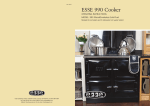
We are pleased that you have chosen an ESSE
cooking stove. We would ask you to read the
following instructions very carefully. Correctly
installed and operated, your ESSE cooking stove will
give satisfactory service for many years. We feel
certain that you will enjoy the warmth and comfort
of your ESSE cooking stove and, perhaps more
importantly, you will more than enjoy the superb
quality of the cooking.
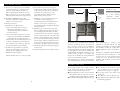
The cooking stove - Fig.1
Flue
restrictor
85mm
Flue centre
Hob lids
Hob
Secondary
air control
(left to open)
OPERATING
Safety Notes
Operating the Oven and Hob
Page 7
Page 2
Cleaning the cooking stove
Page 7
Your Cooking Stove
Page 3
Hot Water System
Page 8
Door Hinge Adjustments
Page 4
INSTALLATION
Lighting and Controlling the Fire
Page 4
Chimney and Flue Information
Loading door
Page 6
Flue Draught Reading
Page 10
Extended Burning
Page 6
Types of Fuel
Page 6
Installing the cooking stove, Positioning
and Flue Connection
Page 11
Oven door
Damper control
(pull out to open)
Page 9
Correct Running Temperatures
90mm
430mm
Ash door
Flue access door
Primary
air control
(left to open)
271mm
(feet)
600mm (Top casting)
900mm
OPERATING INSTRUCTIONSS
900mm
460mm
CONTENTS
SAFETY NOTES
● Properly installed, operated and maintained, this
appliance will not emit fumes into the dwelling.
However occasional fumes from de-ashing and
re-fuelling may occur. Persistent fume emission is
potentially dangerous and must not be tolerated.
If fume emission does persist, open doors and
windows to ventilate the room. Let the fire burn
out or eject and safely dispose of fuel from the
appliance. Once the fire is cold, check the flue
and chimney for blockages and clean if required.
Do not attempt to relight the fire until the cause
of the fume emission has been identified and
corrected. Seek expert advice if necessary.
mechanical order. Regular sweeping means at
least once per year for smokeless fuel and a
minimum of twice per year for other fuels.
● If the chimney was previously used for an open
fire, it is possible that the higher flue gas
temperatures generated by the cooking stove
may loosen deposits that were firmly adhered to
the inner surface of the chimney and cause
blockage of the fluepipe. We recommend that in
such a situation a second sweeping of the chimney
should be carried out within one month of
regular use of the cooking stove after installation.
● Should it be likely that children, aged or infirm
people approach the fire, then a fireguard should
be used.
● Do not fit an extractor fan in the same room as
the appliance.
● An adequate air supply for combustion and
ventilation is essential. Air openings provided for
this purpose must not be restricted.
● Avoid the use of aerosol sprays in the vicinity of
the cooking stove when it is in operation.
Warning! The front of the cooking stove
becomes very hot when in use. Do not place towels
on the handrail when the cooking stove is alight
and keep pets and kids away.
● It is important that flue ways are cleaned
frequently and the chimney swept regularly. Also
the cooking stove must be maintained in good
2
Note: Ordinary bituminous house coal is
not recommended and must not be burned
in smoke control areas. Burning bituminous
house coal will result in a sooty cooking stove
and chimney, and the cooking stove glass will
require regular cleaning. Pure Petcoke should
also be avoided as the high temperatures this
fuel can produce may damage the cooking stove.
Figure 1 shows the cooking stove and its controls.
The large glass door on the left is the loading door
through which the fire is lighted and refuelled. The
small door at the bottom on the left is the ash door.
The large door to the right of the cooking stove is
the oven and the small door at the bottom right is
the oven flue access door.
Included inside your cooking stove is a multi
purpose-operating tool – for lifting the ash pan,
adjusting the primary and secondary air supply and
opening the doors.
Operating tool - Fig.2
Use this to remove
the ash pan
Use this to open
the doors
The cooking stove is suitable for burning wood and
smokeless solid fuels.
A flue restrictor (fig.1) is fitted in the bottom of the
fluebox and is in the open position when lever is
pointing to rear of cooker. This is used on initial
light up and also gives a cooler oven temperature
when open. It can also help to control excessive
flue draught. This is done by pointing the lever to
the front of the cooker.
Use this to adjust
the damper control
and air controls
3