1
24 | Installation
6
Installation
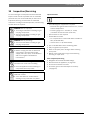
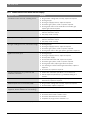
DANGER: Risk of explosion!
B Isolate the gas supply before working on
gas-carrying components.
B Check for leaks before working on gascarrying components.
Installation, power connection, connection
on the gas and flue gas side and
commissioning must only be carried out by
a contractor approved for such work by the
local gas or power supply utility.
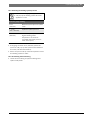
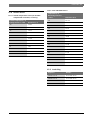
Anti-freeze
The following anti-freeze fluids are permitted:
Product
Concentration
Varidos FSK
22 - 55 %
Alphi - 11
see manufacturer’s
instructions
Glythermin NF
20 - 62 %
Table 10
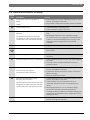
Corrosion inhibitor
The following corrosion inhibitors are permissible:
6.1
Important notes
B Prior to installation, obtain the approval of the gas
supply utility.
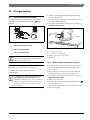
Supply of water preheated by solar energy (only ZWB)
WARNING: Risk of scalding!
Hot water can lead to severe scalding.
NOTE: Excessive temperatures through
water preheated by solar energy can
damage the equipment.
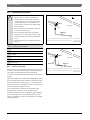
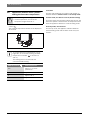
B Install a solar transfer valve upstream of
the appliance and set to 60 °C.
B To prevent excessive lime scale being
deposited, set the thermostatic mixer to
55 °C when encountering a total
hardness of 15 °dH or higher.
Heating system water
Unsuitable fill and top-up water in the heating system
can result in the heat exchanger scaling up and failing
prematurely.
Hardness range
Water treatment
soft (≤ 8.4 °dH)
not required
medium (8.4 - 14 °dH)
recommended
hard (≥ 14 °dH)
required
Table 9
6 720 644 143 (2010/09)
Designation
Concentration
Fernox
see supplier information
Sentinel
see supplier information
Table 11
Open vented heating systems
B Open vented heating systems must be converted to
sealed systems.
Gravity fed heating systems
B Connect the appliance to the existing pipework via a
low loss header with a dirt separator.
Underfloor heating systems
B The appliance is suitable for underfloor heating
systems; observe permissible flow temperatures.
If a room thermostat is used
B Do not fit a thermostatic radiator valve to the radiator
in the primary room.
To increase efficiency of the sysetm, thermostatic
radiator valves should be used on all other radiators.
Sealants
In our experience, adding sealants to the heating water
may result in problems (deposits in the heat exchanger).
We therefore advise against using them.
Water circulation noises
To prevent water circulation noises:
B Fit an overflow valve, or, with two-pipe heating
systems, a 3-way valve to the radiator furthest from
the boiler.