1
Cisco Cat3K ST
6 June 2012
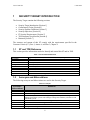
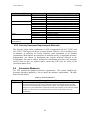
o Type A for Storage, all Cisco supported USB flash drives
o Type mini-B as console port in the front
• Non-volatile read-only memory (ROM) is used to store the bootstrap program and
power-on diagnostic programs
• Non-volatile random-access memory (NVRAM) is used to store switch
configuration parameters used to initialize the system at start-up
• Physical network interfaces (minimally two) (e.g. RJ45 serial and standard 10/100
Ethernet ports). Some models have a fixed number and/or type of interfaces; some
models have slots that accept additional network interfaces
• 24 and 48 10/100/1000 PoE+, non-PoE models, and 12 and 24 GE SFP port
models
• Four optional uplink network modules with GE or 10GE ports
• Industry first PoE+ with 30W power on all ports in 1 rack unit (RU) form factor
• Dual redundant, modular power supplies and fans
In addition to the above features, the Cisco Catalyst 3750-X switches also offer:
• Cisco StackPower™ technology: An innovative feature for sharing power among
stackmembers
• Cisco StackWise Plus technology for ease of use and resiliency with 64 Gbps of
throughput
Cisco IOS is a Cisco-developed highly configurable proprietary operating system that
provides for efficient and effective routing and switching. Although IOS performs many
networking functions, this TOE only addresses the functions that provide for the security
of the TOE itself as described in Section 1.7 Logical Scope of the TOE below.
1.5 TOE Evaluated Configuration
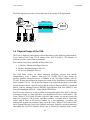
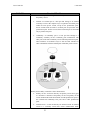
The TOE consists of one or more physical devices; the Catalyst Switch with Cisco IOS
software. The Catalyst Switch has two or more network interfaces and is connected to at
least one internal and one external network. The Cisco IOS configuration determines how
packets are handled to and from the switches’ network interfaces. The switch
configuration will determine how traffic flows received on an interface will be handled.
Typically, packet flows are passed through the internetworking device and forwarded to
their configured destination. BGPv4, EIGRP, PIM-SMv2, and OSPFv2, Routing
protocols are used on all of the Catalyst Switch models. EIGRP supports routing updates
with IPv6 or IPv4, as does BGPv4 and PIM-SMv2 while OSPFv2 routing protocol
support routing updates for IPv4 only.
The TOE can optionally connect to an NTP server on its internal network for time
services. Also, if the Catalyst Switch is to be remotely administered, then the
management station must be connected to an internal network, SSHv2 must be used to
connect to the switch. A syslog server can also be used to store audit records. If these
servers are used, they must be attached to the internal (trusted) network. The internal
(trusted) network is meant to be separated effectively from unauthorized individuals and
user traffic; one that is in a controlled environment where implementation of security
policies can be enforced.
9