1
Linux PCMCIA HOWTO
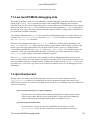
• Your Linux kernel version (i.e., ``uname −rv''), and PCMCIA driver version (i.e., ``cardctl
−V'').
• Any changes you have made to the startup files in /etc/pcmcia, or to the PCMCIA startup script.
• All PCMCIA−related messages in your system log file. That includes startup messages, and
messages generated when your cards are configured.
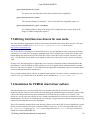
All the PCMCIA modules and the cardmgr daemon send status messages to the system log. This will
usually be something like /var/log/messages or /usr/adm/messages. This file should be the first
place to look when tracking down a problem. When submitting a bug report, always include the relevant
contents of this file. If you are having trouble finding your system messages, check
/etc/syslog.conf to see how different classes of messages are handled.
Before submitting a bug report, please check to make sure that you are using an up−to−date copy of the
driver package. While it is somewhat gratifying to read bug reports for things I've already fixed, it isn't a
particularly constructive use of my time.
If you do not have web access, bug reports can be sent to me at [email protected].
However, I prefer that bug reports be posted to my web site, so that they can be seen by others.
7.2 Interpreting kernel trap reports
If your problem involves a kernel fault, the register dump from the fault is only useful if you can translate the
fault address, EIP, to something meaningful. Recent versions of klogd attempt to translate fault addresses
based on the current kernel symbol map, but this may not work if the fault is in a module, or if the problem is
severe enough that klogd cannot finish writing the fault information to the system log.
If a fault is in the main kernel, the fault address can be looked up in the System.map file. This may be
installed in /System.map or /boot/System.map. If a fault is in a module, the nm command gives the
same information, however, the fault address has to be adjusted based on the module's load address. Let's say
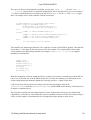
that you have the following kernel fault:
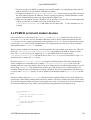
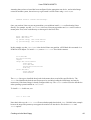
Unable to handle kernel NULL pointer dereference
current−>tss.cr3 = 014c9000, %cr3 = 014c9000
*pde = 00000000
Oops: 0002
CPU:
0
EIP:
0010:[<c2026081>]
EFLAGS: 00010282
The fault address is 0xc2026081. Looking at System.map, we see that this is past the end of the kernel, i.e.,
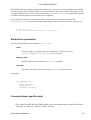
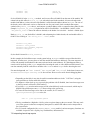
is in a kernel module. To determine which module, check the output of ``ksyms −m | sort'':
Address
c200d000
c200d10c
c200d230
Symbol
(35k)
register_ss_entry
unregister_ss_entry
7.2 Interpreting kernel trap reports
Defined by
[pcmcia_core]
[pcmcia_core]
[pcmcia_core]
48