1
Chapter 5
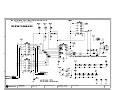
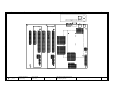
Arcadia Motherboard Architecture
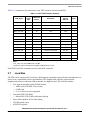
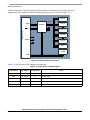
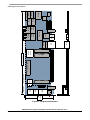
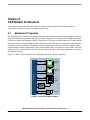
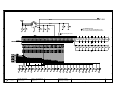
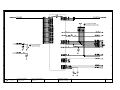
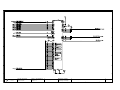
The following sections describe information on the Arcadia Version 3 reference platform, also referred to
as Arcadia x3 or Arcadia V3. Arcadia is a flexible evaluation and development platform support, and
serves several support purposes:
• As a backplane for evaluation of CDS-based boards (PowerQUICC III network host processors)
• As a backplane for high-speed communications protocols (RapidIO, PCI Express, and others)
between hardware interoperability platform (HIP) compliant boards.
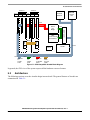
• Arcadia contains a pair of HIP-compliant slots, four PCI/PCI-X slots, one PrPMC connector, and
sufficient system resources (clock, power, arbitration, IDE disk access, PS/2 ports) to allow the
system to boot an operating system (Linux).
5.1
Features
The Arcadia development platform supports many combinations of HIP cards, PrPMC modules (including
MPMC cards), and PCI/PCI-X cards (hereafter, PCI-X will be used unless PCI is specifically referred to).
Accordingly, Arcadia includes the following features:
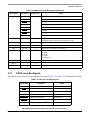
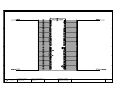
• Two RapidIO HIP slots
— 40 differential pairs
— Protocol-free
— Unlimited speed
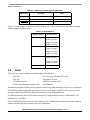
• Six PCI slots
— Four 3 3-V PCI-X slots and PCI bridge at 66-MHz speeds (all 32- or 64-bit)
— Two 5-V, 32-bit PCI slots at 33-MHz speeds
• PrPMC connector
— 33-MHz bus speeds
— 5-V interfaces
— PrPMC/MPMC compatible
• PCI-X/PCI bridge
— 66-MHz PCI-X to 33-MHz PCI bridge
— Allows fast PCI/PCI-X traffic without being limited by VIA PIPC
• PCI integrated peripheral controller (PIPC)
— Dual UDMA100 IDE disk controller
— Dual USB interface
MPC8555E Configurable Development System Reference Manual, Rev. 1
Freescale Semiconductor
5-1