1
XenServer Installation Guide
4.1.0
Published March 2008
1.0 Edition
1
XenServer Installation Guide
XenServer Installation Guide: Release 4.1.0
Published March 2008
Copyright © 2008 Citrix Systems, Inc.
Xen®, Citrix®, XenServer™, XenCenter™ and logos are either registered trademarks or trademarks of Citrix Systems, Inc. in the
United States and/or other countries. Other company or product names are for informational purposes only and may be trademarks
of their respective owners.
This product contains an embodiment of the following patent pending intellectual property of Citrix Systems, Inc.:
1. United States Non-Provisional Utility Patent Application Serial Number 11/487,945, filed on July 17, 2006, and entitled “Using
Writeable Page Tables for Memory Address Translation in a Hypervisor Environment”.
2. United States Non-Provisional Utility Patent Application Serial Number 11/879,338, filed on July 17, 2007, and entitled “Tracking
Current Time on Multiprocessor Hosts and Virtual Machines”.
2
XenServer Installation Guide
3
Table of Contents
1. Introducing XenServer .................................................................................................. 1
1.1. About this document ......................................................................................... 1
1.2. How this Guide relates to other documentation ................................................... 1
1.3. What's new in XenServer 4.1.0 .......................................................................... 1
1.4. What is XenServer? .......................................................................................... 2
1.4.1. Xen: the engine that powers XenServer ................................................... 2
1.4.2. XenServer extends the power of Xen virtualization to server clusters .......... 3
1.4.3. Powerful VM storage management and clustering ..................................... 3
1.4.4. XenMotion™ delivers an agile virtual infrastructure ................................... 4
1.4.5. The XenServer product family ................................................................. 4
1.4.6. XenServer elements ............................................................................... 4
2. System Requirements .................................................................................................. 6
2.1. XenServer Host system requirements ................................................................. 6
2.2. XenCenter requirements .................................................................................... 7
2.3. VM support ....................................................................................................... 7
3. Installing XenServer ..................................................................................................... 8
3.1. Installing the XenServer Host ............................................................................. 8
3.2. Installing XenCenter ........................................................................................ 12
3.3. Installation and deployment scenarios .............................................................. 13
3.3.1. XenServer Hosts with local storage ....................................................... 13
3.3.2. XenServer Hosts with shared NFS storage ............................................. 13
3.3.3. XenServer Hosts with shared iSCSI storage ........................................... 15
A. Troubleshooting ......................................................................................................... 18
B. Maintenance Procedures ............................................................................................ 19
B.1. Preparing XenServer Hosts for maintenance operations .................................... 19
B.2. Applying updates ............................................................................................ 20
B.2.1. Applying updates using the CLI ............................................................. 20
B.3. Reinstalling the same version .......................................................................... 21
B.4. Rolling upgrade from version 4.0.1 to the current version ................................... 22
B.4.1. Backup ................................................................................................ 22
B.4.2. Performing a rolling pool upgrade .......................................................... 23
B.5. Upgrading from version 3.2 to 4.0.1 ................................................................. 23
B.6. Upgrading VHD files from version 4.0.1 ............................................................ 24
B.7. Backing up and restoring XenServer Hosts and VMs ......................................... 25
B.7.1. Backing up Virtual Machine metadata .................................................... 25
B.7.2. Backing up XenServer Hosts ................................................................ 26
B.7.3. Backing up VMs ................................................................................... 28
C. PXE installation of XenServer Host ............................................................................ 29
C.1. Setting up the PXE boot environment .............................................................. 29
C.2. Creating an answerfile for unattended PXE installation ...................................... 32
C.3. Installation media repository format .................................................................. 35
C.3.1. Presence of installation media repositories ............................................ 35
C.3.2. Installation media repository metadata ................................................... 36
C.3.3. Package metadata ............................................................................... 36
C.3.4. Example files ....................................................................................... 37
C.3.5. Notes on best practice ......................................................................... 37
D. Xen Memory Usage ................................................................................................... 38
D.1. Memory scaling algorithm ............................................................................... 38
D.1.1. Increasing the reserved memory size .................................................... 38
4
Chapter 1. Introducing XenServer
Thank you for choosing XenServer™ from Citrix Systems, Inc., the creators of the Xen® hypervisor and
leaders of the open source Xen project.
1.1. About this document
This document is an installation guide for XenServer, the platform virtualization solution from Citrix. The
XenServer package contains all you need for creating a network of virtual x86 computers running on Xen®,
the open-source paravirtualizing hypervisor with near-native performance.
This document contains procedures to guide you through the installation, configuration, and initial operation
of XenServer. This document also contains information about troubleshooting problems that might occur
during installation, and where to go for further information.
1.2. How this Guide relates to other documentation
This document is primarily aimed at system administrators who need to set up XenServer Hosts on physical
servers. Other documentation shipped with this release includes:
• XenServer Virtual Machine Installation Guide describes how to install Linux and Windows VMs on top
of a XenServer deployment. As well as installing new VMs from install media (or via the VM templates
provided with the XenServer release), this guide also explains how to create VMs from existing physical
machines, via a process called P2V.
• XenServer Administrator's Guide describes the tasks involved in configuring a XenServer deployment -how to set up storage, networking and resource pools, and how to administer XenServer Hosts using the
xe command line interface (CLI).
• XenServer Software Development Kit Guide presents an overview of the XenServer SDK -- a selection
of code samples that demonstrate how to write applications that interface with XenServer Hosts.
• XenAPI Specification provides a programmer's reference guide to the XenServer API.
• Release notes provide a list of known issues that affect this release.
1.3. What's new in XenServer 4.1.0
This release of XenServer contains the following major new features. For a detailed list, please refer to the
XenServer 4.1.0 Release Notes.
• Network Appliance storage repositories: NetApp filers are now supported as an additional type of storage
repository for VMs, supporting fast cloning and snapshots.
• Shared Fibre Channel storage repositories: Fibre Channel storage hardware can be configured as a
shared storage repository using the QLogic and Emulex command-line tools, and the xe CLI.
• Linux VMs installed from vendor media In the previous release, the only direct vendor media installations
for Linux VMs required you to set up a network installation repository. This release adds support for
installing Red Hat Enterprise Linux 5, CentOS 5, and Oracle Enterprise Linux 5 from the physical media
itself via the physical CD/DVD-ROM drive.
• Additional VM support: This release adds templates for Windows Vista Enterprise Edition 32-bit, Red Hat
Enterprise Linux 5 64-bit and Oracle Enterprise Linux 5 operating systems.
1
Introducing XenServer
• Enhanced XenApp™ support: A dedicated XenApp VM template provides the fastest way to virtualize
XenApp installations.
1.4. What is XenServer?
XenServer is a server virtualization platform that offers near bare-metal virtualization performance for server
and client operating systems. XenServer uses the Xen hypervisor to virtualize each server on which it is
installed, enabling each to host multiple Virtual Machines simultaneously with guaranteed performance.
XenServer allows you to combine multiple Xen-enabled servers into a resource pool, using industry-standard shared storage architectures and leveraging resource clustering technology created by Citrix. In doing so, XenServer extends the basic single-server notion of virtualization to enable seamless virtualization
of multiple servers as a resource pool, whose storage, memory, CPU and networking resources can be
dynamically controlled to deliver optimal performance, increased resiliency and availability, and maximum
utilization of data center resources.
XenCenter allows IT managers to create multiple clusters of resource pools, and to manage them and their
resources from a single point of control, reducing complexity and cost, and dramatically simplifying the
adoption and utility of a virtualized data center environment. With XenServer, a rack of servers can become
a highly available compute cluster that protects key application workloads, leverages industry standard
storage architectures, and offers no-downtime maintenance by allowing Virtual Machines to be moved while
they are running between machines in the cluster.
XenServer extends the most powerful abstraction: virtualization across servers, storage and networking
to enable users to realize the full potential of a dynamic, responsive, efficient data center environment for
Windows and Linux workloads.
By providing a unified view of the resources of one or more clusters of servers, and through its use of
a standardized abstraction for control of storage resources assigned to Virtual Machines, XenServer dramatically simplifies the job of the IT administrator seeking a painless solution for virtualization of demanding production workloads. XenServer is ideally suited to users seeking to maximize the benefits of server
consolidation, automate test and development of software, or automate the assignment of resources and
protection of performance-sensitive production workloads.
1.4.1. Xen: the engine that powers XenServer
Xen provides fast, secure, open source virtualization that allows multiple operating system instances to run
as Xen Virtual Machines or VMs on a single physical 64-bit x86 computer. Xen supports modified guest
operating systems using a technique known as paravirtualization, which requires modifying the operating
system to run on Xen, but offers near-native performance. Paravirtualized operating systems "know" that
they are virtualized. Xen also supports unmodified operating systems using processor extensions from Intel
(VT) and AMD (AMD-V).
Xen supports 32-bit processors with and without Physical Address Extension (PAE), 64-bit processors,
and Symmetric Multiprocessing (SMP) guest operating systems.
Xen is exceptionally lean, which leads to extremely low overhead and near-native performance for VMs.
Xen re-uses existing Linux device drivers for Linux VMs, and uses special paravirtualized device drivers for
network and disk I/O on Windows VMs, making device management easy. Moreover, Xen is robust in the
event of device driver failure and protects VMs, and also protects the hypervisor from faulty or malicious
drivers.
Xen provides superb resource partitioning for CPU, memory, and block and network I/O. This resource
protection model leads to improved security because VMs and drivers are not susceptible to denial of service
2
Introducing XenServer
attacks. Xen is fully open to scrutiny by the security community and its security is continuously tested. Xen
is also the foundation for a Multi-Level Secure System architecture being developed by Citrix, IBM and Intel.
Xen was originally developed by the Systems Research Group at the University of Cambridge Computer
Laboratory as part of the XenoServers project, funded by the Engineering and Physical Sciences Research
Council (EPSRC), the main funding agency in the United Kingdom for research in engineering and the
physical sciences as well as the managing agent on behalf of the other Research Councils for High Performance Computing.
1.4.2. XenServer extends the power of Xen virtualization to server
clusters
XenServer allows IT administrators to flexibly assign up to 16 64-bit x86 servers into a single resource
pool of server resources. Multiple pools can be managed from a single XenCenter management console.
A resource pool is a tightly coupled collection of servers whose resources are virtualized to host a set of
Virtual Machines. Servers in a resource pool monitor the configuration state and availability of their peers.
XenServer management state is also replicated across all servers in a pool, with the benefit that failure of a
pool master can be quickly remedied, since any node in the cluster can replace the failed node. Using the
XenServer clustering architecture, the workload of a cluster can be protected from server failures, through
a unique combination of shared storage, Xen virtualization, and replicated state management between
servers in the cluster.
Virtual Machines assigned to a resource pool are automatically mapped onto the physical resources of the
pool, but IT administrators retain full control of resource assignment, and full visibility into each system and
each Virtual Machine, including the ability to manually place workload on specific servers, and drill down
into each server within the pool to get a precise view of each server's resources and the Virtual Machines it
hosts. At the simplest level, all the administrator needs to do is assign a Virtual Machine or a set of Virtual
Machines to a resource pool. XenServer manages the rest, including the assignment of physical resources
from servers in the pool to host the VMs, and ensuring that administrator policies for resilient restart of VMs
are implemented. XenServer ensures that the overall utilization of the resources of the servers in the pool
is maximized, to deliver lowest possible TCO.
Of course, if you want to assume full control, XenServer gives you the ability to manage each resource for
each VM, but most users will appreciate the simplicity of the "drag and drop" interface for VM provisioning
with guaranteed VM performance, automated VM storage and network management, and the use of policies
for automatic restart on failure of physical components of the cluster.
1.4.3. Powerful VM storage management and clustering
In most datacenters, storage is managed as a shared, separately administered resource independent of the
different server applications and OS types that make use of it. The rich set of choices for datacenter storage,
and the emergence in its own right of storage virtualization as a powerful technology that reduces TCO
for storage, leaves IT managers with a bewildering set of choices for storage and storage management.
XenServer aims to simplify the management of diverse storage technologies for virtualized infrastructure.
It does this by
• providing a simple plug-in interface for each of the different storage technologies used in the datacenter
today, extensible by storage vendors
• hiding the complexity of storage-related operations on each technology, for example snapshotting for VM
backup
3
Introducing XenServer
• enabling easy import and export of Virtual Machines in the virtual hard disk formats of all major vendors,
as well as offering raw block storage to Virtual Machines
• leveraging shared storage technologies, where present, as a core building block of XenServer resource
pools, to facilitate live-relocation of running Virtual Machines and easy relocation of workload to achieve
optimal utilization of pool resources
XenServer, uniquely amongst all virtualization products on the market, offers an open API to integrate directly with the various kinds of storage infrastructures available. With built-in support for IDE, SATA, SCSI
and SAS drives, XenServer can manage all forms of storage local to any server in a resource pool. Through
NAS, iSCSI and SAN support, XenServer extends the available Virtual Machine storage options to the most
common datacenter architectures in use today, while providing plug-in APIs for storage vendors to integrate
any storage management technology, from clustered file systems, through clustered volume management.
Storage repositories (or SRs) are elemental components of the XenServer architecture. All are managed
via the XenServer API, and through this API XenServer can leverage the built-in features of the underlying
storage infrastructure, including snapshotting, backup, and automated creation and assignment of LUNs for
new Virtual Machines. Not all SRs support all primitives - but XenServer can accommodate this by adding
software-level features that can be used if the storage infrastructure cannot support a particular primitive,
such as snapshotting.
1.4.4. XenMotion™ delivers an agile virtual infrastructure
When a XenServer Host in the pool needs physical maintenance, VMs can be relocated to other servers in
the pool, while they are running, with only hundreds of milliseconds of observable delay. This live relocation
capability is called XenMotion.
1.4.5. The XenServer product family
The three variants available are
• Express Edition™ supports a single XenServer Host with dual sockets (or multiple XenServer Hosts, one
at a time), up to 4GB physical RAM, hosting up to 4 concurrent VMs.
• Standard Edition™ supports multiple simultaneous XenServer Hosts with up to 128GB physical RAM,
and no limit on the number of concurrent VMs except the amount of available RAM. In addition, it also
adds support for specifying VLAN trunk ports in virtual bridges on the XenServer Host.
• Enterprise Edition™ supports multiple simultaneous XenServer Hosts with up to 128GB physical RAM,
and no limit on the number of concurrent VMs except the amount of available RAM. It also offers the
following additional features:
• clustering of XenServer Hosts into resource pools
• support for NFS, NetApp, Fibre Channel and iSCSI shared storage repositories
• live relocation (XenMotion) of VMs within the same resource pool
• additional Quality of Service (QoS) control for VMs
Each member of the XenServer product family provides the XenCenter management interface and a full
set of product documentation.
1.4.6. XenServer elements
XenServer contains all you need to quickly and easily set up a virtualized Xen environment. The main
installation CD contains:
4
Introducing XenServer
• the Xen hypervisor
• installers for both the XenServer Host and for XenCenter
• a tool for creating Linux VMs by converting existing physical installations of supported Linux distributions
(P2V)
• XenCenter, a Windows client application. From XenCenter you can manage XenServer Hosts, resource
pools, and shared storage, and deploy, manage, and monitor VMs
• The xe command line interface (CLI) for Windows
• VM templates for installation of Windows Server 2000 SP4, Windows XP SP2, Windows Server 2003,
Windows Vista, and XenApp
There is also an optional second installation CD known as the Linux Pack which adds support for:
• Red Hat Enterprise Linux 5, and SUSE Linux Enterprise Server 10 VMs from installation CDs or network
repositories
• VM templates for installation of Red Hat Enterprise Linux 4.1-4.4 VMs from vendor media stored on a
network repository
• VM templates for installation of Debian Sarge or Debian Etch VMs without installation media
• The xe command line interface (CLI) for Linux
5
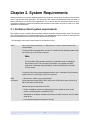
Chapter 2. System Requirements
XenServer requires at least two separate physical x86 computers: one to be the XenServer Host, and the
other to run the XenCenter application. The XenServer Host machine is dedicated entirely to the task of
hosting VMs and is not used for other applications. The computer that runs XenCenter can be any general-purpose Windows computer that satisfies the hardware requirements, and can be used to run other
applications simultaneously.
2.1. XenServer Host system requirements
The XenServer Host is a 64-bit x86 server-class machine devoted to hosting multiple VMs. This machine
runs a stripped-down Linux operating system with a Xen-enabled kernel which controls the interaction between the virtualized devices seen by VMs and the physical hardware.
The following are the system requirements for the XenServer Host:
CPUs
One or more 64-bit x86 CPU(s), 1.5 GHz minimum, 2 GHz or faster multicore CPU
recommended
To support VMs running Windows, an Intel VT or AMD-V 64-bit x86-based system with
one or more (up to 32) CPUs is required.
Note
To run Windows VMs, hardware support for virtualization must be enabled on
the XenServer Host. This is an option in the BIOS. It is possible your BIOS
might have virtualization support disabled. Consult your BIOS documentation
for more details.
To support VMs running supported paravirtualized Linux, a standard 64-bit x86-based
system with one or more (up to 32) CPUs is required.
RAM
1 GB minimum, 2 GB or more recommended
Disk space
Locally attached storage (PATA, SATA, SCSI) with 16 GB of disk space minimum, 60
GB of disk space recommended
General disk space requirements for VMs:
• Product installation creates two 4GB partitions for the XenServer Host control
domain; remaining space is available for VMs
• VMs based on the Debian templates are allocated a 4GB root device, and a 512MB
swap device
• Linux VMs are allocated a root device of 8 GB
6
System Requirements
• Windows Vista VMs are allocated a root device of 16 GB, and other Windows VMs
default to 8 GB.
Network
100 Mbit/s or faster network interface card (NIC). A gigabit NIC is recommended for
faster P2V and export/import data transfers and for live relocation of VMs.
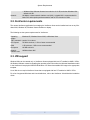
2.2. XenCenter requirements
The remote XenCenter application for managing the XenServer Host can be installed and run on any Windows 2003, Windows XP, Windows Vista workstation or laptop.
The following are the system requirements for XenCenter:
Operating
system
Windows XP, Windows Server 2003, or Windows Vista
.NET framework version 2.0 or above
CPU Speed
750 MHz minimum, 1 GHz or faster recommended
RAM
1 GB minimum, 2 GB or more recommended
Disk space
100 MB minimum
Network
interface card
100Mb or faster NIC
2.3. VM support
Windows VMs can be created only on XenServer Hosts equipped with Intel VT-enabled or AMD-V CPUs.
All Windows VMs are created via installing the operating system from either the Microsoft installation media
in the XenServer Host physical CD/DVD-ROM drive or a network-accessible ISO image to the appropriate
template.
Linux VMs do not require XenServer Hosts that are equipped with Intel VT-enabled or AMD-V CPUs.
For a list of supported Windows and Linux distributions, refer to the XenServer Virtual Machine Installation
Guide.
7
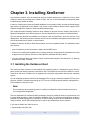
Chapter 3. Installing XenServer
Any XenServer network, from the simplest to the most complex deployment, is made up of one or more
XenServer Hosts, each running some number of VMs, and one or more workstations running XenCenter
to administer the XenServer Hosts.
In order to create resource pools and enable XenMotion (live migration of VMs), a means of shared storage
also needs to be deployed on the network. This version of the XenServer product family supports Fibre
Channel, NetApp filers, LVM over iSCSI, and NFS shared storage.
This chapter describes installing XenServer Host software on physical servers, installing XenCenter on
Windows workstations, and connecting them to form the infrastructure for a network of Virtual Machines.
The first sections describe the installation of XenServer Host and XenCenter, which are common to all
deployments. The following sections describe several common installation and deployment scenarios and
provide information that is specific to each scenario.
Installers for both the XenServer Host and XenCenter are on the installation media. The installation media
also includes:
• a set of XenServer product documents in Adobe Acrobat PDF format
• a P2V tool for creating VM templates from an existing instances of supported Linux distributions running
on physical servers. See the XenServer Virtual Machine Installation Guide for details.
• a tool for restoring a backed-up XenServer Host control domain filesystem. See Section B.7.2, “Backing
up XenServer Hosts” for details.
3.1. Installing the XenServer Host
The XenServer Host consists of a Xen-enabled Linux operating system, a management agent, VM templates, and a local storage repository reserved for VMs. The XenServer Host must be installed on a dedicated 64-bit x86 server. XenServer is not supported in a dual-boot configuration with any other operating
system.
You can install the XenServer Host from the installation CDs or set up a network-accessible TFTP server to
boot from via PXE. For details about setting up a TFTP server for PXE-booting the installer, see Appendix C,
PXE installation of XenServer Host.
Note
Do not install any other operating system in a dual-boot configuration with the XenServer Host; this
is an unsupported configuration.
The main installation CD contains the basic packages to set up the XenServer Host on a physical host, and
to create Windows VMs by using the Windows installation CDs. The XenServer package also contains a
separate CD containing support for creating Linux VMs (including complete built-in distributions of Debian
Sarge and Etch), and six CDs containing source code for the included open-source software.
If you want to install Linux VMs, be sure to
1. download the Linux Pack ISO
8
Installing XenServer
2. burn it to a physical CD if installing from a DVD/CD drive, or set it up for PXE installation as described
in Appendix C, PXE installation of XenServer Host
3. insert the CD when prompted for the Linux Pack during XenServer Host installation
Note
If you decide later to add Linux support, mount the Linux Pack installation CD or ISO image on
the XenServer Host and run the script install.sh, located in the root of the CD.
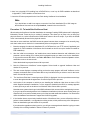
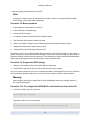
Procedure 3.1. To install the XenServer Host
When booting the XenServer Host after installation, the message "Loading GRUB, please wait" is displayed,
followed by several "Press any key to continue" messages. This allows you to press a key on either the
physical console or a serial console and let GRUB know where to direct its output. If you wait, the GRUB
menu is automatically directed to the physical console.
Note that on some machines, the BIOS causes the pause between these messages to be unusually long,
such that it takes over a minute for it to automatically direct to the physical console.
1.
Boot the computer from the main installation CD, or PXE-boot from your TFTP server if applicable (see
Appendix C, PXE installation of XenServer Host for details on how to set up the XenServer media for
PXE installation).
2.
After the initial boot messages, the installer does some hardware detection and initialization, then
presents a screen asking you to select which keyboard keymap you want to use for the installation.
In this and the screens that follow, use Tab or Alt+Tab to move between elements, Space to select,
and F12 to move to the next screen.
Select the desired keymap and choose OK to proceed.
3.
Next, the "Welcome to XenServer" screen appears. Select Install or upgrade XenServer Host and
choose OK to proceed.
4.
The next screen displays a message telling you that the setup program will install XenServer on the
computer, and warns that it will overwrite data on any hard drives that you select to use for the installation. Choose OK to proceed.
5.
The XenServer End User License Agreement (EULA) is displayed. Use the up and down arrow keys
to scroll through and read the agreement. Choose Accept EULA to proceed.
6.
At this point, if the computer on which you are installing the XenServer Host does not have a CPU
which supports hardware virtualization, or if the support is disabled in the BIOS, a message appears
to warn you that you will not be able to run Windows VMs. Choose OK to proceed.
Note that some systems have bugs in their BIOS software which can result in the setting being incorrect.
If you get a spurious warning about a lack of hardware virtualization (or do not see a warning when you
expected one), then perform a hard power cycle of the host and restart the installation. You should also
check the hardware manufacturer's support site for BIOS upgrades.
7.
If the installer detects a previously-installed version of XenServer Host, you are offered the choice to
perform a clean installation, or to upgrade the existing version, which preserves any of the VMs present.
Select an installation type and choose OK to proceed.
If you selected to upgrade an existing version, you will get a message that the installer is going to create
a backup of the existing installation. Select Continue to proceed.
9
Installing XenServer
8.
If you have multiple local hard disks, you are asked to choose the Primary Disk for the installation. Select
the desired disk and choose OK to proceed. After selecting the primary one, you are also prompted
to choose if you want any of the other drives to be formatted for use by XenServer for VM storage.
Select and choose OK to proceed.
If the computer has a single hard disk, these two screens do not appear.
9.
The next screen asks you to specify the source of the installation packages. If you are installing off the
CD, you will most likely want to select Local media. If you are installing via PXE you will most likely
want to select HTTP or FTP or NFS, as appropriate.
If you select HTTP or FTP or NFS, you are next prompted to set up Networking so that the installation
script can connect to the product repository.
If the computer has multiple network interfaces, you are prompted to select one of them to be used to
access the XenServer product repository. Select and choose OK to proceed.
If the computer has a single network interface, that interface is used to access the XenServer product
repository and no prompt is displayed.
You can select Automatic configuration (DHCP) to configure the NIC using DHCP, or Static configuration, which prompts you to configure the NIC's properties manually. Following that, you are prompted
to provide the URL or NFS server and path where the installation media are, as appropriate.
Note
To be part of a resource pool, XenServer Hosts need to have static IP addresses.
If you select Local media, this networking setup appears later in the installation process.
The next screen asks if you want to install the Linux Pack from a second CD. If you are planning to
install VMs that will run Linux operating systems, choose Yes. If you are planning to install only Windows
VMs, you can choose No.
Important
In a pooled setup, the Linux Pack must be installed either on all of the pool XenServer Hosts,
or on none of them, so that they are matched.
10. The next screen asks if you want to verify the integrity of the installation media. If you select Verify
installation source, the MD5 checksum of the packages is calculated and checked against the known
value. This may take some time. If you select Skip verification, this check is bypassed. Make your
selection and choose OK to proceed.
11. You are next prompted to set a root password. (This will be the password that the XenCenter application
will use to connect to the XenServer Host.) Type the desired password and type it again to verify it.
12. You are prompted to select the general geographical area for the Time Zone. Choose from the displayed
list of geographical areas, then choose OK to proceed.
13. You are prompted to select the specific locale for the Time Zone. (Note that this list is long, but if you
type the first letter of the desired locale, the selection will jump to the first entry that begins with this
letter.) Choose from the displayed list of locales, then choose OK to proceed.
14. You are prompted to choose a method of setting the System Time. You can select Using NTP or Manual
time entry. Make your selection and choose OK to proceed.
10
Installing XenServer
15. If you selected Using NTP in the preceding step, you are prompted to identify the time server or servers
you want to use. You can check NTP is configured by my DHCP server and the time server will be set
by DHCP. Otherwise, enter at least one NTP server name or IP address in the fields below. Choose
OK to proceed.
Otherwise, the installation script moves to the next step; you will be prompted for the manually-entered
time later, near the end of the installation.
Warning
Currently XenServer assumes that the time setting for the server’s BIOS is the current time
in UTC, and that the time for the VMs reflects the local time based on the time zone offset
specified.
16. You are next prompted to set up Networking for the management NIC, which is the interface that will
be used to connect to the XenCenter.
If the computer has multiple network interfaces, you are prompted to select one of them to be used as
the management NIC for the XenServer Host software. Select one and choose OK to proceed.
If the computer has a single network interface, that interface is used as the management NIC and no
prompt is displayed.
Next you can select Automatic configuration (DHCP) to configure the NIC using DHCP, or Static configuration, which prompts you to configure the NIC's properties manually.
Note
To be part of a resource pool, XenServer Hosts need to have static IP addresses.
17. You are next prompted to specify the hostname and the configuration for the name service.
In the Hostname Configuration section, if you select Automatically set via DHCP, the DHCP server
will provide the hostname along with the IP address. If you select Manually specify, enter the desired
hostname for the server in the field below.
In the DNS Configuration section, if you select Manually specify, enter the IP addresses of your primary
(required), secondary (optional), and tertiary (optional) Nameservers in the fields below. Otherwise,
select Automatically set up via DHCP to get name service configuration via DHCP.
Select OK to proceed.
18. A message is displayed that the installation is ready to proceed and that this will format the primary
disk and any other disks selected for VM storage, destroying any data that is currently on them. Select
Install XenServer Host to proceed.
A progress bar is displayed as the installation commences. If you chose to set the system date and
time manually, a dialog box appears when the progress bar has reached about 90%. Enter the correct
numbers in the fields and select OK to proceed.
19. If you are installing from CD and selected to include support for Linux VMs, you will be prompted to
put in the Linux Pack disk. Eject the main disk, put in the Linux Pack disk, and close the CD drawer.
Select OK. A screen appears, identifying that this disk contains the Linux Pack. Select Use media to
proceed with installing it. Another progress bar is displayed, and when it reaches 100%, a completion
message is displayed.
11
Installing XenServer
If you selected not to install support for Linux VMs, a completion message is displayed.
Note
If you decide later to add Linux support, mount the Linux Pack installation CD or ISO image on
the XenServer Host and run the script install.sh, located in the root of the CD.
20. Select Reboot. Upon reaching the login prompt, the system should now be ready to be managed via
XenCenter. To connect to it, you will need the IP address or hostname of the XenServer Host. This is
displayed at the login prompt.
3.2. Installing XenCenter
XenCenter is a Windows client application. XenCenter must be installed on a remote machine that can
connect to the XenServer Host through the network; it cannot run on the same machine as the XenServer
Host. It can be installed and run on Windows 2003, XP SP2, or Vista. The .NET framework version 2.0 or
above must be installed as well.
Procedure 3.2. To install XenCenter
1.
Before installing XenCenter, be sure to uninstall the previous version if one exists.
2.
Put the Base Pack CD in the drive.
3.
If Auto-play is enabled for the CD drive, the application installer launches automatically after a few
moments.
If Auto-play is not enabled for the CD drive, browse to the /client_install directory on the CD
and find the file named XenCenter.msi. Then double-click on the file’s icon to launch the application
installer.
4.
Follow the instructions displayed in the installer window. When prompted for installation directory, either
click Browse to change the default installation location, or click Next to accept the default path C:
\Program Files\Citrix\XenCenter.
When complete, there will be a Citrix XenCenter group on the All Programs list.
Note
By default, XenCenter allows saving of usernames and passwords. To disable this, use the registry
Editor, navigate to the key HKEY_CURRENT_USER\Software\Citrix\XenCenter and add a
key named AllowCredentialSave with the string value false. This will cause XenCenter to no
longer save usernames or passwords, and disables the Save and Restore Connection State dialog
box in XenCenter (Tools -> Save and Restore).
Should you need to, XenCenter can be uninstalled from a system quite easily.
Procedure 3.3. To uninstall XenCenter
1.
Select Control Panel from the Start menu.
2.
In Windows XP or 2003, select Add or Remove Programs. In Windows Vista, select Programs, then
select Programs and Features.
12
Installing XenServer
3.
A list of programs installed on the computer is displayed. Scroll down if necessary and select XenCenter.
4.
In Windows XP or 2003, click the Remove button. In Windows Vista, select Uninstall from the toolbar
above the list of programs.
This will remove the Citrix application. At the end, a message is displayed. Click OK to close the message box.
3.3. Installation and deployment scenarios
This section describes several common installation and deployment scenarios:
• one or more XenServer Hosts with local storage
• two or more XenServer Hosts with shared NFS storage
• two or more XenServer Hosts with shared iSCSI storage
and details the steps that differ between scenarios.
3.3.1. XenServer Hosts with local storage
The simplest use of XenServer is to set up a simple network of VMs running on one or more XenServer
Hosts without shared storage. This, of course, means that live relocation of VMs from one XenServer Host
to another is not possible, as this requires shared storage.
Requirements
• one or more 64-bit x86 servers with local storage
• one or more Windows workstations, on same network as the XenServer Hosts
Procedure 3.4. Basic procedure
1.
Install XenServer Host software on server(s)
2.
Install XenCenter on workstation(s)
3.
Run XenCenter and connect to XenServer Hosts
3.3.2. XenServer Hosts with shared NFS storage
Adding shared storage to the XenServer network enables grouping of XenServer Hosts into resource pools,
enabling live relocation of VMs and sharing of server resources.
Requirements
• two or more 64-bit x86 servers with local storage
• one or more Windows workstations, on same network as the XenServer Hosts
• a server exporting a shared directory via NFS
13
Installing XenServer
Note
To be part of a resource pool, the XenServer Hosts and the server or servers providing the shared
NFS storage need to have static IP addresses.
Procedure 3.5. Basic procedure
1.
Install XenServer Host software on server(s)
2.
Install XenCenter on workstation(s)
3.
Set up the NFS server
4.
Run XenCenter and connect to XenServer Hosts
5.
Choose one XenServer Host as a pool master and join other XenServer Hosts to its pool.
6.
Create an SR on the NFS share at the pool level
For this procedure, a server running a typical Linux distribution is assumed as the NFS server. Consult your
Linux distribution documentation for further information.
Procedure 3.6. Set up NFS share on NFS server
1.
Check to see if the portmap daemon is installed and running:
# chkconfig --list portmap
portmap
0:off
1:off
2:off
3:on
4:on
5:on
6:off
Note that in the preceding example, runlevels 3, 4, and 5 say "on". That means that at boot, for runlevels
3, 4 and 5, the portmap daemon is started automatically. If either 3, 4 or 5 say "off," turn them on with
the following command:
chkconfig portmap on
2.
Check to see if the NFS daemon is installed and running:
# chkconfig --list nfs
nfs
0:off
1:off
2:on
3:on
4:on
If either 3, 4 or 5 say "off," turn them on with the following command:
chkconfig nfs on
3.
Make a directory for the shared storage to live in:
mkdir /<vm_share_dir>
14
5:on
6:off
Installing XenServer
4.
Edit the file /etc/exports and add the line
/<vm_share_dir>
*(rw,no_root_squash,sync)
Save and close the file.
5.
Restart the portmap and nfs daemons as follows:
service portmap restart
service nfs restart
The <vm_share_dir> should now be exported on the network and you should be able to use XenCenter to point to it using the Storage wizard. See the XenCenter online help for details.
Procedure 3.7. Create an SR on the NFS share at the pool level
1.
Open a host text console on any XenServer Host in the pool.
2.
Create the storage repository on server:/path
xe sr-create content-type=user type=nfs name-label=<SR name> \
shared=true device-config-server=<server> \
device-config-serverpath=<path>
The device-config-server refers to the hostname of the NFS server and device-config-serverpath refers to the path on the server. Since shared is set to true, the shared storage will
be automatically connected to every host in the pool and any hosts that subsequently join will also be
connected to the storage. The UUID of the created storage repository will be printed on the screen.
3.
Find the UUID of the pool
xe pool-list
4.
Set the shared storage as the pool-wide default
xe pool-param-set uuid=<UUID of the pool> \
default-SR=<UUID of the storage repository>
Since the shared storage has been set as the pool-wide default, all future VMs will have their disks
created on shared storage by default.
3.3.3. XenServer Hosts with shared iSCSI storage
Adding shared storage to the XenServer network enables grouping of XenServer Hosts into resource pools,
enabling live relocation of VMs and sharing of server resources.
Requirements
• two or more 64-bit x86 servers with local storage
• one or more Windows workstations, on same network as the XenServer Hosts
15
Installing XenServer
• a server providing a shared directory via iSCSI
Note
To be part of a resource pool, the XenServer Hosts and the server or servers providing the shared
iSCSI storage need to have static IP addresses.
Procedure 3.8. Basic procedure
1.
Install XenServer Host software on server(s)
2.
Install XenCenter on workstation(s)
3.
Prepare the iSCSI storage
4.
If necessary, enable your iSCSI device for multiple initiators
5.
Run XenCenter and connect to XenServer Hosts
6.
Choose one XenServer Host as a pool master and join other XenServer Hosts to its pool
7.
Configure the iSCSI IQN for each XenServer Host
8.
Create an SR on the iSCSI share at the pool level
The details of how to set up iSCSI storage differ between the various iSCSI solutions on the market. In
general, though, you need to provide an iSCSI target on the SAN for the VM storage, and then configure
XenServer Hosts to be able to see and connect to it. This is done by providing a valid iSCSI Qualified Name
(IQN) to the iSCSI target and to the iSCSCI initiator on each XenServer Host.
Procedure 3.9. Prepare the iSCSI storage
1.
Assign a virtual storage volume on the iSCSI SAN for VM storage
2.
Create IQNs on the SAN for each XenServer Host that will use the storage
You can use either XenCenter or the CLI to configure the IQN for each XenServer Host and to create the
SR. The following describes using the CLI; see the XenServer Help for details on using XenCenter.
Warning
When using the XenCenter to create SRs for iSCSI and NetApp storage, any existing contents of
the volume will destroyed.
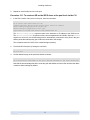
Procedure 3.10. To configure the iSCSI IQN for each XenServer Host via the CLI
1.
In the Text Console, issue the command:
xe-set-iscsi-iqn <iSCSI-IQN>
Alternatively, the CLI can be used directly:
xe host-param-set uuid=<host-UUID> other-config-iscsi_iqn=<iSCSI-IQN>
16
Installing XenServer
2.
Repeat for each XenServer Host in the pool.
Procedure 3.11. To create an SR on the iSCSI share at the pool level via the CLI
1.
In the Text Console of any server in the pool, issue the command:
xe sr-create name-label=<name for SR>
content-type=user device-config-target=<iSCSI server IP address>
device-config-targetIQN=<iSCSI target IQN>
device-config-localIQN=<iSCSI local IQN>
type=lvmoiscsi shared=true device-config-LUNid=<LUN ID>
The device-config-target argument refers to the hostname or IP address of the iSCSI server.
The device-config-LUNid argument can be a comma-separated list of LUN IDs. Since the shared
argument is set to true, the shared storage will be automatically connected to every host in the pool
and any hosts that subsequently join will also be connected to the storage.
The command returns the UUID of the created storage repository.
2.
Find the UUID of the pool by issuing the command
xe pool-list
3.
Set the shared storage as the pool-wide default as follows:
xe pool-param-set uuid=<UUID of the pool> default-SR=<UUID of the iSCSI shared SR>
Now that the shared storage has been set as the pool-wide default, all future VMs will have their disks
created on shared storage by default.
17
Appendix A. Troubleshooting
If you experience odd behavior, crashes, or have other issues during installation, this chapter
is meant to help you solve the problem if possible and, failing that, describes where logs are
located and other information that can help your Citrix Solution Provider and Citrix track and
resolve the issue.
Note
We recommend that you follow the troubleshooting information in this chapter solely
under the guidance of your Citrix Solution Provider or Citrix Support.
Citrix provides two forms of support: you can receive free self-help support via the Support site, or
you may purchase our Support Services and directly submit requests by filing an online Support
Case. Our free web-based resources include product documentation, a Knowledge Base, and
discussion forums.
The XenServer Host installation CD runs Linux, so most standard Linux commands can be used
to diagnose installation problems. There are three virtual terminals available during installation,
which display the installation menu, an interactive console and an event log, respectively. Use
the ALT + F1-F3 keys to toggle between the virtual terminals.
You can check some basic things in the interactive terminal:
• fdisk lists all disks that can be seen as a result of the loaded storage device drivers. If a
particular device driver did not load, for example,the driver for a RAID card, then the disks
attached to that card will not appear in the output from the fdisk command.
• ifconfig shows the network configuration of physical NICs, including their IP addresses, netmasks, and gateway.
• ping can be used to verify network connectivity from the XenServer Host to a remote IP address and vice-versa.
You should use the two additional virtual terminals solely under the guidance of your Citrix Solution Provider.
Installation logs are written to /install/tmp/
18
Appendix B. Maintenance Procedures
This chapter documents some miscellaneous procedures for maintaining XenServer Hosts.
B.1. Preparing XenServer Hosts for maintenance operations
Before performing maintenance operations on a XenServer Host that is part of a resource pool,
you should disable it (which prevents any VMs from being started on it), then migrate its VMs
to another XenServer Host in the pool. This can most readily be accomplished by placing the
XenServer Host into Maintenance Mode using XenCenter. See the XenCenter Help for details.
Procedure B.1. To prepare a XenServer Host in a pool for maintenance
operations via the CLI
1.
Use the command
xe host-evacuate uuid=<UUUID of XenServer Host>
This will disable the XenServer Host and then migrate any running VMs to other XenServer
Hosts in the pool.
2.
Perform the desired maintenance operation.
3.
Once the maintenance operation is completed, enable the XenServer Host:
xe host-enable
then restart any halted VMs and/or resume any suspended VMs.
Before performing maintenance operations on a XenServer Host that is not part of a resource
pool, you should disable it (which prevents any VMs from being started on it), then either shutdown or suspend its VMs.
Procedure B.2. To prepare an unpooled XenServer Host for maintenance
operations via the CLI
1.
Disable the XenServer Host:
xe host-disable
2.
Shut down or suspend any running VMs using the xe vm-shutdown or xe vm-suspend
commands.
3.
Perform the desired maintenance operation.
4.
Once the maintenance operation is completed, enable the XenServer Host:
19
Maintenance Procedures
xe host-enable
then restart any halted VMs and/or resume any suspended VMs.
B.2. Applying updates
Between releases of XenServer software, Citrix occasionally releases updates to the software.
These updates typically contain accumulated bug fixes and feature improvements. When an
update is released, it is made accessible on the Internet and an email announcement is sent to
all XenServer customers.
Once downloaded, updates can be applied most readily via XenCenter, but can also be applied
using the CLI. Updates are applied through the Manage Updates dialog box, under the pool
menu. See the XenCenter Help for details.
Updates may have differing after-apply guidance, such as requiring the XenAPI agent to be
restarted. Where possible, updates will be such that they can be applied without interruption, but
in some cases they may require system, or virtual machine restarts to be performed. In cases
where a system restart is required, users can avoid downtime of virtual machines in a pooled
environment by applying the update to each server in turn, migrating virtual machines away from
each server in turn as the update is applied. XenCenter can take care of this update sequence
automatically on your behalf via the Manage Updates option. If you are using the CLI, you will
have to do this manually using the host-evacuate command.
If using the CLI to perform the update, XenServer Hosts to be updated should be prepared for
this operation by the procedures in Section B.1, “Preparing XenServer Hosts for maintenance
operations”. If using XenCenter, this will be taken care of automatically where required.
B.2.1. Applying updates using the CLI
First, the update must be uploaded to the pool or server to which it will be applied. This will cause
a UUID (identifier) to be assigned to the update, and information about which servers it has been
applied to will be tracked. Once an update has been uploaded to a pool or server, you can use the
patch-list and patch-param-list commands to view information about the update. The second
stage is to apply the update. We recommend that the patch-pool-apply command be used to do
this; this will result in the update being applied on all servers in the pool. Alternatively, the patchapply command may be used to apply the update to one server in a pool - this may be useful
when applying the update and then restarting individual servers in the pool. Pools should not
be left in an inconsistent update state (one where updates have been installed on some servers
and not others).
Discussion of procedures using the CLI below assume a basic knowledge of the usage of the xe
tool. For information about this, please see the Administrator's Guide.
The update procedure is essentially the same for both a single server and pool scenario, except
that in a pooled scenario you must ensure that the update is applied to all servers in the pool.
This will be achieved either by using the patch-pool-apply command, or by executing the patchapply once for each host. These are described below.
20
Maintenance Procedures
Procedure B.3. To apply an update to a XenServer Host or XenServer Host
pool using the CLI
1.
Download the update to a local directory. Note the path to the update file you have downloaded. (It is also possible to download the update directly to an appropriate location on the
server, e.g. /root, using standard Linux commands, but it is usually best to download it
to a remote client.)
2.
Upload the update to your server or pool. An example CLI command to do this might be:
$ xe -s my_server -u root -pw root_password patch-upload \
file-name=update_file b89249c7-feba-41c5-8838-911ded969add
Here, the -s -u, and -pw options refer to the server, the username (which would usually be
root), and the password, as usual - these would be omitted if running the command directly
from the XenServer Host console.
Once you have executed the above command, you will be given the UUID of the uploaded
update. This UUID will be used to specify the update that is to be applied.
3.
Be sure to follow any guidance regarding the update before continuing, in particular any
information provided about whether VMs should be moved away from the server or that the
server should be restarted after applying the update. As always, we recommend taking appropriate backup measures before making modifications to system software. To automatically move VMs to other servers, you can make use of the host-evacuate CLI command.
4.
Apply the update to the pool. A command like the following may be used to do this:
$ xe patch-pool-apply uuid=b89249c7-feba-41c5-8838-911ded969add
This will apply the update to all servers in the pool. Alternatively, if you need to restart servers
and perform the update in a rolling manner, you can apply the update to an individual server
by running a command like the following:
$ xe patch-apply host-uuid=ebf17583-d8c5-4835-999a-e0a29716207d \
uuid=b89249c7-feba-41c5-8838-911ded969add
5.
Verify that the update was applied by using the patch-list command again. Now the hosts
field should contain the host UUID.
After an update is applied to a XenServer Host, a small file containing the same information stored
on the master from the xe patch-upload command is written to a subdirectory of the machine's
patch directory. This enables XenServer Hosts later ejected from the pool to repopulate their
databases with information about updates already applied.
To save space on the master, large updates can be deleted from disk using the xe patch-clean
command. (The update information stored in the master's database, though, is always retained.)
These updates can be uploaded again using xe patch-upload if required.
B.3. Reinstalling the same version
21
Maintenance Procedures
The following procedure describes how to reinstall the current version of the XenServer Host
over an existing installation of XenServer Host 4.1.0, and preserve settings an VMs.
When reinstalling your host, be aware that any custom RPMs which you might have installed on
the XenServer Host control domain will not be preserved.
Procedure B.4. To reinstall XenServer Host from version 4.1.0
1.
Perform an orderly shutdown on the VMs hosted on the XenServer Host. If any of your VMs
are in the in the suspended state, resume them first, and then perform an orderly shutdown
on them too.
To shut down all the VMs automatically, you can also type service xapi-domains stop into
the control domain terminal.
2.
Reboot the XenServer Host, and boot from the Installation CD.
3.
The installation script will identify the version and prompt you whether you want to reinstall
over the existing installation and preserve VMs. Select OK to proceed with the installation.
4.
Follow the rest of the installation procedure as described in Section 3.1, “Installing the
XenServer Host”.
5.
Run XenCenter and connect to the upgraded XenServer Host.
B.4. Rolling upgrade from version 4.0.1 to the current version
XenServer allows you to upgrade a pool of XenServer Hosts running the 4.0.1 version, while
keeping VMs on that pool running and thus avoiding downtime of your services. This is achieved
by upgrading on a host-by-host basis, with only one XenServer Host offline at a time.
You can use XenCenter or the command line interface to migrate VMs running on a XenServer
Host running an older version of the product to one running either the same version or higher.
It is not possible to migrate VMs located on a XenServer Host with a newer XenServer version
to one running an older version.
You should plan your upgrade path carefully, as we strongly advise against running a mixedmode pool (one with multiple versions of XenServer co-existing) for longer than necessary. This
is because the pool will be operating in a degraded state during the upgrade: all VMs will continue to function as normal, but control operations other than migration might not be available.
In particular, it is not safe to perform storage-related operations such as adding, removing or
resizing virtual disks in this mode.
B.4.1. Backup
It is strongly recommended that you take a backup of the state of your existing v4.0.1 pool using
the pool-dump-database CLI command (see the XenServer Administrator's Guide). This will
allow you revert a partially complete rolling upgrade back to its original state without losing any
VM data.
Note that since it is not possible to migrate a VM from an upgraded XenServer Host to a XenServer Host running an older version of XenServer, it may be necessary to shut down VMs if you
need to revert the rolling upgrade for any reason.
22
Maintenance Procedures
B.4.2. Performing a rolling pool upgrade
The correct sequence for upgrading a pool of XenServer installations to a newer version is as
follows:
1.
Eject any CDs from your Virtual Machines before starting the rolling upgrade. Having CDs
inserted during rolling upgrade can prevent migrations from working correctly, and due to
the mode of operation of the pool whilst the rolling upgrade is taking place, it is required that
this be done before the rolling upgrade is started.
2.
Upgrade your XenCenter to the latest version. The newer version will continue to operate
fine against older versions of XenServer hosts.
3.
Verify that there are no VMs in the Suspended state. This is indicated in XenCenter by a blue
paused icon. Importantly, any suspended virtual machine with a CD drive attached (with the
Tools ISO or a local physical drive, for example) will not be resumable after upgrade. To get
the virtual machine back into a usable state, one would have to perform a "Force Shutdown"
of the suspended VM.
4.
Migrate all VMs running on the pool master to other XenServer Hosts using XenMotion. The
pool master is identified in XenCenter as being the topmost server in the pool, and shows
Server type: Master in the General tab when selected.
5.
Shut down the pool master using XenCenter or the command line interface. This will cause
your pool to enter emergency mode. VMs will continue to run, but you will be unable to
perform control operations. This is expected behavior.
6.
Boot the pool master using your XenServer installation media or network and follow the instructions for doing a standard installation and upgrade (see Chapter 3, Installing XenServer).
7.
On restarting your pool master, after a few minutes your pool will leave emergency mode
and normal service will be restored.
8.
You are now ready to upgrade a second XenServer Host. You should select a XenServer
Host still running an old version of XenServer and migrate the VMs running on this XenServer
Host to the one you have just upgraded. Do not attempt to migrate a VM from an upgraded
XenServer Host to one that has not yet been upgraded. You will see an error message if
you attempt to do this, and your VM will continue running without being migrated.
9.
Upgrade the member XenServer Host you have just freed up following a similar procedure
as for the master; shut down the member using XenCenter or the command line interface
(your pool will not enter emergency mode this time), then upgrade the server software using
your product media or remote installation repository.
10. Repeat the previous two steps for each member XenServer Host in the pool.
11. Now that you have upgraded the XenServer Host software on your pool, it is important to
upgrade the XenServer Tools in each VM. This will enable new functionality and ensure
the stability of your VMs. Running old versions of XenServer Tools on newer XenServer
installations is not a supported configuration except for during the upgrade process. Please
refer to the XenCenter Help, or the XenServer Virtual Machine Installation Guide for details
on how to perform the upgrade of XenServer Tools for Windows and Linux VMs.
B.5. Upgrading from version 3.2 to 4.0.1
23
Maintenance Procedures
The following procedure describes how to install the current version of the XenServer Host over
an existing installation of XenServer Host 3.2.0
When upgrading from version 3.2.0 to the current version, be aware of the following:
• any custom RPMs which you might have installed on the XenServer Host control domain will
not be preserved
• existing Windows VMs will need to have the paravirtualized device drivers reinstalled
Procedure B.5. To upgrade XenServer Host from version 3.2
1.
Perform an orderly shutdown on the VMs hosted on the XenServer Host.
If any of your VMs are in the in the Suspended state, Resume them first, and then perform
an orderly shutdown on them too.
2.
Reboot the XenServer Host, and boot from the 4.0.1 Installation CD.
3.
The installation script will identify the older version and prompt you whether you want to
install over the existing 3.2 installation and preserve VMs. Select OK to proceed with the
installation.
4.
Follow the rest of the installation procedure as described in the 4.0.1 installation guide.
5.
Run XenCenter and connect to the upgraded XenServer Host.
6.
To upgrade the drivers for a Windows VM, select the "Install Tools" menu option and open
its console. Run the xensetup.exe installation program to upgrade your paravirtualized
drivers. When finished, reboot the VM.
To upgrade the kernel and guest utilities for Linux VMs, follow the instructions in the XenServer 4.0.1 Virtual Machine Installation Guide.
Repeat for all other Windows VMs.
Note that there is no direct upgrade path to the current version from 3.2. You must first upgrade
to 4.0.1, and then proceed to the next version. This will ensure that your VMs are preserved
correctly.
B.6. Upgrading VHD files from version 4.0.1
VMs ext3 and nfs storage repositories, which are stored in the Microsoft Virtual Hard Disk (VHD)
format under the 4.0.1 version of XenServer, have a free space bitmap written in with the wrong
byte order. Version 4.1 provides an upgrade utility vhd-update, located in /usr/sbin/.
The command
vhd-update -f <filename>
copies all bitmaps in filename to filename.journal, then writes all bitmaps, transformed appropriately, from filename.journal to filename, and finally deletes filename.journal.
If the update is interrupted for any reason, it can be resumed by running:
24
Maintenance Procedures
vhd-update -f <filename> -j <filename>.journal
This will validate the specified journal file, then proceed to transform the bitmaps and rewrite
filename.
There is also a rollback operation
vhd-update -f <filename> -j <filename>.journal -r
which will write the bitmaps from filename.journal to filename without transforming them (this is
probably only useful for testing and debugging).
Note
• The vhd-update utility should not be used with live (i.e., plugged) VHDs.
• The vhd-update utility does not follow parent links; to update a chain of VHDs, each
file must be updated individually.
• While a VHD file is being updated, it will be marked as such so that the system will
not attempt to make use of it - this is to prevent it from being damaged. If you attempt
to use a VHD file that is in the process of being updated, or had an update operation
interrupted, it is normal for an error message to be displayed if you try to use it. If
the upgrade process is interrupted, please refer to the recovery instructions above for
information about how to restore the file back to its original state.
B.7. Backing up and restoring XenServer Hosts and VMs
We recommend that, whenever possible, you leave the installed state of XenServer Hosts unaltered. That is, do not install any additional packages or start additional services on XenServer
Hosts, and treat them as if they are appliances. The best way to restore, then, is to re-install
XenServer Host software from the installation media. If you have multiple XenServer Hosts, the
best approach is to configure a PXE boot server and appropriate answerfiles for this purpose
(see Appendix C, PXE installation of XenServer Host).
For VMs, the best approach is to install backup agents on them, just as if they were standard
physical servers. For Windows VMs, as of this release we have tested CA BrightStor ARCserve
Backup, and Symantec NetBackup and Backup Exec.
For more information about backup tools tested, best practices, and backups in general, see the
Citrix Knowledge Base.
B.7.1. Backing up Virtual Machine metadata
XenServer Hosts use a per-host database to store metadata about VMs and associated
resources such as storage and networking. When combined with storage repositories, this
database forms the complete view of all VMs available across the pool. Thus, it is important to
understand how to backup this database in order to recover from physical hardware failure and
other disaster scenarios.
This section first describes how to backup metadata for single-host installations, and then for
more complex pool setups.
25
Maintenance Procedures
B.7.1.1. Backing up single host installations
The CLI must be used to backup the pool database. To obtain a consistent pool metadata backup
file, run xe pool-dump-database against the XenServer Host and archive the resulting file. The
backup file will contain sensitive authentication information about the pool, so ensure it is securely
stored.
To restore the pool database, use the xe pool-restore-database from a previous dump file. If
your XenServer Host has died completely, then you must first do a fresh install, and then run the
xe pool-restore-database command against the freshly installed XenServer Host.
After a restoration of the pool database, some VMs may still be registered as being “suspended”,
but if the storage repository with their suspended memory state (defined in the [suspend-VDIuuid] field) was a local SR, it will no longer be available since the host has been reinstalled. To
reset these VMs back to the halted state so that they can be started up again, use the xe vmshutdown vm=vm_name -force command, or use the xe vm-reset-powerstate vm=vm_name
-force command.
Note that XenServer Hosts restored using this method will have their UUIDs preserved. Thus,
if you restore to a different physical machine while the original XenServer Host is still running,
there will be a UUID clash. The main observable effect of this clash will be that XenCenter will
refuse to connect to the second XenServer Host. Pool database backup is not the recommended
mechanism for cloning physical hosts; you should use the automated installation support for that
(see Appendix C, PXE installation of XenServer Host).
B.7.1.2. Backing up pooled installations
In a pool scenario, the master host provides an authoritative database which is synchronously
mirrored by all the member hosts in the pool. This provides a degree of built-in redundancy to a
pool; the master can be replaced by any member since each of them have an accurate version
of the pool database. Please refer to the XenServer Administrator's Guide for more information
on how to transition a member into becoming a master host.
This level of protection may not be sufficient; for example, if your shared storage containing
the VM data is backed up in multiple sites, but your local server storage (containing the pool
metadata) is not. To fully recreate a pool given just a set of shared storage, you must first backup
the xe pool-dump-database against the master host, and archive this file.
Procedure B.6. To subsequently restore this backup on a brand new set
of hosts
1.
Install a fresh set of XenServer hosts from the installation media, or via PXE.
2.
Use the xe pool-restore-database on the host designated to be the new master.
3.
Run the xe host-forget command on the new master to remove the old member machines.
4.
Use the xe pool-join command on the member hosts to connect them to the new cluster.
Please refer to the "Coping with machine failures" section of the XenServer Administrator's Guide
for specific restoration scenarios.
B.7.2. Backing up XenServer Hosts
26
Maintenance Procedures
This section describes the XenServer Host control domain backup and restore procedures.
These procedures do not back up the storage repositories that house the VMs, but only the privileged control domain that runs Xen and the XenServer agent.
Note that since the the privileged control domain is best left as installed, without customizing it
with other packages, we recommend you set up a PXE boot environment to cleanly perform a
fresh installation from the XenServer media as a recovery strategy. In many cases you will not
need to backup the control domain at all, but just save the pool metadata (see Section B.7.1,
“Backing up Virtual Machine metadata”). This backup method should always be considered complementary to backing up the pool metadata.
Another approach is to run the XenServer installation twice, selecting to back up the existing
installation when prompted. This will create a pristine copy of the freshly-installed control domain
that can later be restored if necessary by using the installation CD and choosing the Restore
option.
Using the xe commands host-backup and host-restore is another approach that you can take.
The xe host-backup command archives the active partition to a file you specify, and the xe
host-restore command extracts an archive created by xe host-backup over the host's currently
inactive disk partition. This partition can then be made active by booting off the installation CD
and choosing the Restore option.
After completing the above steps and rebooting the host, you must ensure that the VM meta-data
is restored to a consistent state. This can be achived by running xe pool-restore-database on
/var/backup/pool-database-${DATE}. This file is created by xe host-backup using xe
pool-dump-database prior to archiving the running filesystem, in order to snapshot a consistent
state of the VM metadata.
Procedure B.7. To back up a XenServer Host
•
On a remote host with enough disk space, run the command:
xe host-backup file-name=<filename> -h <hostname> -u root -pw <password>
This creates a compressed image of the control domain file system in the location specified
by the file-name argument.
Procedure B.8. To restore a running XenServer Host
1.
If you want to restore a XenServer Host from a specific backup, run the following command
while the XenServer Host is up and reachable:
xe host-restore file-name=<filename> -h <hostname> -u root -pw <password>
This restores the compressed image back to the hard disk of the XenServer Host on which
the command is run (not the host on which filename resides). In this context “restore” is
something of a misnomer, as the word usually suggests that the backed-up state has been
put fully in place. The restore command here only unpacks the compressed backup file and
27
Maintenance Procedures
restores it to its normal form, but it is written to another partition (/dev/sda2) and does not
overwrite the current version of the filesystem.
2.
To actually use the restored version of the root filesystem, you need to reboot the XenServer
Host using the XenServer installation CD and select the Restore from backup option.
After the restore from backup is completed, reboot the XenServer Host and it will start up
from the restored image.
Finally, restore the VM meta-data using
xe pool-database-restore file-name=/var/backup/pool-database-*
Note
Restoring from a backup as described here does not destroy the backup partition.
Procedure B.9. To restart a crashed XenServer Host
1.
If your XenServer Host is crashed and not reachable anymore, you need to use the XenServer installation CD to do an upgrade install (see Section B.5, “Upgrading from version 3.2 to
4.0.1”). When that is completed, reboot the machine and make sure your host is reachable
with XenCenter or remote CLI.
2.
Then proceed with the procedure on restoring a running XenServer Host above.
B.7.3. Backing up VMs
VMs are best backed up using standard backup tools running on them individually. For Windows
VMs, we have tested CA BrightStor ARCserve Backup.
28
Appendix C. PXE installation of
XenServer Host
This appendix describes setting up a TFTP server to enable PXE booting of XenServer Host
installations. It also describes the use of an XML answerfile, which allows you to perform unattended installations.
C.1. Setting up the PXE boot environment
To create a PXE environment, you need:
• a TFTP server to enable PXE booting
• a DHCP server to provide IP addresses to the systems that are going to PXE-boot
• an NFS, FTP, or HTTP server to house the installation files
These can all co-exist on the same server, or be distributed on different servers on the network.
Additionally, each system that you want to PXE boot and install the XenServer on needs a PXE
boot-enabled Ethernet card.
The following steps assume that the Linux server or servers you will use have RPM support.
Procedure C.1. To set up a TFTP server for PXE booting
1.
TFTP requires SYSLINUX 3.11 or above. SYSLINUX is a collection of boot loaders for the
Linux operating system which operates on Linux EXT2/EXT3 file systems, MS-DOS FAT
file systems, network servers using PXE firmware, and CD-ROMs. Make sure you have
SYSLINUX version 3.11 or above installed on your system with the command
#rpm -q syslinux
If you have a earlier version, you can download an appropriate later version from ftp://
ftp.kernel.org/pub/linux/utils/boot/syslinux/RPMS/i386/, then install it
using the command
#rpm -Uvh syslinux.-.rpm
2.
Check if the tftp server package is installed:
#rpm -q tftp-server
If not, use system-config-packages and install.
3.
Edit the file /etc/xinetd.d/tftp to change the line
disable = yes
29
PXE installation of XenServer Host
to
disable = no
4.
Restart the xinetd service, which manages tftp:
# service xinetd restart
5.
Make a directory inside /tftpboot called xenserver.
6.
Copy the files mboot.c32 and pxelinux.0 from /usr/lib/syslinux to the /tftboot
directory.
7.
Copy the files install.img, vmlinuz, and xen.gz from the Base Pack CD (found in the
root of the Base Pack CD, and in its /boot directory respectively), and place them in
/tftpboot/xenserver.
8.
Make a directory called pxelinux.cfg inside /tftboot and create a file named default. The file contents depend on how you want to configure your PXE boot environment.
For example, you might have a configuration file like the following:
Note
The backslashes at the ends of lines in the example PXE configuration files shown
below denote continuation of lines; do not actually include them in your PXE configuration file.
Also note that the three hyphens in the examples are necessary parts of the
mboot.c32 loader syntax, and not including them will cause PXE boot attempts to
fail.
default xenserver
label xenserver
kernel mboot.c32
append path/to/boot/directory/xen.gz watchdog com1=115200,8n1i \
console=com1,tty --- path/to/boot/directory/vmlinuz \
console=tty0 console=ttyS0,115200n8 \
--- path/to/boot/directory/install.img
(where path/to/boot/directory is the directory where you copied install.img, vmlinuz, and xen.gz files in the previous step). This will start an installation on any machine
that boots from this server. Someone would then need to manually respond to the prompts to
complete the installation. Alternatively, you might have a configuration file like the following:
default xenserver-auto
label xenserver-auto
kernel mboot.c32
append path/to/boot/directory/xen.gz watchdog com1=115200,8n1 \
console=com1,tty --- path/to/boot/directory/vmlinuz \
console=tty0 console=ttyS0,115200n8 \
answerfile=http://pxehost.example.com/4.1.0-answerfile \
install --- path/to/boot/directory/install.img
30
PXE installation of XenServer Host
This will perform an unattended installation using the answerfile at the URL specified.
Note
Also, if you want to use the serial console to do an installation, be sure to include
the argument output=ttyS0 on the kernel command-line (e.g. after "vmlinuz") in
addition to any other appropriate console= values.
For details on creating an answerfile for unattended installation, see Section C.2, “Creating
an answerfile for unattended PXE installation”. For more information on PXE configuration
file syntax, see the SYSLINUX website.
Please refer to your server operating system manual for details for your specific operating system.
The information here is a guide that can be used for Red Hat, Fedora, and some other RPMbased distributions.
Procedure C.2. To set up a DHCP server
1.
On the server that you will be using for DHCP, check if you have DHCP installed by issuing
the command
# rpm -qa dhcp
If not, install using system-config-packages.
2.
Configure the dhcp server. Refer to article 4221 in the Red Hat Knowledge base for details.
3.
Add these lines to the end of the existing dhcpd.conf file where is your tftp server address:
allow booting;
allow bootp;
class "pxeclients" {
match if substring(option vendor-class-identifier, 0, 9) = "PXEClient";
next-server ;
filename "pxelinux.0";
}
4.
Restart the dhcpd service:
# service dhcpd restart
Procedure C.3. To set up the installation media host
1.
On the server where you are going to house the installation files, copy the contents of the
packages directories from the Base Pack CD to a location where they are exported by HTTP,
FTP, or NFS. For example, you might make a directory in the document root of a webserver
31
PXE installation of XenServer Host
named XenServer_4.1.0 and then copy the directory packages.main from the Base
Pack disk to XenServer_4.1.0/packages.main.
2.
If Linux support is also desired, copy packages.linux from the Linux Pack disk to
XenServer_4.1.0/packages.linux. This structure allows you to install either both
packages by having the answerfile's source element contain the enclosing directory
XenServer_4.1.0, or you can install just the base pack (no support for Linux VMs) by
putting in the path to XenServer_4.1.0/packages.main.
For example, to install both packages from the webserver http://pxehost.example.com where
the packages are in the directories mentioned above relative to the server's document root, the
answerfile would contain this source element:
<source type="url">http://pxehost.example.com/XenServer_4.1.0</source>
or, to install just the basic pack and skip Linux support:
<source type="url">
http://pxehost.example.com/XenServer_4.1.0/packages.main
</source>
Procedure C.4. To prepare the destination system
1.
Start the system and enter the Boot Menu (F12 in most BIOSes) and select to boot from
your Ethernet card.
2.
The system should then PXE boot from the installation source you set up, and the installation script will commence. if you have set up an answerfile, the installation can proceed
unattended.
C.2. Creating an answerfile for unattended PXE installation
In order to perform installations in an unattended fashion, you need to create an XML answerfile.
Here is an example answerfile:
<?xml version="1.0"?>
<installation>
<primary-disk>sda</primary-disk>
<guest-disk>sdb</guest-disk>
<guest-disk>sdc</guest-disk>
<keymap>us</keymap>
<root-password>mypassword</root-password>
<source type="url">http://pxehost.example.com</source>
<post-install-script type="url">
http://pxehost.example.com/myscripts/post-install-script
</post-install-script>
<admin-interface name="eth0" proto="dhcp" />
<timezone>Europe/London</timezone>
</installation>
32
PXE installation of XenServer Host
All nodes should be within a root node named installation.
The following is a summary of the elements. All values should be PCDATA within the nodes,
unless otherwise stated. Required elements are indicated.
Element
Description
Required?
<primary-disk>
The name of the storage device where the Dom0
should be installed, equivalent to the choice made
on the Select Primary Disk step of the interactive
installation process.
Y
Attributes:
You can specify a gueststorage attribute with
possible values yes and no. For example:
<primary-disk gueststorage="no">sda</primary-disk>
If this attribute is not specified, the default is yes.
If you specify no, it is possible to automate an
installation scenario where no storage repository
is created, if, in addition, no guest-disk keys are
specified.
<guest-disk>
The name of a storage device to be used for storing
guests. You should use one of these elements for
each extra disk.
N
<keymap>
The name of the keymap to use during installation.
Y
<keymap>us</keymap>
<root-password>
The desired root password for the XenServer Host.
Y
<source>
Where the packages should be installed from.
Y
Attributes:
type: url, nfs, or local
If local, leave the PCDATA empty. For example,
<source type="url">
http://server/packages
</source>
<source type="local" />
<source type="nfs">
server:packages
</source>
<post-install-script>
Where the post-install-script is.
33
Y
PXE installation of XenServer Host
Element
Description
Required?
Attributes:
type: url, nfs, or local
If url or nfs, put the url or NFS path in the PCDATA; if
local, leave the PCDATA empty. For example,
<source type="url">
http://server/scripts
</source>
<source type="local" />
<source type="nfs">
server:scripts
</source>
<admin-interface>
The single network interface to be used as the host
administration interface.
N
Attributes:
proto: dhcp or static
name: eth0 for example.
Children:
• <ip>: The IP address, if proto="static"
• <subnet-mask>: The subnet mask, if proto="static"
• <gateway>: The gateway, if proto="static"
All three child elements are required if proto="static"
<timezone>
In the format used by the TZ variable, e.g. Europe/
London, or America/Los_Angeles.
Y
<nameserver>
The name of a nameserver. You should use one of
these elements for each nameserver you wish to
nominate.
N
<hostname>
Specify if you want to manually set a hostname.
N
<bootloader>
Specify which bootloader to install for startup time.
Only change this if you have problems booting.
Currently either grub (the default) or extlinux.
N
You can also perform automated upgrades by varying the answerfile appropriately. You would set
the mode attribute of the installation element to reinstall, specify the disk on which the existing
34
PXE installation of XenServer Host
installation lives with the existing-installation element, and leave the primary-disk and guest-disk
elements unspecified. For example:
<?xml version="1.0"?>
<installation mode="reinstall">
<existing-installation>sda</existing-installation>
<keymap>us</keymap>
<root-password>mypassword</root-password>
<source type="url">http://pxehost.example.com</source>
<post-install-script type="url">
http://pxehost.example.com/myscripts/post-install-script
</post-install-script>
<admin-interface name="eth0" proto="dhcp" />
<timezone>Europe/London</timezone>
</installation>
C.3. Installation media repository format
The repository format described here should be used by installation sources and driver disks.
C.3.1. Presence of installation media repositories
Given a path, the presence of a Citrix installation media repository is determined by checking
for the existence of valid XS-REPOSITORY and XS-PACKAGES files. From a given base, that
base is checked, along with the packages, packages.main, packages.linux, and packages.site
subdirectories. Thus, a typical installation point will have the following format:
xs-installation
+-- packages.main
|
+-- XS-REPOSITORY
|
+-- XS-PACKAGES
|
+-- ...
+-- packages.linux
|
+-- XS-REPOSITORY
|
+-- XS-PACKAGES
|
+-- ...
+-- packages.site
|
+-- XS-REPOSITORY
|
+-- XS-PACKAGES
|
+-- ...
A typical driver disk will have the following layout:
xs-driver-disk
+-- XS-REPOSITORY
+-- XS-PACKAGES
In the first example, given a path to xs-installation, the XenServer installer will detect the
presence of three repositories. In the second example, xs-driver-disk, a single repository
will be detected.
35
PXE installation of XenServer Host
C.3.2. Installation media repository metadata
The XS-REPOSITORY file is used to describe a Citrix-format installation media repository. It has
four fields, separated by newlines:
• repository id
• repository name
• intended target product
• intended target version
Repository IDs should be alphanumeric strings that provide a machine identifier for the repository.
They should be unique within a target product and version. Best practice is to use the form
vendor:repository
Citrix repositories start with xs (for example, xs:main), custom repositories should be
custom:my-repo, and third-party add-ons should be identified as such by using an appropriate
vendor string. This will help avoid name clashes.
Repository names are presented to the user, so should be a string that identifies the repository
in a sensible manner so the user can confirm that they wish to install from it.
The intended target product will be XenServer; version 4.1.0-build.
C.3.3. Package metadata
The XS-PACKAGES file describes the packages in a repository, one line per package. Fields are
separated by spaces.
There are three types of packages:
• tbz2 packages are bzipped tarballs that get extracted onto the root filesystem
• driver packages are kernel modules that get loaded by the installer at runtime as well as being
installed into the filesystem
• firmware packages are made available during the installation so that they may be loaded by
udev in addition to getting installed into the target filesystem.
Firmware loading support is currently limited; this will be addressed in a future release.
The first three fields are mandatory: package name, package size, and package checksum
(md5). The fourth field is the package type, either tbz2, driver, or firmware. Which type is
used dictates the contents of the subsequent fields.
If the type is tbz2, the subsequent fields are required or optional, source filename,
and destination (usually just /).
Example:
docs 37750 2ba1783d84d10c71f07469252c555427 tbz2 required docs.tar.bz2 /
36
PXE installation of XenServer Host
If the type is driver, the subsequent fields are source filename and destination
(${KERNEL_VERSION} will be substituted with the Xen-kernel version.)
Example:
firmware_example 77001 3452c04dfcc237cde11c63d43e97a303 driver \
firmware_example.ko \
/lib/modules/${KERNEL_VERSION}/extra/firmware_example.ko
If the type is firmware, the subsequent field is destination filename (no path is necessary - it is automatically prefixed with /lib/firmware/).
Example:
firmware 12 6f5902ac237024bdd0c176cb93063dc4 firmware sample_firware.bin
Note
The backslashes at the ends of lines in the examples in this section denote continuation
of lines; do not actually include them in a XS-PACKAGES file.
C.3.4. Example files
C.3.4.1. XS-REPOSITORY
xs:main
Base Pack and extra driver
XenServer
3.2.0-1934
C.3.4.2. XS-PACKAGES
storage-manager 59831 b66672f0aa681bd2b498e3d902f17c04 tbz2 required \
storage-manager.tar.bz2 /
docs 37750 2ba1783d84d10c71f07469252c555427 tbz2 required docs.tar.bz2 /
xgts-main 1133 59dda9c318f4205167350b7ed993b5cd tbz2 required \
xgts-main.tar.bz2 /
pvdrivers-win 524477 37ea0c145f5b0d7a2740ecb69d21ed52 tbz2 required \
pvdrivers-win.tar.bz2 /
dom0fs 169875708 c1a86d705915eda16cca84cccffaca9f tbz2 required \
dom0fs.tar.bz2 /
C.3.5. Notes on best practice
If a driver disk is used, any tbz2 packages on it will also be installed to the target. However, a
copy of the repository will be taken so that the drivers can be loaded at runtime; this copy is
placed into memory. Therefore, if you are constructing a driver disk that also includes user-space
tools, and if these result in a large repository, it is better to split it up into two repositories and
require that people use the packages.site mechanism to install your add-ons. Alternatively,
provide a post-install script to install them after the fact.
37
Appendix D. Xen Memory Usage
When calculating the memory footprint of a Xen host there are two components that must be
taken into consideration. First there is the memory consumed by the Xen hypervisor itself; then
there is the memory consumed by the host's control domain. The control domain is a privileged
VM that provides low-level services to other VMs, such as providing access to physical devices.
It also runs the management tool stack.
D.1. Memory scaling algorithm
On a XenServer host, the Xen hypervisor (and its associated system tools) occupies approximately 128 MB of RAM.
Calculating the memory consumed by the control domain is more complicated, since this value
depends on the amount of physical RAM in the particular host. The memory used by the control
domain is always at least 200MB, and is never more than 752MB; within that range it is scaled
as a linear function of total host RAM. For hosts with up to 3.5GB of physical RAM, the control
domain usage remains at 200MB; on a 5GB host the control domain will use 228MB; on a 16GB
host the control domain consumes 454MB; and on hosts with 32GB or more the control domain
consumes 752MB.
D.1.1. Increasing the reserved memory size
The default memory scaling algorithm is designed to be sufficient for using normal guest operating systems with over 256MB of RAM and 2-4 virtual disks. If you have more specialized requirements (e.g. a large number of VMs with 64MB of RAM each, and 7 virtual disks each), you
may need to tweak the amount of memory reserved for the control domain. This is an advanced
operation, and you may wish to contact Citrix Support before doing this.
When you have installed your XenServer host, log into the host console and type in cat /proc/
meminfo. The value of MemTotal will tell you how much memory has been reserved for the
control domain. If your control domain is under memory pressure, the value of the SwapFree
parameter will be lower than the SwapTotal, and you may improve overall system performance
by increasing the reserved memory.
The memory reservation algorithm is based on the total amount of RAM in your XenServer host,
and is calculated by:B + (G * T) where T is the total RAM in the host (in MB), B represents the
base amount of memory, and G represents the memory gradient. The memory gradient is the
scaling parameter which increases the control domain memory as the amount of host memory
increases, and defaults to 0.0205. The base memory defaults to 126MB.
The value of the memory gradient can be increased by altering the value in
XAPI_DOM0_MEM_GRADIENT in the /etc/sysconfig/xapi configuration file, and rebooting
the system. Do not decrease the memory gradient under any circumstances. Similarly, the base
memory value can be increased by altering the value in XAPI_DOM0_MEM_BASE in the /etc/
sysconfig/xapi configuration file, and should also not be decreased.
38