1
Service and Maintenance
Constant Voltage (CV) Verifications
8
5 Repeat step 1 through step 4 for the other output.
CV source effect (line regulation)
This test measures the immediate change in output voltage
that results from a change in AC line voltage from the
minimum value (10% below the nominal input voltage) to the
maximum value (10% above the nominal input voltage).
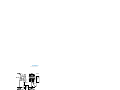
1 Turn off the power supply and connect a digital voltmeter
between the (+) and (–) terminals of the output to be
tested as shown in Figure 8- 2.
2 Connect the AC power line through a variable voltage
transformer.
3 Turn on the power supply. Select the output to be tested
and the high voltage range (20 V/1.5 A)[1], enable the
output, and set the display to the limit mode. When the
display is in the limit mode, program the current to the
maximum programmable value and the voltage to the full
rated value (20.0 V)[1].
4 Operate the electronic load in the constant current mode
and set its current to be the same as the power supply
full rated value 1.5 A[1]. Check that the CV annunciator
remains lit. If not lit, adjust the load so that the output
current drops slightly until the CV annunciator lights up.
5 Adjust the transformer to the low line voltage limit (104
Vac for nominal 115 Vac, 90 Vac for nominal 100 Vac, or
207 Vac for nominal 230 Vac). Record the output reading
on the digital voltmeter.
6 Adjust the transformer to high line voltage (127 Vac for a
115 Vac nominal input, 110 Vac for a 100 Vac nominal
input, or 253 Vac for a 230 Vac nominal input). Record
the voltage reading on the digital voltmeter immediately.
The difference between the digital voltmeter readings in
step 5 and step 6 is the CV line regulation. The difference
of the readings during the immediate change should be
within the limit of 5 mV[2] or 9 mV[3].
[1] For the E3646A model. For other models, refer to Table 8-5.
E364xA User’s and Service Guide
199