1
General Safety Rules
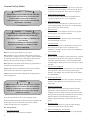
WARNING –
DANGER
THE BLADES COAST AFTER SWITCH TRIGGER
IS RELEASED AND MOTOR IS SWITCHED OFF.
MAKE SURE BLADES HAVE COME TO A
COMPLETE STOP AND ENGINE IS OFF BEFORE
RELEASING A HANDLE.
WARNING –
DANGER
IF TRIMMER IS USED IMPROPERLY OR SAFETY
PRECAUTIONS ARE NOT FOLLOWED, THE
USER RISKS SERIOUS INJURY TO THEMSELVES
AND OTHERS.
READ AND UNDERSTAND THE FOLLOWING
BEFORE ATTEMPTING TO OPERATE THIS
HEDGE TRIMMER.
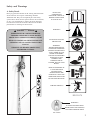
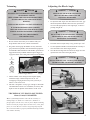
Don’t ever grasp cutting blades for any reason.
Don’t attempt to clear cut material while blades are moving,
and the motor is running. Never try to remove jammed material
or adjust the blade angle before switching the motor off and
making sure the blades have stopped completely.
Don’t hold the cutter blades when making any adjustments to
the blade or loop handle positions.
Always make sure that the blades are in the correct working
position that you want before starting the motor.
Always stop the motor before adjusting the working position
of the cutting device.
WARNING
WHEN USING ELECTRIC TOOLS, BASIC SAFETY
PRECAUTIONS, INCLUDING THE FOLLOWING,
SHOULD ALWAYS BE FOLLOWED TO REDUCE
THE RISK OF FIRE, ELECTRIC SHOCK AND
PERSONAL INJURY.
Pay particular attention to all sections regarding safety.
Read and understand all these instructions before operating this
product and save these instructions. Be familiar with the
controls and the proper use of equipment.
2. Consider work area environment.
Do not expose power tools to rain. Do not use power tools
in damp or wet locations. Keep work area well lit. Do not
use power tools where there is risk of fire or explosion.
3. Guard against electric shock.
Avoid body contact with earthed or grounded surfaces,
e.g. pipes, radiators, stoves, ovens, refrigerators.
4. Keep children away.
Do not let visitors touch the tool or extension cord. All
visitors should be kept away from area. Local regulations
may restrict the age of the operator.
5. Store idle tools.
When not in use, tools should be stored in a dry, high or
locked up place, out of reach of children.
6. Do not force the tool.
It will do the job better and safer at the rate for which it
was intended. Walk, never run.
7. Use the right tool.
Do not force small tools or attachments to do the job of a
heavy duty tool. Do not use tools for purposes not
intended; for example, do not use chain saw attachment to
cut tree limbs or logs.
8. Dress properly.
Do not wear loose clothing or jewelry that can be caught in
moving parts. Long trousers, non-slip gloves and sturdy
work shoes with non-skid soles are recommended when
working outdoors. Wear protective hair covering to contain
long hair.
9. Use protective equipment.
To avoid injury, wear ear, eye protection, face or dust mask
if the operation is dusty. To avoid injury from falling
branches, wear helmet. Eye protection must meet ANSI Z
87.1 requirements.
10. Do not abuse the cord.
Never carry the tool by the cord or yank it to disconnect it
from the socket. Keep the cord away from heat, oil and
sharp edges.
11. Maintain tool with care.
Keep cutting tools sharp and clean for better and safer
performance. Follow instructions for lubrication and
changing accessories. Inspect tool cord periodically and if
damaged, have it repaired by an authorized service facility.
Inspect extension cords periodically and replace, if
damaged. Keep handles dry, clean and free from oil and
grease.
For safe operations:
12. Disconnect tools.
When not in use, before servicing and when changing
accessories such as blades, bits and cutters.
1. Keep work area clean.
Cluttered areas and benches invite injuries.
13. Remove adjusting keys and wrenches.
Form the habit of checking to see that keys and adjusting
3