1
AIR FOR COMBUSTION AND VENTILATION
Continued
The space in the previous example is a confined
space because the actual Btu/Hr used is more
than the maximum Btu/Hr the space can support. You must provide additional fresh air. Your
options are as follows:
A. Rework worksheet, adding the space of an
adjoining room. If the extra space provides
an unconfined space, remove door to adjoining room or add ventilation grills between
rooms. See Ventilation Air From Inside
Building.
B. Vent room directly to the outdoors. See
Ventilation Air From Outdoors.
C. Install a lower Btu/Hr fireplace, if lower Btu/
Hr size makes room unconfined.
If the actual Btu/Hr used is less than the maximum Btu/Hr the space can support, the space is
an unconfined space. You will need no additional
fresh air ventilation.
WARNING: If the area in which
the heater may be operated does
not meet the required volume for
indoor combustion air, combustion and ventilation air shall be
provided by one of the methods
described in the National Fuel
Gas Code, ANSI Z223.1/NFPA 54,
the International Fuel Gas Code,
or applicable local codes.
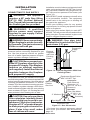
12"
Ventilation
Grills Into
Adjoining
Room,
Option 1
Ventilation Grills
Into Adjoining Room,
Option 2
Or
Remove
Door into
Adjoining
Room,
Option
3
12"
Figure 4 - Ventilation Air from Inside
Building
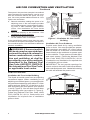
Ventilation Air From Outdoors
Provide extra fresh air by using ventilation
grills or ducts. You must provide two permanent openings: one within 12" of the ceiling
and one within 12" of the floor. Connect these
items directly to the outdoors or spaces open
to the outdoors. These spaces include attics
and crawl spaces. Follow the National Fuel
Gas Code, ANSI Z223.1/NFPA 54, Air for
Combustion and Ventilation for required size
of ventilation grills or ducts.
IMPORTANT: Do not provide openings for
inlet or outlet air into attic if attic has a thermostat-controlled power vent. Heated air entering
the attic will activate the power vent.
VENTILATION AIR
Ventilation Air From Inside Building
This fresh air would come from an adjoining
unconfined space. When ventilating to an
adjoining unconfined space, you must provide
two permanent openings: one within 12" of the
ceiling and one within 12" of the floor on the
wall connecting the two spaces (see options
1 and 2, Figure 4). You can also remove door
into adjoining room (see option 3, Figure 4).
Follow the National Fuel Gas Code, ANSI
Z223.1/NFPA 54, Air for Combustion and
Ventilation for required size of ventilation
grills or ducts.
8
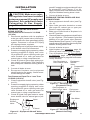
Outlet
Air
Outlet
Air
Ventilated
Attic
To Attic
To
Crawl
Space
Inlet
Air
Inlet Air
Ventilated
Crawl Space
Figure 5 - Ventilation Air from Outdoors
www.fmiproducts.com
123502-01E