1
Security Escort | Installation and Setup Guide | 2.0
Equipment Estimation
2.4
Post Construction Setup
2.4.1 Testing the location accuracy of
an installation
Note:
Before doing any of the following
testing, it is important to verify
that every receiver in the system
is functioning correctly using the
procedure described in this guide.
Additionally, every receiver must
be programmed in the transponder
database with its actual physical
location and floor level. It is
also important that receivers
physically stacked directly above
one another on floors of a building
are also located at the same X and
Y coordinates in the database.
There are three methods you can use to
verify the location accuracy of an
installed system, using a standard
Subscriber Transmitter or a
Maintenance Transmitter. Repeat the
chosen process throughout all
protected areas. Ask the customer for
the areas where they have special
concern and devote extra attention to
those areas, since the customer is
likely to be more critical in those
areas.
Remember the intent of the Security
Escort system is to dispatch a
responding individual to an area that
does not add additional delay to their
response to that duress call.
Therefore the computed location should
be considered to be in error only when
it adds unacceptable additional time
to the alarm response.
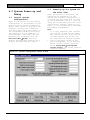
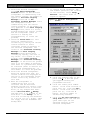
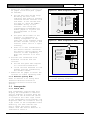
During testing, it is helpful to see
which receivers are involved in the
alarm response and the relative
reception level they reported. To
display the receivers, select
Utilities Menu → Security
Preferences. Make sure the No Receiver
icon checkbox is not checked and click
the Save button. Select from the Setup
Menu → System Preferences → If Show
Test Levels → Show Maintenance Levels
are checked, the relative reception
level is shown in the receiver icons;
otherwise, the floor number is shown.
Bosch Security Systems | 1/09 | 33831E
EN | 21
When testing with any of the following
methods, the transmitter must be used
exactly as it is used in normal
operation. A transmitter designed to
be belt mounted or used in a holster
must be in its normal mounting
attitude and be worn on the belt of
the individual originating the test
transmissions. Handheld transmitters
must be held in the hand about waist
high, never above the head.
1. Using a standard subscriber
transmitter
a. This method requires two people
with radio contact between them.
One person operates the computer
running the Security Escort
software and the other takes the
Subscriber Transmitter to the
area to be tested.
b. Press the alarm on the
transmitter and remain at the
spot where you transmitted.
c.
The computer operator
acknowledges the alarm and
accurately describes the
computed location over the
radio. The individual with the
transmitter should confirm the
reported location or describe
over the radio the actual
location. Either individual must
record all discrepancies,
including the actual and
computed locations.
We recommend using a map or
floor plan and drawing an arrow
from the actual alarm location
to the reported location. It is
also helpful if all successful
alarm locations are marked with
a P (passed), then the alarm can
be reset from the computer
screen.
d. For areas where there are alarm
location problems, try facing in
different directions in the same
spot. Also generate additional
alarms from different spots to
fully understand the extent of
the problem. You should generate
alarms in areas adjacent to the
area with the problem to see if
they are also affected.