1
Interrupt Acknowledge Bus Operation
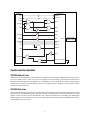
The TNT4882 can interrupt the processor by asserting its interrupt signal. The MC68340 will acknowledge the
interrupt if its priority is higher than the interrupt mask in the status register. For the above example, interrupt level
three has been selected. Since the TNT4882 cannot supply a vector number, it requests an automatically generated
vector (autovector). Instead of placing the vector number on the data bus, the autovector register is programmed to
generate an autovector. The DSACKNx signals of MC68340 must be negated during the interrupt acknowledge cycle
so that the autovector is generated internally. Therefore, DSACKN1 should also be negated when the TNT4882 INTR
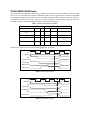
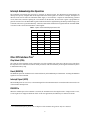
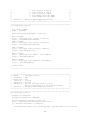
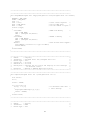
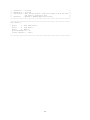
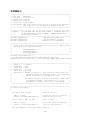
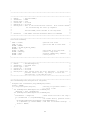
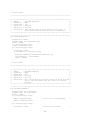
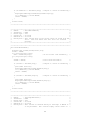
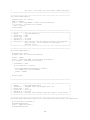
is asserted. Table 3 shows the DSACKN1 control signals:
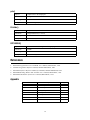
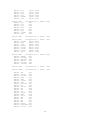
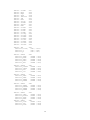
Table 3. Signals Used for Controlling Asynchronous I/O
TNT4882
MC68340
RDY1
CPUACC
INTR
DSACKN1
0
0
0
0
0
0
1
1
0
1
0
1
0
1
1
1
1
0
0
0
1
0
1
1
1
1
0
0
1
1
1
1
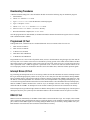
Other CPU Interface Pins1
Chip Select (CSN)
The CSN pin of the TNT4882 can be connected to one of the available chip select pins of the processor. This allows
the chip select to be controlled in software which provides us with some flexibility in moving the TNT4882 anywhere
in MC68340 memory map.
Reset (RESETN)
The RESETN pin of the TNT4882 can be connected directly to the RESETN pin of MC68340. Asserting the RESETN
signal will reset the TNT4882.
Interrupt Signal (INTR)
MC68340 IRQ lines are active low, so the INTR signal from the TNT4882 must be inverted and then connected to one
of the available interrupt lines.
PAGED Pin
When the PAGED pin on the TNT4882 is asserted, the TNT4882 enters the Paged-In state. If Page-In state is true,
several registers are mapped to different offsets. In all new applications, PAGED may be connected to GND.
1
For a detailed description, please refer to Chapter 5 of the TNT4882 Programmer Reference Manual.
6