1
North et al. Complex Adaptive Systems Modeling 2013, 1:3
http://www.casmodeling.com/content/1/1/3
"repast.user.models.ExampleSocialAgent",
watcheeFieldName = "contentment",
query = "linked_to 'neighbors' and not linked_from
'work' and colocated",
triggerCondition = "$watchee.getContentment() !=
$watcher.contentment",
whenToTrigger = WatcherTriggerSchedule.LATER,
scheduleTriggerDelta = 5,
scheduleTriggerPriority = 15)
public void neighborMoodUpdated(ExampleSocialAgent
neighbor) {
// Check the contentment level.
if (neighbor.getContentment() > 0.5) {
// Copy a neighbor.
this.setContentment (neighbor.getContentment());
} else {
// Decide for ourselves.
this.setContentment(RandomHelper.nextDouble());
}
}
In this example, the “neighborMoodUpdated” method will be called after another
ExampleSocialAgent’s contentment changes if the current agent is linked to the
watched agent in the neighbor network, is not linked from the watched agent in the
work network, is colocated with the watched agent in a context, and has a contentment
setting different from that of the watched agent’s contentment. The “neighborMoodUpdated” method will be called five ticks after the change and the event will be given a
scheduler priority of 15, which is substantially higher than the default value of zero. As
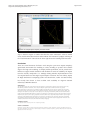
shown in the example, contexts work directly with watchers by allowing watcher queries to use context names and properties. Similarly, projections work directly with
watchers, allowing watcher queries to use projection names (e.g., “neighbors” and
“work” in Figure 3), properties, and relationships (e.g., “linked_to,” “linked_from,” and
“colocated” in Figure 3).
The watcher mechanism provides a listener-like design pattern for reactive agent
behavior, which is computationally more efficient than polling a collection of agents
at a fixed interval. Runtime agent class instrumentation is performed with the Javassist
library (Chiba and Nishizawa 2003) when the agent classes are loaded by the Repast
runtime, which occurs automatically for classes with @Watch annotations. Bozada et al.
(2006) presented one of the first implementations the Repast watcher pattern in a largescale, agent-based model of military deployment logistics. The execution speed of the
logistics model implementation in Repast was more than an order of magnitude faster
than the previous Java implementation with polling-based agent behaviors.
Annotations can also be used for tasks such as unconditional scheduling. In this usage,
individual methods can be called at specified times without the need for explicit Java
method calls to the Repast scheduling system. This approach has the potential to be both
Page 11 of 26