1
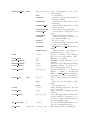
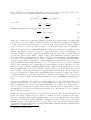
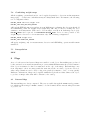
FLAG TYPE
OR
keyword
OR
AND
MIN
MAX
MOST
float
GAIN
INTERP MAXXLAG
16
integers (n ≤ 2)
INTERP MAXYLAG
16
integers (n ≤ 2)
INTERP TYPE
ALL
keywords (n ≤ 2)
NONE
VAR ONLY
ALL
MAG GAMMA
float
MAG ZEROPOINT
float
MASK TYPE
CORRECT
keyword
NONE
BLANK
CORRECT
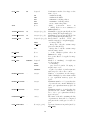
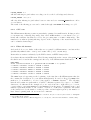
MEMORY BUFSIZE
—
integer
MEMORY OBJSTACK
—
integer
MEMORY PIXSTACK
—
integer
PARAMETERS NAME
—
string
PHOT APERTURES
—
floats (n ≤ 32)
10
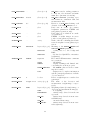
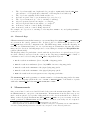
Combination method for flags on the
same object:
– arithmetical OR,
– arithmetical AND,
– minimum of all flag values,
– maximum of all flag values,
– most common flag value.
“Gain”
(conversion
factor
in
e− /ADU) used for error estimates of
CCD magnitudes .
Maximum x gap (in pixels) allowed in
interpolating the input image(s).
Maximum y gap (in pixels) allowed in
interpolating the input image(s).
Interpolation method from the
variance-map(s) (or weight-map(s)):
– no interpolation,
– interpolate only the variance-map
(detection threshold),
– interpolate both the variance-map
and the image itself.
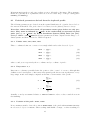
γ of the emulsion (takes effect in
PHOTO mode only).
Zero-point offset to be applied to magnitudes.
Method of “masking” of neighbours
for photometry:
– no masking,
– put detected pixels belonging to
neighbours to zero,
– replace by values of pixels symetric
with respect to the source center.
Number of scan-lines in the imagebuffer. Multiply by 4 the frame width
to get equivalent memory space in
bytes.
Maximum number of objects that the
object-stack can contain. Multiply by
300 to get equivalent memory space in
bytes.
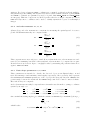
Maximum number of pixels that the
pixel-stack can contain. Multiply by
16 to 32 to get equivalent memory
space in bytes.
The name of the file containing the list
of parameters that will be computed
and put in the catalogue for each object.
Aperture diameters in pixels (used by
MAG APER).