1
SLL-reverse+test. In this experiment, we start with the set of all possible SLLs and we
use the “marking” method proposed in [8] to verify that the program implements a real
reversion: i.e. no element is lost or added, and the elements are linked in exactly the
opposite order as before applying the procedure.
The head of the list is pointed by the variable l. Before the reversion, we set the
pointer variable head to the head of the list. Then, we randomly choose an element of
the list and point it by the variable f irst. The pointer variable second is then set to the
successor of f irst (i.e., second == f irst->n). The pointer variable last is set to the tail
of the list. The reversion procedure does not see these variables—its implementation
is untouched. Thus, at the end of the reversion, they are pointing to exactly the same
memory nodes as before the reversion. Just the order of these memory nodes in the SLL
should change. It is easy to see that the reversion does not work properly if one of the
following issues (or the ones mentioned in SLL-creation) happen:
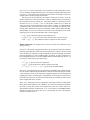
– l[¬(p = last)]. The head of the list is not pointed by last.
n
– second → [¬(p = f irst)]. The order of the elements is not reversed correctly.
n
– head → [¬(p = ⊥)]. The variable head does not point to the end of the list.
Doubly-Linked Lists We suppose the two selectors of DLLs to be denoted n (next)
and p (previous).
DLL-delete. We consider a program that removes an element from a list. The initial set
describes all possible DLLs where the head is pointed by the variable l. We first search
for an element to be deleted by going through the list from its beginning. As the data
items are abstracted, we select a random node to be deleted. To ensure consistency of
the resulting data structure, we use the LBMP formulae mentioned already in Sect. 2.2
(acyclicity is ensured by the 2nd, and 3rd rule):
n ∗
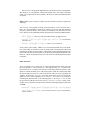
– l → [p = >]. The tail of the list is undefined.
p
– l[¬(p → ⊥)]. The predecessor of the first element is not null.
p
n ∗
n
– l → [∃x. p → x ∧ x 6= ⊥ ∧ ¬(x → p)]. The list is not doubly-linked.
DLL-insert. The program inserts a new element into a randomly chosen position in the
list. The initial set describes all possible DLLs where the head is pointed by the variable
l. We search the position for the insertion by going through the list from the head and
stopping the search at a random place. The possibility of inserting a new element as a
new head is also taken into account. After the insertion is performed, the same tests as
in the example DLL-delete are done.
DLL-reverse. The program reverses a given DLL. The initial set is the set of all possible
DLLs where head is pointed by the variable l. We use the same method to check that
the result is exactly the reversion of the input list as in the case of SLLs (and so we
again introduce auxiliary variables head, f irst, second, and last). The LBMP formulae
considered in DLL-delete and in SLL-reverse (in particular, the ones concerning the
auxiliary variables) are used.