1
180 - 06: All About Strings
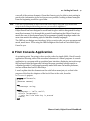
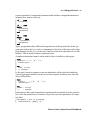
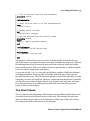
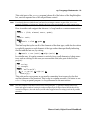
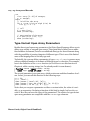
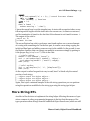
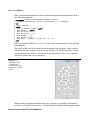
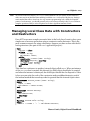
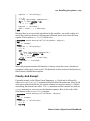
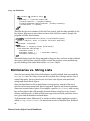
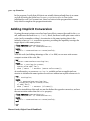
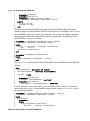
MyStr1 [1] :=
Show ( 'Change
Show ( 'MyStr1
Show ( 'MyStr2
'a';
2nd char' );
- ' + StringStatus (MyStr1));
- ' + StringStatus (MyStr2));
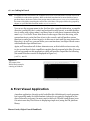
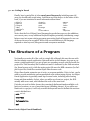
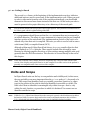
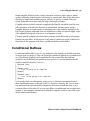
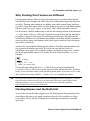
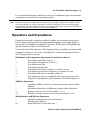
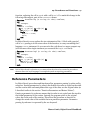
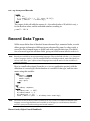
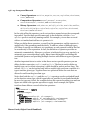
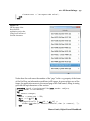
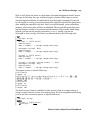
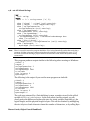
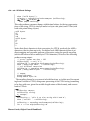
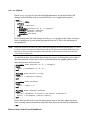
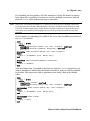
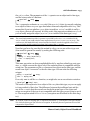
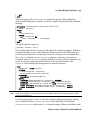
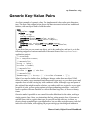
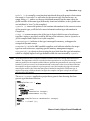
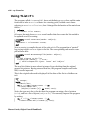
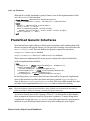
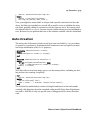
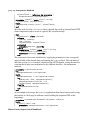
Initially, you should get two strings with the same content, the same memory location, and a reference count of 2.
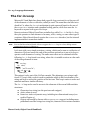
MyStr1 - Addr: 51837036, Len: 5, Ref: 2, Val: Hello
MyStr2 - Addr: 51837036, Len: 5, Ref: 2, Val: Hello
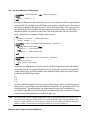
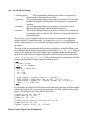
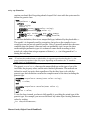
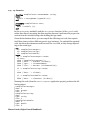
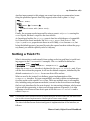
As the application changes the value of one of the two strings (it doesn't matter
which one), the memory location of the updated string will change. This is the effect
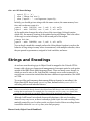
of the copy-on-write technique. This is the second part of the output:
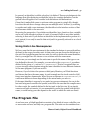
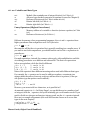
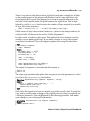
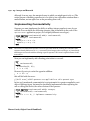
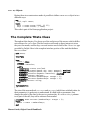
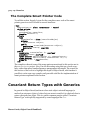
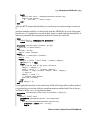
Change 2nd char
MyStr1 - Addr: 51848300, Len: 5, Ref: 1, Val: Hallo
MyStr2 - Addr: 51837036, Len: 5, Ref: 1, Val: Hello
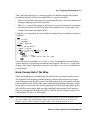
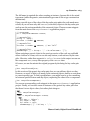
You can freely extend this example and use the StringStatus function to explore the
behavior of long strings in many other circumstances, with multiple reference, when
they are passed as parameters, assigned to local variables, and more.
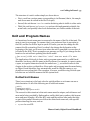
Strings and Encodings
As we have seen the string type in Object Pascal is mapped to the Unicode UTF16
format, with 2-bytes per element and management of surrogate pairs for code points
outside of the BMP (Basic Multi-language Plane). There are many cases, though, in
which you need to save to file, load from file, transmit over a socket connection, or
receive form a connection textual data that uses a different representation, like ANSI
or UTF8.
To convert files and in memory data among different formats (or encodings), the
Object Pascal RTL has a handy TEncoding class, defined in the System.SysUtils
unit along with several inherited classes.
note
There are several other handy classes in the Object Pascal RTL that you can use for reading and
writing data in text formats. For example, the TStreamReader and TStreamWriter classes offer
support for text files with any encoding. These classes will be introduced in Chapter 18.
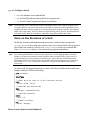
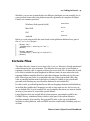
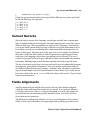
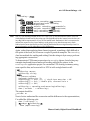
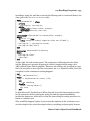
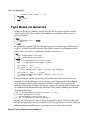
Although I still haven't introduced classes and inheritance, this set of encoding
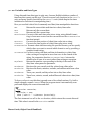
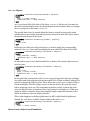
classes is very easy to use, as there is already a global object for each encoding, automatically created for you. In other words, an object of each of these encoding classes
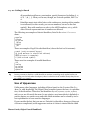
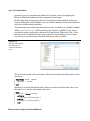
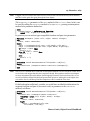
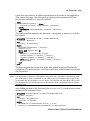
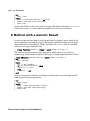
is available within the TEncoding class, as a class property:
Marco Cantù, Object Pascal Handbook