1
Restrictions on Data Retention Utility volumes
•
File systems using Data Retention Utility
When setting DRU to the UNIX file system volumes, the volumes
must be mounted with the Read Only option after the volumes are
unmounted. If DRU is set to the volumes as they are in the mounted
status, unexpected behavior may occur in the system.
When using a file system for Write Protect Mode set disk on Windows
Server 2003/Windows Server 2008/Windows Server 2012, use the "x mount" and "-x umount" CCI command options with the above
mentioned procedures.
Data Retention Utility volumes set to Write Protect Mode (Read
ONLY) cannot be used for the Windows NT/Windows 2000 file system
(NTFS, FAT).
•
LVM(VxVM) on Data Retention Utility
If changing LVM configuration including Data Retention Utility, use
the raidvchset -vg command for setting the status of the target
volume checking prohibited temporarily. Also, after the completion of
LVM configuration change, set again the status as checking.
•
Data Retention Utility in HA Cluster Server
If HA Cluster software writes to the metadata at regular intervals to
confirm whether its disks are available or not, then Data Retention
Utility should not be used in HA environments.
•
Dynamic disk on Windows systems
Data Retention Utility volumes cannot be used for the dynamic disk,
because the dynamic disk does not handle the volumes set to Write
Protect Mode (Read ONLY). Data Retention Utility volumes must be
used for basic disks only.
•
LUN#0
Some operating systems cannot recognize LUNs over LUN#1 if
LUN#0 has the Data Retention Utility "inv" attribute set. This is
because some HBA drivers do not scan all LUNs on a port if LUN#0
is invisible.
Database Validator
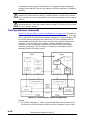
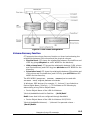
Database Validator prevents data corruption in an Oracle database by
checking Oracle data validation before an Oracle data block is written on a
disk.
•
Data Block corruption: This occurs when Oracle data is corrupted by
some intervening software layer and/or hardware components. The
RAID storage system can check the validity of the data block before the
Oracle data block is written to disk.
•
Data block address corruption: The OS (file system, LVM, Disk driver)
may write blocks to the wrong location. The RAID storage system can
check the validity of the data block address to verify that the Oracle data
block is written to the correct location on disk.
Data protection operations with CCI
Hitachi Command Control Interface User and Reference Guide
7–3