1
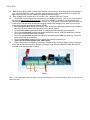
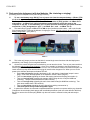
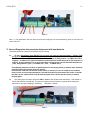
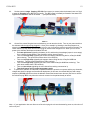
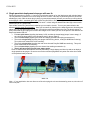
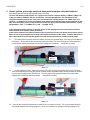
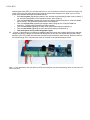
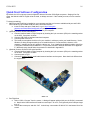
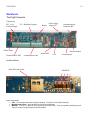
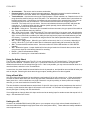
G-Wiz HCX 10 2. Dual parachute deployment with dual batteries (No clustering or staging). [One battery powers the computer and one powers the pryo channels] 2.1 To use a dual battery setup DO NOT use a jumper wire from the computer battery + (CBatt+) (TB2 pin 6) to the pyro battery +(PBatt+) (TB1 pin 1) terminals. Connect two batteries. A 9 volt battery for the computer should be wired to the “nose end” of terminal bar 2 (TB2) (positive + to CBatt+ Pin 6 and negative – to CBatt- Pin 5) (which should have some method to switch the power to the computer on and off). A second battery (9 to 15 volts) should be wired to the pyro power terminals terminal bar 1 (TB1), designated as “pyro” (+ to PBatt+ Pin 1, and – to PBatt- Pin 2). 2.2 The small twin pin jumper at JP2 should be ON the pins (located near the bottom – and on the far side from the terminal bar.) This sets the altimeter for high pyro current, which should only be used in the dual battery configuration. (See photo 5) Photo 5 2.3 This is the only jumper you have to deal with for normal single motor launches with dual deployment parachutes, even though you’re using dual batteries. 2.4 Once all the correct firing devices are hooked up you can test the circuits. Turn on your power switch to the altimeter with the shunt plug plugged in. Once you’ve tested it by listening to the beep sequence or observing the status LED, you can either leave it on or turn it off until the rocket is mounted on the pad. The launch sensor is pretty robust and the shunt plug will not allow the charges to fire. When you turn on the power to the altimeter the beeper and status LED will: Emit a two quick tones (signaling the battery is OK, and that the cluster/stage jumper is set to stage) If not check the beep pattern in the Operation section, above (Page 5). Then emit two chirps (signaling the cluster and staging channel has nothing connected to it) Then emit a single chirp (signaling the apogee channel firing device, a Davyfire N28B has continuity). Two quick tones means there is No continuity. Then emit a single chirp (signaling the main chute channel Davyfire N28B has continuity). Two quick tones means there is No continuity. Then emit two chirps (signaling the user channel has nothing connected to it) Then it will pause and cycle the beep pattern again. 2.5 In photo 6 the altimeter is connected to separate batteries to power the computer and the pryo channels. Charges are wired to deploy both apogee and low altitude parachutes (main set at the default of 800 feet). Be sure to remove the red shunt plug JP1/3 only when the rocket is mounted on the pad and ready to launch.