1
PATTERN MATCHING
4.4
Wildcards
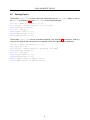
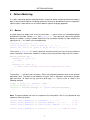
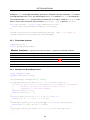
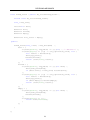
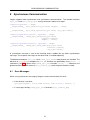
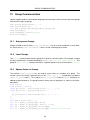
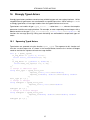
The type anything can be used as wildcard to match any number of any types. A pattern created
by on<anything>() or its alias others() is useful to define a default case. For patterns
defined without template parameters, the constexpr value any_vals can be used as function
argument. The constant any_vals is of type anything and is nothing but syntactic sugar for
defining patterns.
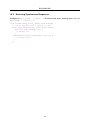
on<int, anything>() >> [](int i) {
// tuple with int as first element
},
on(any_vals, arg_match) >> [](int i) {
// tuple with int as last element
// "on(any_vals, arg_match)" is equal to "on(anything{}, arg_match)"
},
others() >> [] {
// everything else (default handler)
// "others()" is equal to "on<anything>()" and "on(any_vals)"
}
4.5
Guards
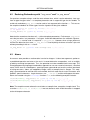
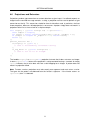
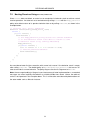
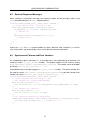
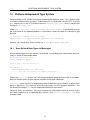
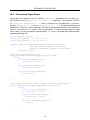
Guards can be used to constrain a given match statement by using placeholders, as the following
example illustrates.
using namespace cppa::placeholders; // contains _x1 - _x9
on<int>().when(_x1 % 2 == 0) >> [] {
// int is even
},
on<int>() >> [] {
// int is odd
}
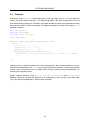
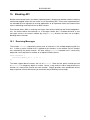
Guard expressions are a lazy evaluation technique. The placeholder _x1 is substituted with the
first value of a given tuple. All binary comparison and arithmetic operators are supported, as well
as && and ||. In addition, there are three functions designed to be used in guard expressions:
gref (“guard reference”), gval (“guard value”), and gcall (“guard function call”). The function
gref creates a reference wrapper, while gval encloses a value. It is similar to std::ref but it
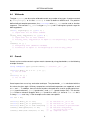
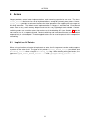
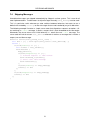
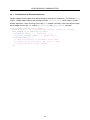
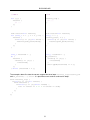
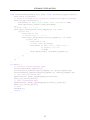
is always const and “lazy”. A few examples to illustrate some pitfalls:
int val = 42;
on<int>().when(_x1 == val)
on<int>().when(_x1 == gref(val))
on<int>().when(_x1 == std::ref(val))
others().when(gref(val) == 42)
others().when(std::ref(val) == 42)
9
//
//
//
//
//
//
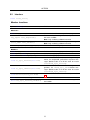
(1)
(2)
(3)
(4)
matches if _x1 == 42
matches if _x1 == val
ok, because of placeholder
matches everything
as long as val == 42
(5) compiler error