1
RECEIVING MESSAGES
7.3
Timeouts
A behavior set by become is invoked whenever a new messages arrives. If no message ever
arrives, the actor would wait forever. This might be desirable if the actor only provides a service
and should not do anything else. But often, we need to be able to recover if an expected messages
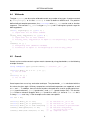
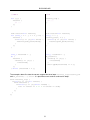
does not arrive within a certain time period. The following examples illustrates the usage of after
to define a timeout.
#include <chrono>
#include <iostream>
#include "cppa/cppa.hpp"
using std::endl;
behavior eager_actor(event_based_actor* self) {
return {
[](int i) { /* ... */ },
[](float i) { /* ... */ },
others() >> [] { /* ... */ },
after(std::chrono::seconds(10)) >> [] {
aout(self) << "received nothing within 10 seconds..." << endl;
// ...
}
};
}
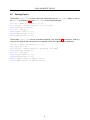
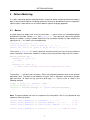
Callbacks given as timeout handler must have zero arguments. Any number of patterns can precede the timeout definition, but “after” must always be the final statement. Using a zero-duration
timeout causes the actor to scan its mailbox once and then invoke the timeout immediately if no
matching message was found.
libcppa supports timeouts using minutes, seconds, milliseconds and microseconds.
However, note that the precision depends on the operating system and your local work load.
Thus, you should not depend on a certain clock resolution.
20