1
PATTERN MATCHING
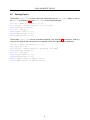
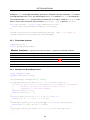
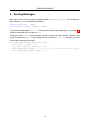
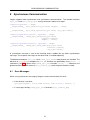
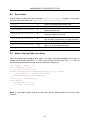
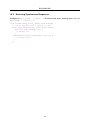
Statement (5) is evaluated immediately and returns a boolean, whereas statement (4) creates
a valid guard expression. Thus, you should always use gref instead of std::ref to avoid errors.
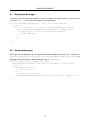
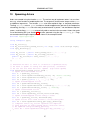
The second function, gcall, encapsulates a function call. Its usage is similar to std::bind, but
there is also a short version for unary functions: gcall(fun, _x1) is equal to _x1(fun).
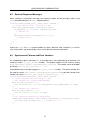
auto vec_sorted = [](const std::vector<int>& vec) {
return std::is_sorted(vec.begin(), vec.end());
};
on<std::vector<int>>().when(gcall(vec_sorted, _x1)) // is equal to:
on<std::vector<int>>().when(_x1(vec_sorted)))
4.5.1
Placeholder Interface
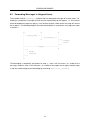
template<int X>
struct guard_placeholder;
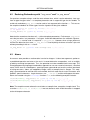
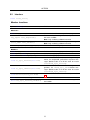
Member functions (x represents the value at runtime, y represents an iterable container)
size()
empty()
not_empty()
front()
in(y)
not_in(y)
4.5.2
Returns x.size()
Returns x.empty()
Returns !x.empty()
Returns an option (see Section 18.1) to x.front()
Returns true if y contains x, false otherwise
Returns !in(y)
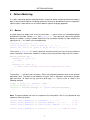
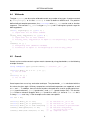
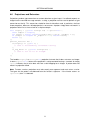
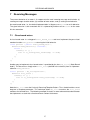
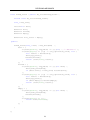
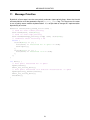
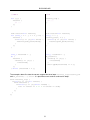
Examples for Guard Expressions
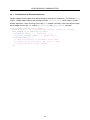
using namespace std;
typedef vector<int> ivec;
vector<string> strings{"abc", "def"};
on_arg_match.when(_x1.front() == 0) >> [](const ivec& v) {
// note: we don’t have to check whether _x1 is empty in our guard,
//
because ’_x1.front()’ returns an option for a
//
reference to the first element
assert(v.size() >= 1);
assert(v.front() == 0);
},
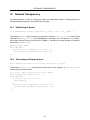
on<int>().when(_x1.in({10, 20, 30})) >> [](int i) {
assert(i == 10 || i == 20 || i == 30);
},
on<string>().when(_x1.not_in(strings)) >> [](const string& str) {
assert(str != "abc" && str != "def");
},
on<string>().when(_x1.size() == 10) >> [](const string& str) {
// ...
}
10