1
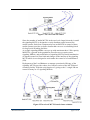
2 OVERVIEW 2.1 GENERAL CONSIDERATIONS Being a cost-effective solution the MVTS session border controller (SBC) installed on a platform whose computing power does not differ much from an average table-top system can handle but a limited number of simultaneous calls. As the carrier’s business grows the increased volume of traffic may require additional investment in the switching facility. To protect your initial investment in the switching capability and cope up with the scalability challenge the MVTS SBC is made clusterable. 2.2 WHAT IT TAKES TO SET UP AN MVTS-BASED CLUSTER Operation in a heavy traffic environment necessitates division of the major system functions (gatekeeper, RADIUS, signaling proxy, media proxy etc.). The roles of constituent MVTS systems within a cluster element change. The most resource-intensive process in terms of computing power is full proxy (signaling and media) operation. Therefore, pumping media traffic becomes the sole function of the computer which we call in what follows Media MVTS (MMVTS). At the same time all the gatekeeper, routing, billing and RADIUS procedures are now the job of the system referred to in this document as signaling MVTS (SMVTS). Since signaling, routing, billing and all associated tasks are less demanding from the standpoint of computing power one SMVTS can control several MMVTSs (reliably manageable fleet is three full proxies of 1500-2000 simultaneous calls capacity). Therefore a basic functional cluster element comprises two parts: signaling MVTS (SMVTS) in control of three media MVTSs (MMVTS) A block diagram of a cluster element is demonstrated in Figure 1 below MVTS-based clusters page 10 of 21