1
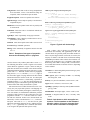
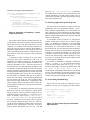
sm lockunlock {
state decl anyobject v;
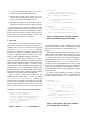
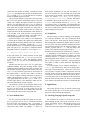
Bug caused by using equals() on incompatible types
boolean filterComment()
{
User user = User.getUser();
Document d = getContainingDocument();
return !user.equals(d.getAuthor());
}
start:
{ v."lock"(...) } ==> v.locked;
v.locked:
{ v."unlock"(...) } ==> v.stop
| $end_of_path$ ==> {
/* flag error */ };
}
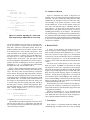
Short checker that found this bug:
sm applesandoranges {
decl anyobject objl, objr;
Figure 8. Lock checker: flags where intraprocedural lock/unlock pairing is violated
start:
{ objl.equals(objr) } ==> {
// warn if !objl.type.isCompatible(objr.type);
}
}
violated: by placing the call to B into the finally clause, the
programmer ensures that B is called no matter which path
is taken to leave the try block.
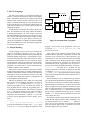
Nevertheless, the compiler cannot enforce proper use of
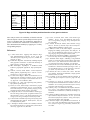
try/finally. Figure 7 shows a bug in Jigsaw 2.2.2 where the
programmer mistakenly placed the required call to unlock
in a catch instead of a finally clause.
Figure 8 shows a simple MJ program that detected this
bug: this checker matches invocations of v.lock() and
tracks the locked instance v. If a call to unlock() is encountered that is invoked on the same object, we stop tracking the object. If a tracked object reaches $end of path$ ,
i.e., an edge in the control flow graph that leaves the current
function, a potential error is signaled.
This error occurred despite a comment by the implementer of the ResourceReference interface that explicitly recommends the use of the try/finally pattern when using this interface. The length of that comment is about the
same as the length of checker; we conclude that analysis
tools such as MJ could be used as enforceable documentation. It is also possible to develop checkers in conjunction
with the use of automatic interface extraction tools, such
as [21].
Figure 6. Bug caused by using equal() on
incompatible types, resulting in loss of confidentiality in a commercial system.
related; otherwise, the implementation of equals() may either crash or, worse, silently return false, leaving a possible error untrapped.
Figure 6 shows a security hole caused by violating this
rule and a checker that found it. The shown filterComment() method is part of a code base of a leading enterprise software system. The method’s purpose is to determine whether a user requesting a document is authorized
to see comments that should be visible only to the author.
In this case, the consequence of this bug was a breach of
confidentiality, exposing these comments to all viewers.
5.2. Checking Interface Properties
Many APIs have the property that a call to A must be followed by a call to B. For instance, calls to lock() must be
paired with calls to unlock(). Java provides the try/finally
construct to reduce the likelihood that such properties are
5.3. Redundant Operations
Redundancies, such as redundant assignments, have
been shown to be correlated with actual bugs in C code [22].
To test whether this holds true for Java code as well, we
implemented an MJ extension, neverused, that identifies
such redundancies.
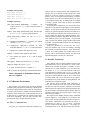
Figure 9 shows an example of a bug this checker found
in the OceanStore system: a function that needs to update a value in a hashtable did not, presumably because
the programmer mistakenly assumed that an assignment
to a reference that was obtained from the hashtable via
get() would affect the value stored in the hashtable. Our
checker flags this example because the result of the call to
msg.getMsgs() is never used.
Jigsaw org/w3c/jigsaw/proxy/ProxyFrame.java:
try {
DirectoryResource dir =
(DirectoryResource)root.lock();
...
} catch (InvalidResourceException ex) {
root.unlock();
}
Figure 7. Mismatched pairing: the programmer placed the call to unlock() in the catch
instead of a finally block.
7