1
foot 2. In the event of an earthquake or other extreme events, the wired links are prone to breakage resulting in
unreliability of the data link. Also, in commercial buildings, rodent nibbling is a serious problem.
To overcome the many disadvantages of wired systems, use of wireless technologies have been proposed for structural
monitoring 1. With the advent of low cost wireless technologies like Bluetooth, IEEE 802.11 etc, there has been
considerable interest in wireless technology as a viable alternative to the wired systems.
sensor
monitoring station
wired link
wireless link
Floor View Plan
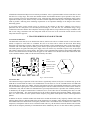
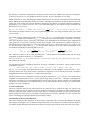
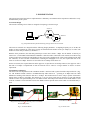
Fig. 1: Traditional Wired and Wireless sensor networks
Floor View Plan
The general approach to using the wireless links in structural monitoring has been to push the process of digitization of
the analog vibration information to the remote sensor units and then replace the wired links with wireless links to
provide data communication. Essentially, the wireless network is a STAR network, with all the sensor units
communicating with a central monitoring station. Such an approach solves most of the problems associated with wired
systems but throws up the new problems that are inherent to the wireless systems, the primary problem being that of
power. In a wired monitoring system, the remote sensor units obtain their power over the cables connected to the DAQ
module. However, in a wireless monitoring system, the remote sensor units are powered by batteries and so power is at a
premium.
Most of the research in wireless monitoring systems has focused on the development of sensor modules with embedded
computational capability and wireless communication capability provided by off the shelf radio modules like those of
Bluetooth or IEEE 802.11. These systems assume a point to point or point to multi-point communication. However,
there hasn’t been much research on developing suitable network architectures for these systems. A robust wireless
structural monitoring strategy requires the appropriate choice of the wireless network topology, the specific wireless
technology as well as a suitable protocol. In this paper we propose a wireless structural monitoring strategy for civil
infrastructures, with a focus on the system-wide sensor network. Atwo-tiered wireless network architecture with a
protocol inspired by the LEACH 3 and Bluetooth 4 protocols is proposed and designed specifically for the structural
monitoring application. The characteristics and requirements of the structural monitoring application are studied first in
order to identify the key design challenges. The two-tiered wireless network architecture is intended to handle these
issues. A communication protocol is designed and several power saving strategies in the sensor unit architecture are
considered. The proposed monitoring system is analyzed and several conclusions about the tradeoffs involved in the
system are drawn. An estimate of the maintenance cycle is made based on the power consumption of the sensor unit. A
simple implementation of the proposed network that was made in a laboratory setting is explained next along with the
experiments conducted on it.
2. THE STRUCTURAL MONITORING APPLICATION
The structural monitoring system operates primarily under two scenarios, extreme event monitoring and long term
periodic monitoring. In the event of an earthquake (extreme event), we need a near real-time performance from the
system. Information as to the soundness of the structure has to be obtained with in minutes. It is important to note that
the maximum duration of the earthquake is about 3 minutes with the majority of earthquakes lasting less than a minute.
For the long term periodic monitoring, the response of the structure to ambient loading from winds or traffic is to be