1
2
2.2 Required Files
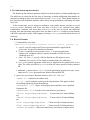
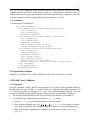
FID35 uses three input files, specified on the command-line. Example files are available.
Detailed syntax is described in section 2.4. These are attribute, data, and parameter files.
1. The attribute file (such as data.attrs) contains information about the
attributes, definitions of partitioning sets and the corresponding names, etc.
Attributes w/o predefined partitions are identified, with some restrictions on the
partitioning preprocessing. The files also contains the definition of the decision
class.
2. The event, or data file (such as data.dat) contains information about training
examples: the values of each attribute (numeric, linguistic, or missing), the
decision value (numeric or linguistic), and weight value (weight of the event). One
file may be used for training, another for testing.
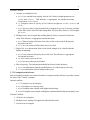
3. The parameter file (such as par.template) contains default values for all of the
configurable options. These values may be overwritten by specifying their values
on the command line, or by modifying the default file. In fact, it is recommended
that the included parameter file be modified to customize the options to the user’s
needs.
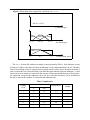
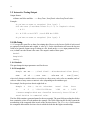
2.3 Sample Data
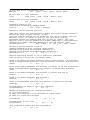
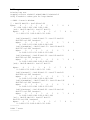
A sample case is provided. It includes both attribute and data files, called data.attrs
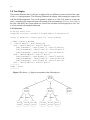
and data.dat, respectively. The attributes used are X and Size. X has three nominal values: A, B,
C, while Size is a linear attribute with 0..1 domain and predefined fuzzy sets Small, Medium,
Large, as illustrated in Figure 1. The decision variable Classification is linear, with two fuzzy sets
Yes and No.