1
Proximity Effect and Working Distance
The Sound That is “More Real than Real”
Ribbon microphones have long been renowned for a rich bass response. This effect is largely due
to the fact that most ribbon microphones have excellent bass response, and at the same time
exhibit substantial proximity effect (an increasing amount of bass response as the microphone is
moved closer to the sound source)
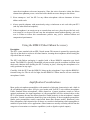
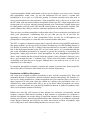
As illustrated in the following graph, a typical bi-directional ribbon microphone will have a flat
frequency response at a distance of about six feet from
the microphone, but at shorter distances the bass
response becomes boosted. The effect becomes
increasingly pronounced as the distance between the
microphone and the sound source is reduced.
Typical relationship of microphone
distance to frequency response for
ribbon-velocity bidirectional
microphone.
This bass-boosting characteristic can become intense
when close-miking and, if desired, can be corrected by
equalization. However, for a multiple microphone
setup, the pronounced proximity effect can be turned
to an advantage. If an instrument such as a trumpet is
close-miked and the bass is cut to restore flat response,
other low-frequency sounds with potential for
bleeding into the mic will be cut back by upwards of
20 dB compared to an unequalized microphone with a
flat response.
Another area where proximity effect can be turned to
an advantage is in making things sound “more real
than real.” For example, many voices and certain
musical instruments produce fundamental frequencies
within the bass range (below 150HZ or so) but the fundamentals are weak. In a worst case, if a
microphone which has no proximity effect and a rising high frequency response is used on an
upright piano, or on a person with a thin, weak voice, the recording is likely to sound even
thinner than the original sound source. In contrast, using a microphone with strong proximity
effect on such sound sources can result in a “better than real” sound, with the boosted bass
response compensating for the weak fundamentals in the sound source. Since the fundamentals
are present, but weak, boosting them by several dB will sound natural even though the sound has
been sweetened. Radio and television announcers have long relied on proximity effect to give a
full, rich, authoritative quality to their voices. By knowing how to work with proximity effect,
engineers can get several useful effects without resorting to electronic manipulation.
10