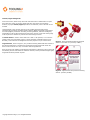
1
 Lesson: 18/19
NIOSH Guidelines for Robot Safety
NIOSH has published a guide called Preventing the Injury of Workers by
Robots 85-103. This guide recommends safety measures for designing
robotic systems and training and supervising the workers who use them.
According to NIOSH, a good safeguarding system includes:
l
l
l
l
l
Sufficient clearance of at least 500mm between the robot's
components and objects, workspaces, and pathways near the robot.
The robot's work area and movement zones should be marked so
workers can tell when they are entering the robot’s work envelope.
Sufficient lighting in the control and operational areas of the robotic
system so that the operator can clearly see controls and instructions.
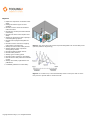
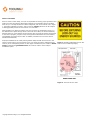
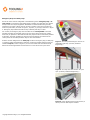
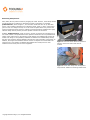
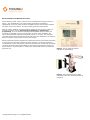
Physical barriers such as gates that stop the operation of the robot
when the gate is opened (Figure 1).
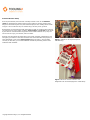
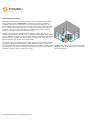
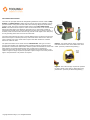
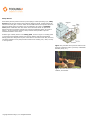
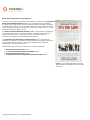
Sensors such as light curtains, motion sensors, or pressure mats that
stop the operation of the robot when the sensor barrier is crossed
(Figure 2).
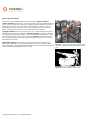
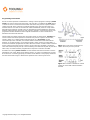
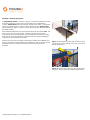
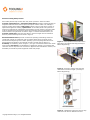
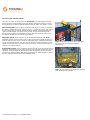
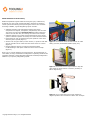
Remote diagnostic devices or instrument panels that allow
troubleshooting to take place outside the robot’s work envelope
(Figure 3).
Figure 1. Use a barrier device like this interlock for robot
safety. [Courtesy of Kawasaki Robotics (USA), Inc.]
Never rely on a single safeguard to protect workers. The best approach to
robot safety is using a combination of safeguards. If operating conditions are
especially hazardous, install redundant safeguards and backup safeguards in
addition to your primary safeguarding system.
Figure 2. Use sensors such as light curtains to stop the
robot when the sensor barrier is crossed. (Courtesy of
Banner Engineering.)
Figure 3. Use a remote device like a teach pendant to
diagnose problems from outside the robot's work envelope.
Copyright © 2009 Tooling U, LLC. All Rights Reserved.
Lesson: 19/19
Summary