1
EnerPHit Standard
Exemptions for EnerPHit
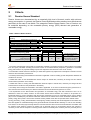
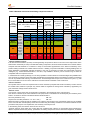
The limit values in Table 2 for the heat transfer coefficients of the exterior envelope building
components may be exceeded if absolutely necessary based on one or more of the following
compelling reasons:
□
If required by the historical building preservation authorities
□
If the cost-effectiveness of a required measure is no longer assured due to exceptional
circumstances or additional requirements
□
Due to legal requirements
□
If implementation of the required standard of thermal insulation would result in unacceptable
restriction of the use of the building or adjacent outer areas
□
If special, additional requirements (e.g. fire safety) exist and there are no components available
on the market that also comply with the EnerPHit criteria
□
If the heat transfer coefficient (U-value) of windows is increased due to a high thermal
transmittance (psi value) of the window installation offset to the insulation layer in a wall that
has interior insulation
□
If reliably damage-free construction is only possible with a smaller insulation thickness in the
case of interior insulation
□
If other compelling reasons relating to construction are present
If the thickness of the thermal insulation is restricted due to any of the reasons mentioned above,
and an exemption is applicable, then the insulation thickness that is still possible must be
implemented with a high-performance insulation material with a thermal conductivity
λ ≤ 0.025 W/(mK) if this can be implemented cost-effectively and in a damage-free way (in the case
of interior insulation). In this case, the additional application of a surrounding insulation skirt should
be considered in the case of floor slabs and basement ceilings. The measure should be implemented
if this is economically viable.
Criteria for the Passive House, EnerPHit and PHI Low Energy Building Standard, version 9d, revised 10.11.2015
11/25
Copyright © 2015 Passive House Institute; excerpts and use only permitted in an unchanged form with complete citing of the source