1
MSC 79/23/Add.2
ANNEX 34
Page 30
Radar target enhancer
An electronic radar reflector, the output of which is an
amplified version of the received radar pulse without any
form of processing except limiting.
Reference target
Symbol indicating that the associated tracked stationary
target (e.g. a navigational mark) is used as a speed reference
for the ground stabilization.
Relative bearing
Direction of a target’s position from own ship’s reference
location expressed as an angular displacement from own
ship’s heading.
Relative course
Direction of motion of a target relative to own ship’s
direction. (Bearing).
Relative motion
Combination of relative course and relative speed.
Relative speed
Speed of a target relative to own ship’s speed data.
Rate of turn
Change of heading per time unit.
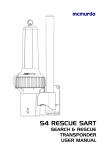
SART
Search And Rescue Transponder.
SDME
Speed and Distance Measuring Equipment.
Selected target
A manually selected target for the display of detailed
alphanumeric information in a separate data display area.
The target is displayed by a “selected target” symbol.
Sleeping AIS target
A target indicating the presence and orientation of a vessel
equipped with AIS in a certain location. The target is
displayed by a “sleeping target” symbol. No additional
information is presented until activated.
Stabilization modes
Ground stabilization: Display mode in which speed and
course information are referred to the ground, using ground
track input data, or EPFS as reference.
Sea stabilization: Display mode in which speed and
course information are referred to the sea, using gyro or
equivalent and water speed log input as reference.
Standard display
The level of information that should be shown when a chart
is first displayed on ECDIS. The level of the information it
provides for route planning or route monitoring may be
modified by the mariner according to the mariner's needs.
Standard radar reflector
Reference reflector mounted 3.5 m above sea level with
10 m2 effective reflecting area at X-Band.