1
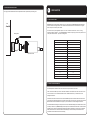
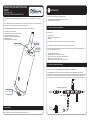
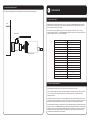
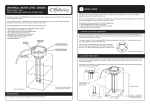
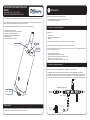
1.3 SUGGESTED MOUNTING METHOD
It is highly recommended that the Tank and Hydrostatic Sender is separated by an isolating valve.
2
CONFIGURATION
2.2 TANK DEVICE INSTANCE
Tank
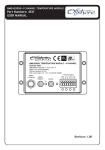
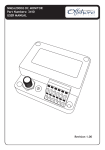
NMEA2000 requires a unique Device Instance to be set for each type of 4272 NMEA2000 Hydrostatic Side Mount
Tank Level Sender on a single network. This is settable from device instance 0 to Device Instance 15 using the
small rotary switch on the top of the sender.
This can be set at any time regardless if power is on or off. The switch counts from 0 – 9 then A – F being
equivalent to Device Instance 0 – 15. The NMEA2000 Device Instance is set by using the small rotary switch on the
front panel labeled “Tank No.” as per the following table:
Isolating Valve
Switch Position
Device Instance
0
0
1
1
2
2
3
3
4
4
5
5
6
6
7
7
8
8
Hydrostatic Sender
9
9
A
10
B
11
C
12
D
13
E
14
F
15
2.2 OUTPUT MODE CONFIGURATION
The 4272 Hydrostatic Side Mount Tank Level Sender has two output modes to choose from.
It has a normal tank LEVEL output from 0 – 100% that indicates the exact LEVEL of the fluid in the tank. The user
can tell when the unit is in Level Mode because the blue LED flashes ONCE every 2.5 seconds when a level
message has been sent.
In addition to this mode the unit can transmit a tank VOLUME output from 0-100% that reflects the actual fluid
volume within the tank taking allowance for the tanks internal shape. The user can tell when the unit is in Volume
Mode because the blue LED flashes twice rapidly every 2.5 seconds when a volume message has been sent.
The Volume Mode PGN message is exactly the same as the Level Mode PGN message which means that the volume
can easily be shown on any NMEA2000 display that accepts Fluid Level PGNs from tank senders. The Volume Mode
Tank data can be entered from any Offshore Systems Display that is equipped to set up this data (e.g. 3340 and
3350). Please contact us for more information on these displays. It can also be set up at manufacture if the
information is made available at the time of ordering.