1
5 Architecture and Implementation
With a generic questionnaire model and an approach to integrate PAIS functionality into
such questionnaires (as described in chapter 4), the basis for a standalone process-aware
questionnaire configurator is created. Such a configurator requires additional features to
handle the complexity of the supplementary PAIS support in a user-friendly way. Furthermore, the generic questionnaire model (as shown in section 4.2) defines several extension
points for a flexible expandability of configurators. In this chapter an architecture is presented, which lists and structures required components including their dependencies, to
pave the way for a concrete implementation of a process-aware questionnaire configurator.
To validate this architecture an implemented prototype is developed as part of this thesis
and grants an insight into a concrete implementation based on RCP.
The first step of implementing a configurator is the listing of requirements and their packaging into different software components. Section 5.1 provides an overview of necessary
core components reaching from front-end to persistence modules. A closer look at the
persistence components is given in section 5.2. To avoid restrictions by only providing either online or offline functionality, this persistence components describe a hybrid approach,
which offers both functionalities. These components are structured in section 5.3 by using
well-known design patterns, like the Presentation-Abstraction-Control (PAC) pattern, which
divides the graphical representation from the data model on several hierarchical layers. In
section 5.4 the Rich Client Platform (see section 2.3) is integrated into the architecture of
the process-aware configurator to benefit from available functionality for common programming tasks. The results of this chapter are provided as an overview in section 5.5.
5.1 Core Components
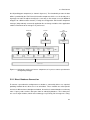
The components of a process-aware questionnaire configurator constitute three categories:
The user interface components contain the visual representation and therefore focus on
39