1
8
Revision 1853 committed on 2014-08-30 23:51:33Z by black
Blocks are lexically scoped inside their containing method or block. A
“naked” block literal, that is, a block literal that is neither the target of a
method request nor an argument, is a syntax error.
The body of a block consists of a sequence of declarations and expressions.
An empty body is allowed, and is equivalent to done.
6
Declarations
Declarations of constants and variables may occur anywhere within an object, a method, or a block: their scope is the whole of their defining object,
method, or block. Grace has a single namespace for all identifiers; this shared
namespace is used for methods, constants, variables and types. It is an error
to declare a constant or variable that shadows a lexically-enclosing constant
or variable. It is an error to attempt to redeclare anything in the same lexical
scope.
6.1
Constants
Constant definitions are introduced using the def keyword; they bind an
identifier to the value of an initialising expression, optionally at a precise
type. Constants cannot be re-bound.
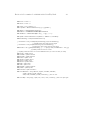
Examples
def x = 3 ∗ 100 ∗ 0.01
def x:Number = 3 // means the same as the above
def x:Number
// Syntax Error: x must be initialised
6.2
Variables
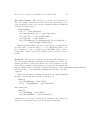
Variable definitions are introduced using the var keyword; they optionally
bind an identifier to the value of an initialising expression, optionally at a
precise type. Variables can be re-bound to new values as often as desired,
using an assignment statement. If a variable is declared without an initializing expression, it is said to be uninitialized ; any attempt to access the value
of an initialized variable is an error. This error may be caught either at run
time or at compile time, depending on the cleverness of your implementor.
Examples