1
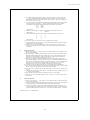
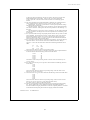
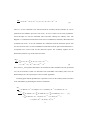
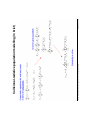
It is now possible to obtain a full equilibrium solution for the population of metastables
making the left-hand side members of all equations equal to zero and solving.
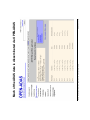
ADAS tools and data base.
A series Fortran routines have been created to compute molecular CR coefficients and
perform full equilibrium population calculations given plasma conditions of temperature and
density. Fundamental data which form the input to the model and the derived CR coefficients
are archived in a structured and comprehensive data base that will be available in ADAS [7].
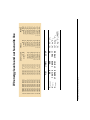
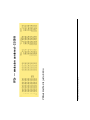
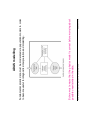
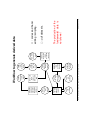
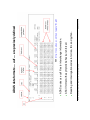
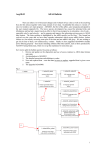
The fundamental data (cross sections and rates) are archived in a specific format file called
mdf02 (mdf stands for molecular data format). A dedicated routine (ADAS902) produces the
Maxwellian rates from these data. The results are output in the specific formats mdf33 and
mdf34 which store electron impact data and ion impact data respectively. They also make the
input of the next main routine: ADAS903. It analyses the collisional matrix and fill the gaps
where it is possible. To do so, impact parameter (IP) approximation with a cut-off at close
radius [8] is used for the excitation data by means of the ADAS routine EIQIP [7]. For
excitation and ionization data, the ECIP approximation [9] which uses binary encounters at
close range collisions with IP at long range is available. ADAS903 can utilize the FranckCondon factors to create data for the two resolutions considered:
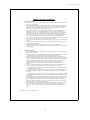
1. Electronic resolution where the vibronic transitions are summed over the electronic levels
for the ordinary states. Due to the absence of a permanent dipole moment in the homonuclear
diatomic molecules, vibronic levels of the metastables are considered as metastables themselves
and transitions between them are forbidden.
2. Full vibronic resolution where all the vibronic levels are kept for the calculations. Here
Franck-Condon factors are used to split the total cross sections into vibronic states.
5