1
CERTIFICATION TESTING FOR SMALL WIND TURBINES
Dave Corbus, Hal Link, Sandy Butterfield, Christof Stork, Charles Newcomb
National Renewable Energy Laboratory
1617 Cole Blvd.
Golden, CO 80401
Tim Sasseen
Southwest Windpower
2131 N. First St.
Flagstaff, AZ 86003
1.0 Background
This paper describes the testing procedures for obtaining type certification for a small wind turbine.
Southwest Windpower (SWWP) is seeking type certification from Underwriters Laboratory (UL) for the
AIR 403 wind turbine. UL is the certification body and the National Renewable Energy Laboratory
(NREL) is providing technical assistance including conducting the certification testing. This is the first
small turbine to be certified in the United States, therefore standards must be interpreted and test
procedures developed.
2.0 Description of the Turbine
The AIR 403 is a small battery-charging turbine rated to produce 400 watts in a 12.5 meters per second
(m/s) (28 mph) wind speed. The turbine is generally used either as a stand-alone battery charging system
or in conjunction with a small photovoltaic (PV) array as a wind-PV hybrid system to power loads such
as lighting, TV, and small household appliances. The AIR 403 turbine is also very popular on sailboats
for on-board power.
The AIR 403 uses a brushless permanent magnet alternator to produce three-phase variable alternating
current (AC) output that is then rectified to direct current (DC). The rectifier and charge controller for the
turbine are housed in the nacelle of the turbine and are directly heat-sinked to the turbine body. The
turbine rotor diameter is 1.15 meters (4 ft), the weight is 5.85 kilograms (13 lb), and the turbine is
available in 12-, 24-, and 48-volt configurations. The cut-in wind speed of the turbine is 2.7 m/s (6 mph).
The turbine has a brake switch that shorts the turbine output wires together and results in the turbine
stopping.
The turbine blades are made from injected-molded carbon fiber. In winds above about 18.8 m/s
(42 mph), the carbon-fiber blades will go into flutter to protect the turbine from overspeeding. This is
called aeroelastic stall in the user’s manual (Southwest Windpower 1999). During normal turbine
operation (i.e., turbine connected to batteries), the turbine regulator will brake the turbine to a very slow
rotational speed when the batteries are fully charged. During open-circuit operation of the turbine (i.e.,
turbine disconnected from the batteries), the turbine regulator will brake the turbine to prevent overspeed
and to prevent the output voltage from rising above double the rated voltage of the turbine.
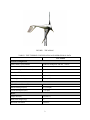
Figure 1 shows a picture of the AIR 403. Table 1 lists the basic turbine specifications and operational
data.
1