1
In this research, the performance of the forklift drivers was measured by comparing the actual time
they needed to fulfil an order to the standard time. This standard time could be calculated by
subdividing a task into its basic elements. By then performing work measurement techniques, the
needed time for each element could be calculated. These times were then added together and an
allowance for fatigue was also taken into account.
The standard times were calculated for the travel time and the loading and unloading times of the
vehicle. The travel time is based on the shortest distance between the start- and stop-point, taking
into account corners and passageways. The loading and unloading times can be divided into arm
lift and drop times (based on how high the fork needs to be lifted for the action), and pallet
retrieval and put away times (based on the type of product handled and the storage location).
The actual times were measured by the time-stamps provided by the wireless units attached to
each forklift.
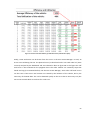
The forklifts were then equipped with screens that displayed the time goal and also the
performance of the driver. By communicating this performance to the drivers immediately, the
performance increased according to a test case. (Ludwig and Goomas, 2009)
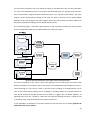
Another interesting application of RFID technology in the performance measurement of internal
logistics is the PRIDE framework as proposed by Kootbally et al.. PRIDE or Prediction In Dynamic
Environments provides an autonomous vehicle path planning system with collision avoidance.
In this research, PRIDE is used to navigate AGVs in a dynamic manufacturing environment. These
AGVs have to move around the plant between various loading- and unloading-points. To minimize
the time needed for this, shortest path algorithms such as Dijkstra’s algorithm can be used.
However, when another vehicle blocks this shortest path, the PRIDE algorithm will be used. This
algorithm calculates the shortest path but also provides collision avoidance between the different
logistics vehicles. First the importance or the role of the other vehicle is examined. If this vehicle
cannot be moved at that time (e.g. because it is lifting items from a rack) or has a higher priority,
the AGV’s shortest path will be recalculated but with the blocked lane removed from the possible
lanes. (Kootbally et al., 2009)
The collision avoidance described here could possibly be used as an expansion on this thesis when
multiple logistics vehicles are deployed in one area.
The applications that are described here, will be used as a guideline for the development of
performance measurement system in this thesis. In these three applications there is always a direct
13