1
Hyperion Manual, Release 0.9.7
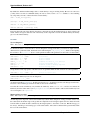
It is important to note that the two are incompatible - a given image group can either use filters, or a fixed wavelength
range. However, multiple filters can be added to a single image group. The filter properties are then set using e.g.:
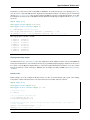
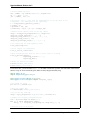
from astropy import units as u
f = i.add_filter()
f.name = 'F2'
f.spectral_coord = [2, 2.1, 2.2, 2.3, 2.4] * u.micron
f.transmission = [0., 50, 100, 60, 0.] * u.percent
f.detector_type = 'energy'
f.alpha = 1.
f.central_spectral_coord = 2.15 * u.micron
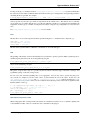
The attributes to set are the following:
• the name should simple be a string that can be used later to refer to the output in that particular filter.
• the spectral_coord attribute should be set to the x-axis of the spectral transmission curve, and can be in
frequency, wavelength, or energy.
• the transmission attribute should be given as an array or a list of values. The absolute values do not
matter, because they are re-normalized before being used in Hyperion, but the values should give the relative
transmission as a function of frequency. This should not already be multiplied or divided by the frequency. It
should simply give at a given frequency or wavelength, the relative probability that an energy packet will pass
through the filter/system.
• the detector_type attribute should be set to either ’energy’ or ’photons’. This is important because
for a given input spectral shape for the emission, if a detector simply measures photons, then proportionally
more photons will be detected at longer wavelengths relative to shorter wavelengths compared to the ratio of
the energy detected at longer wavelengths to shorter wavelengths. When using the measurement made with the
detector, it is therefore important to know whether to take into account this bias.
• the alpha attribute is also related to a subtle issue, which is that when measuring a flux through a given filter,
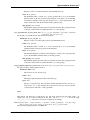
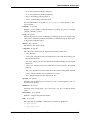
what is measured is a total amount of energy or photons, but in order to convert this to a monochromatic flux 𝐹𝜈 ,
assumptions need to be made about the underlying spectral shape. Examples of this are given in the appendix
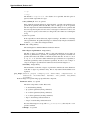
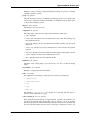
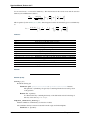
of Robitaille et al. (2007). The parameter alpha is used to indicate that the underlying spectral shape is
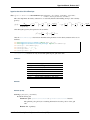
𝜈 𝛼 𝐹𝜈 ∝ const.
• the central_spectral_coord attribute gives the spectral coordinate at which the monochromatic flux
should be given.
Once the filters have been set up, Hyperion runs as usual. The output SEDs and images will be defined at the central
wavelengths of the filters.
Note that filter convolution cannot be used in conjunction with raytracing, nor with monochromatic radiative transfer.
Finally, the two following topics are reserved for coding ninjas! They explain the HDF5 file format used for the dust
files and the model files so that you can write your own library, and bypass the Python library altogether.
4.1.11 Dust HDF5 Format
Overview
Hyperion requires information on the dust properties, such as the albedo, opacity, mean opacities, and emissivities.
These need to be packaged in an HDF5 format that is described below. In most cases you do not need to create
these files from scratch, and you can instead use the Hyperion Python library to produce these (see Preparing dust
properties). If however you want to write the files directly without the Python library, this section is for you!
4.1. Advanced topics
99