1
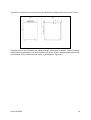
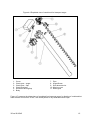
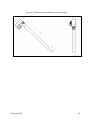
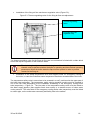
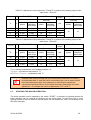
Minor change in the primary air regulation flap position changes sensibly its flow
rate, therefore precise adjustment is necessary – it is recommended to move the flap
with small pitch (around 1 mm).
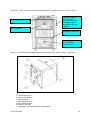
The secondary air flow rate can be changed by changing the primary air flap position. By opening
it the primary air flow rate increases and the secondary air decreases. The air is transferred
through the preheating box, then through the nozzle orifices and mixes with the combustible
gasses, separated from the wood gasification, which results in optimum combustion and
production of heat energy.
The total air quantity sucked by the boiler is determined by the flap position, driven by the thermoregulation valve. The valve changes the common air regulation flap position (its tilt) by chain. The
burning process adjustment must be performed by trained specialist and gas-analyzing device.
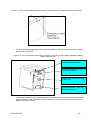
For primary adjustment of the burning process it is necessary to perform visual evaluation of the
flame color – it is performed by slightly opening of the combustion chamber door (lower boiler
door) and quick assessment of the flame color. After that the door must be closed.
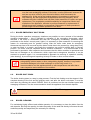
By opening the combustion chamber door the under pressure (discharge) in this
zone and the burning process change rapidly. Therefore for correct evaluation of the
burning process it is necessary to evaluate the flame immediately, after quick
opening of the door and before it reflects the burning process.
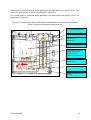
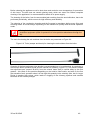
The flame coming down from the nozzle must reach the directing fireclay component, positioned
on the bottom of the combustion chamber. The flame color at optimal burning process (process
realized with low excess air and minimum harmful emissions concentration in the flue gasses –
mainly carbon oxygen (CO), nitro oxygen (NOx) and unburned carbon hydrogen) is deep yellow
with bluish (blue) areas.
In case the flame is:
Deep red – this shows insufficient secondary air – it is necessary to increase the
secondary air flow rate, by opening the flap;
Bright yellow or with small length – this is indication for excessive secondary air and its
flow rate has to be decreased, by gradual closing of the common air regulation flap, driven
by the chain of the thermo-regulation valve;
Flame with low intensity (slow flame) – indicates that the primary air flow rate has to be
increased – the primary air regulation flap has to be opened gradually;
Smoke in the flame – indicates insufficient secondary air and increased production of
combustible gasses and tars. Therefore it is necessary to decrease the primary and
increase the secondary air flow rates, after waiting for a period of time – this is performed
by closing the primary air regulation flap (move its shaft gradually towards the boiler).
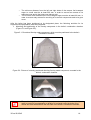
Criterion for optimal combustion is the condition of the directing fireclay component, mounted in
the boiler’s combustion chamber – its surface must be white to light grey color, the ash deposits
quantity should be relatively little, without presence of unburned particles (coals and others, or
dark colored wooden particles).
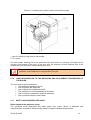
The burning process adjustment can be also evaluated by monitoring the smoke color, exhausted
from the chimney to which the boiler is connected. If the smoke is dark it means that the
secondary air is not enough or the fuel moistureis high. The chimney smoke is usually visible, as
mainly the sun lights break through it due to the smoke gas higher temperature (compared to the
environment). In other cases, when the temperature is below -10oC, it is possible to monitor
3Fera 25/35/45
33