1
RideControl
Introduction
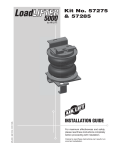
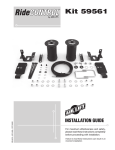
The purpose of this publication is to assist with the installation, maintenance and
troubleshooting of the RideControl air spring kit. The air springs used in RideControl kits
are designed and manufactured like a tire. The air springs have layers of rubber and cords
that control the bag’s growth and funnel it into one direction. The bags do not require a coil
spring for control. RideControl kits utilize a sleeve style air bag that provides up to 2,000
pounds of load-leveling support. Each sleeve is rated at a maximum of 100 PSI.
It is important to read and understand the entire installation guide before beginning
installation or performing any maintenance, service or repair. The information here includes
a hardware list, step-by-step installation information, maintenance tips, safety information
and a troubleshooting guide.
Air Lift Company reserves the right to make changes and improvements to its products and
publications at any time. Contact Air Lift Company at (800) 248-0892 or go online at
www.airliftcompany.com for the latest version of this manual.
IMPORTANT SAFETY NOTICE
The installation of this kit does not alter the Gross Vehicle Weight Rating (GVWR) or payload
of the vehicle. Check your vehicle’s owner’s manual and do not exceed the maximum load
listed for your vehicle.
Gross Vehicle Weight Rating: The maximum allowable weight of the fully loaded vehicle
(including passengers and cargo). This number — along with other weight limits, as well
as tire, rim size and inflation pressure data — is shown on the vehicle’s Safety Compliance
Certification Label.
Payload: The combined, maximum allowable weight of cargo and pasengers that the truck
is designed to carry. Payload is GVWR minus the Base Curb Weight.
NOTATION EXPLANATION
Hazard notations appear in various locations in this publication. Information which is
highlighted by one of these notations must be observed to help minimize risk of personal injury
or possible improper installation which may render the vehicle unsafe. Notes are used to help
emphasize areas of procedural importance and provide helpful suggestions. The following
definitions explain the use of these notations as they appear throughout this guide.
DANGER
INDICATES IMMEDIATE HAZARDS WHICH WILL RESULT IN SEVERE PERSONAL
INJURY OR DEATH.
WARNING
INDICATES HAZARDS OR UNSAFE PRACTICES WHICH COULD RESULT IN SEVERE
PERSONAL INJURY OR DEATH.
CAUTION
INDICATES HAZARDS OR UNSAFE PRACTICES WHICH COULD RESULT IN DAMAGE
TO THE MACHINE OR MINOR PERSONAL INJURY.
NOTE
2
Indicates a procedure, practice or hint which is important to highlight.
MN-670