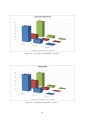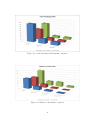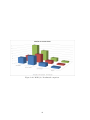
1
Block Tridiagonal Solver
(BT)
Embarrassingly
(EP)
Parallel
NAS Benchmarks Definitions
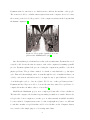
The Block Tridiagonal Solver benchmark solves a tridiagonal matrix. This is also a good benchmark for testing real life problems.
The Embarrassingly Parallel benchmark tests the maximum computational power of the cluster. This test
uses the minimum interprocessor communication possible, and is therefore a great benchmark to test the
maximum ability of the cluster.
Integer Sort (IS)
The Integer Sort benchmark tests computational speed
and communication performance.
Multi-Grid (MG)
The Multi-Grid benchmark tests both long and short
term communication. This benchmark will test how
well the hardware of the cluster can communicate with
each other node. This is a very important test for larger
clusters where communication between nodes can take
up a lot of time.
Conjugate Gradient (CG)
The Conjugate Gradient benchmark is best explained
by NASA themselves, ”A conjugate gradient method
is used to compute an approximation to the smallest
eigenvalue of a large sparse symmetric positive definite
matrix”[10]. This benchmark is a great gauge for knowing how a realistic computational physics code would
run.
Discrete 3D Fast Fourier
Transform (FT)
The Fast Fourier Transform benchmark solves a 3D
partial differential equation. This benchmark is another realistic computational physics problem and will
help administrators understand the clusters capabilities.
Lower-Upper Gauss-Seidel
Solver (LU)
The Lower-Upper benchmark solves a computational
fluid dynamics problem.
Scalar
Pentadigaonal
Solver (SP)
The Scalar Pentadiagonal benchmark is a computational fluid dynamics code built to test the overall capabilities of a cluster.
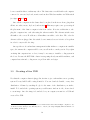
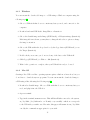
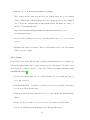
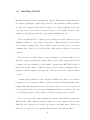
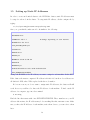
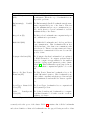
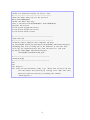
Figure 4.1: A list of all the NAS benchmarks and what they test
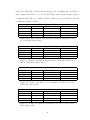
accurately reflect the power of the cluster. Table 4.1 contains a list of all the benchmarks
and a short definition of what each benchmark tests. The pages following are tables of data
30