1
9.
1.
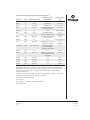
Appendix ...................................................................................................................................43
A. Preparing the PowerPlex® 16 HS System PCR Amplification Mix ........................43
B. Advantages of STR Typing...........................................................................................44
C. Advantages of Using the Loci in the PowerPlex® 16 HS System ...........................44
D. Power of Discrimination ...............................................................................................48
E. The Internal Lane Standard 600...................................................................................48
F.
Composition of Buffers and Solutions........................................................................49
G. DNA Extraction and Quantitation Methods..............................................................49
H. Related Products ............................................................................................................50
Description
STR (short tandem repeat) loci consist of short, repetitive sequence elements 3–7 base
pairs in length (1–4). These repeats are well distributed throughout the human genome
and are a rich source of highly polymorphic markers, which may be detected using
the polymerase chain reaction (5–9). Alleles of STR loci are differentiated by the
number of copies of the repeat sequence contained within the amplified region and
are distinguished from one another using radioactive, silver stain or fluorescence
detection following electrophoretic separation.
The PowerPlex® 16 HS System(a–e) allows co-amplification and three-color detection
of sixteen loci (fifteen STR loci and Amelogenin), including Penta E, D18S51, D21S11,
TH01, D3S1358, FGA, TPOX, D8S1179, vWA, Amelogenin, Penta D, CSF1PO,
D16S539, D7S820, D13S317 and D5S818. One primer for each of the Penta E, D18S51,
D21S11, TH01 and D3S1358 loci is labeled with fluorescein (FL); one primer for each
of the FGA, TPOX, D8S1179, vWA and Amelogenin loci is labeled with carboxytetramethylrhodamine (TMR); and one primer for each of the Penta D, CSF1PO,
D16S539, D7S820, D13S317 and D5S818 loci is labeled with 6-carboxy-4´,5´-dichloro2´,7´-dimethoxy-fluorescein (JOE). All sixteen loci are amplified simultaneously in a
single tube and analyzed in a single injection or gel lane.
The PowerPlex® 16 HS System is compatible with the ABI PRISM® 310, 3100 and
3100-Avant Genetic Analyzers and Applied Biosystems 3130 and 3130xl Genetic
Analyzers. The protocols presented in this manual were tested at Promega
Corporation. Amplification and detection instrumentation may vary. You may need
to optimize protocols including cycle number and injection time (or loading volume)
for each laboratory instrument. In-house validation should be performed.
The PowerPlex® 16 HS System provides all of the materials necessary for
amplification of STR regions of purified genomic DNA, including hot-start Taq DNA
polymerase. This manual contains separate protocols for use of the PowerPlex® 16
HS System with the Perkin-Elmer model 480 and GeneAmp® PCR system 9600 and
9700 thermal cyclers in addition to protocols to separate amplified products and
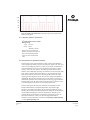
detect separated material (Figure 1). Protocols for operation of the fluorescencedetection instruments should be obtained from the instrument manufacturer.
Information on other Promega fluorescent STR systems, including the PowerPlex® 16
Monoplex Systems, and detection of amplified STR fragments using silver staining is
available upon request from Promega or online at: www.promega.com
Promega Corporation · 2800 Woods Hollow Road · Madison, WI 53711-5399 USA · Toll Free in USA 800-356-9526 · Phone 608-274-4330 · Fax 608-277-2516 · www.promega.com
Part# TMD022
Page 2
Printed in USA.
1/09