1
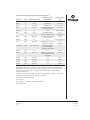
Symptoms
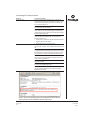
The plots window or allele
table does not display all data
The Check ILS macro
displays an empty plot
window
Off-ladder peaks
8.
Causes and Comments
The macros were not run in the proper order. Use the POWER
or POWER 20% Filter macro option.
All four dye colors were not imported. For Genotyper ®
software, versions 2.5 and 3.5 or higher, set preferences (in the
Edit menu) to import the blue, green, yellow and red colors.
All four dye colors were not imported. For Genotyper ®
software, versions 2.5 and 3.5 or higher, set preferences (in the
Edit menu) to import the blue, green, yellow and red colors.
Migration of samples changed slightly over the course of a
CE run with many samples. This may be due to changes in
temperature or the CE column over time. Use a different
injection of allelic ladder to determine sizes in the
PowerTyper™ 16 Macro (Release 2.0). Do not use the first
injection on a new column for the ladder sample.
The base-pair size of alleles was incorrect because incorrect
fragment sizes were assigned to the internal lane standard.
Confirm that internal lane standard fragment sizes are
assigned correctly. Re-analyze the sample using GeneScan®
software, and redefine the internal lane standard fragments.
References
1.
Edwards, A. et al. (1991) DNA typing with trimeric and tetrameric tandem repeats: Polymorphic loci,
detection systems, and population genetics. In: The Second International Symposium on Human
Identification 1991, Promega Corporation, 31–52.
2.
Edwards, A. et al. (1991) DNA typing and genetic mapping with trimeric and tetrameric tandem
repeats. Am. J. Hum. Genet. 49, 746–56.
3.
Edwards, A. et al. (1992) Genetic variation at five trimeric and tetrameric tandem repeat loci in four
human population groups. Genomics 12, 241–53.
4.
Warne, D. et al. (1991) Tetranucleotide repeat polymorphism at the human β-actin related pseudogene 2
(actbp2) detected using the polymerase chain reaction. Nucleic Acids Res. 19, 6980.
5.
Ausubel, F.M. et al. (1996) Unit 15: The polymerase chain reaction. In: Current Protocols in Molecular
Biology, Vol. 2, John Wiley and Sons, NY.
6.
Sambrook, J., Fritsch, E.F. and Maniatis, T. (1989) Chapter 14: In vitro amplification of DNA by the
polymerase chain reaction. In: Molecular Cloning: A Laboratory Manual, Second Edition, Cold Spring
Harbor Laboratory Press, Cold Spring Harbor, New York.
7.
PCR Technology: Principles and Applications for DNA Amplification (1989) Erlich, H.A., ed., Stockton
Press, New York, NY.
8.
PCR Protocols: A Guide to Methods and Applications (1990) Innis, M.A. et al., eds., Academic Press, San
Diego, CA.
9.
Butler, J.M. (2005) Forensic DNA Typing, 2nd ed. Elsevier Academic Press, London.
10.
Presley, L.A. et al. (1992) The implementation of the polymerase chain reaction (PCR) HLA DQ alpha
typing by the FBI laboratory. In: The Third International Symposium on Human Identification 1992,
Promega Corporation, 245–69.
11.
Hartmann, J.M. et al. (1991) Guidelines for a quality assurance program for DNA analysis. Crime
Laboratory Digest 18, 44–75.
12.
Internal Validation of STR Systems Reference Manual GE053, Promega Corporation.
13.
Kline, M.C. et al. (2005) Results from the NIST 2004 DNA quantitation study. J. Forensic Sci. 50, 571–8.
Promega Corporation · 2800 Woods Hollow Road · Madison, WI 53711-5399 USA · Toll Free in USA 800-356-9526 · Phone 608-274-4330 · Fax 608-277-2516 · www.promega.com
Printed in USA.
1/09
Part# TMD022
Page 41