1
Asteroid user’s manual
1. Introduction
The channel bank is a 19’’, 1U height unit. It consists of four 8 port FXS or FXO modules.
Asteroid can be used for attaching up to 30 telephone clients to the traditional PBX or to any
DAHDI-compatible PBX like the Asterisk/CallWeaver. It can be connected to the traditional PBX with
the help of E1 interface. Connection with Asterisk can be made through Ethernet port, using TDMoE
protocol. In both cases the channel bank realizes Loop Start signalization, subset of CAS family
signalizations. Moreover, Point to point mode can be provided if Asterisk server is not used.
Further in the text we assume Asterisk and CallWeaver to be equivalent.
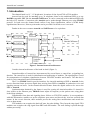
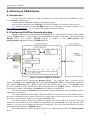
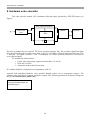
Figure 1. Internal Asteroid architecture
Consider internal architecture of the bank in detail (Figure 1).
Internal modules of Asteroid are interconnected by several buses: a control bus, a signaling bus,
data bus. The control bus is used for initialization and monitoring of modules. The signaling bus is used
for transportation of telephone signalization between FXO/FXS modules and framers. The data bus is
used for voice transmission and synchronization.
The E1 or TDMoE framers provide interfaces for Asteroid attaching to PBX or Asterisk. In the
receive direction framer processes digital data, arriving from PBX or Asterisk. It synthesizes voice and
signaling streams on buses. In the transmit direction framer forms the digital stream to be sent to the
PBX or Asterisk.
Synchronization obtained by the framer is used for syncing all Asteriod modules. If Asteroid is
slave relative to the Ethernet port, TDMoE framer adjust its frequency to the packets rate, using phase
locked loop technique.
Signalization from data and signaling buses follows to FXS/FXO modules. In correspondence
with this information, modules set up the telephone ports states and decode the A/m law encoded data
stream. In the reverse direction, these modules process the analog lines modifications and encode the
voice to data stream.
FXS modules can recognize the hook off state, the pulse dialing. They form the ring signal. FXO
modules can recognize the ring signal from PBX and dial number. The tone dialing is passed through
without processing.
5