1
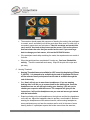
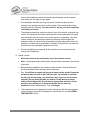
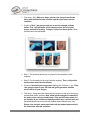
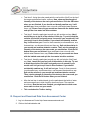
♦ Hold monitor near scanner LCD screen and squeeze balloon repeatedly to get signal
to appear on LCD (may take ~ 15 seconds)
♦ Put respiration band on participant near waistband. This will likely need to be moved
and adjusted after subject lies down to optimize signal.
7.3. Give participant warning about peripheral stimulation:
♦ [IMPORTANT] If participants are wearing shorts, either separate their legs with a
towel or sheet or change into scrubs to avoid peripheral stimulation (and cardiac
stimulation).
♦ Tell participants what peripheral stimulation feels like, instruct them not to clasp
hands together. This warning could happen outside of scanner room, but it is
important to make sure they know.
♦ "Some participants have reported that they feel peripheral stimulation in the scanner.
It may feel like pins and needles, or like muscle twitches.”
♦ “Clasping your hands or crossing your arms could make this worse, so please avoid
that while in the scanner. Instead, keep your arms at your side, with your hands on
the scanner bed or on your thighs."
♦ “If you feel anything, it will probably be very mild. If it gets painful, you could always
let us know by squeezing the emergency bulb. But otherwise, it should get less
intense over time.”
7.4. Tell participant about emergency bulb
♦ Tell participant that we will be taping emergency bulb to thigh. To avoid triggering it
accidentally, subject should not hold it in the scanner. Should only require a slight
movement to grab it.
♦ Instruct the participant to squeeze emergency bulb if there are any emergency
issues during the scan (e.g., peripheral stimulation is too painful, scanner noise
becomes painful because earplugs fall out). If it cannot wait without endangering
health and safety, squeeze the emergency bulb. Otherwise, if it is something that
can wait until the end of the scan, like needing to use the restroom, please wait and
we will check in with you every few minutes.
♦ Tape emergency bulb to thigh
7.5. Explain how we communicate with participant
♦ Tell participant: “While you are in the scanner, we will be communicating with you
either by the speaker in the scanner room or by the earbuds you will be wearing.
We will check on how you are doing and tell you what to expect next. To reduce
movement associated with speaking, please try to answer with yes or no, and to
keep your head as still as possible when you answer. Of course, if you need to tell
us something that cannot be communicated by just a yes or no, you should say it.”
Q3 Reference Manual – Appendix IV | WU-Minn Consortium of the NIH Human Connectome Project
Page 21