1
Section 3 - Configuration
Performance
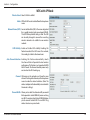
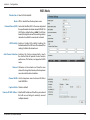
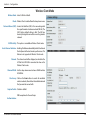
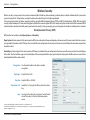
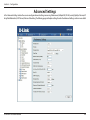
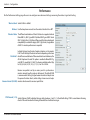
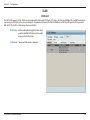
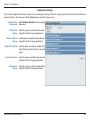
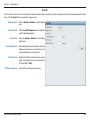
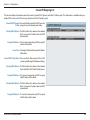
On the Performance Settings page the users can configure more advanced settings concerning the wireless signal and hosting.
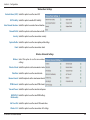
Wireless Band: Select 2.4Ghz in default.
Wireless: Use the drop-down menu to turn the wireless function On or Off.
Wireless Mode: The different combination of clients that can be supported include
Mixed 802.11n, 802.11g and 802.11b, Mixed 802.11g and 802.11b and
802.11n Only in the 2.4 GHz band Please note that when backwards
compatibility is enabled for legacy (802.11g/b) clients, degradation
of 802.11n wireless performance is expected.
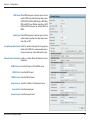
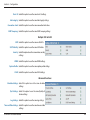
Indicate the base transfer rate of wireless adapters on the wireless
LAN. The AP will adjust the base transfer rate depending on the base
Data Rate*: rate of the connected device. If there are obstacles or interference, the
AP will step down the rate. This option is enabled in Mixed 802.11g
and 802.11b mode (for 2.4 GHz). The choices available are Best (Up
to 54), 54, 48, 36, 24, 18, 12, 9, 6, 11, 5.5, 2 or 1 for 2.4 GHz.
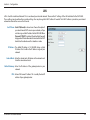
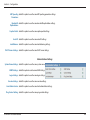
Beacons are packets sent by an access point to synchronize a
wireless network. Specify a value in milliseconds. The default (100)
is recommended. Setting a higher beacon interval can help to save
the power of wireless clients, while setting a lower one can help a
Beacon Interval (25-500): wireless client connect to an access point faster.
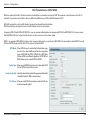
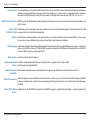
DTM Interval (1-15): Select a Delivery Traffic Indication Message setting between 1 and 15. 1 is the default setting. DTIM is a countdown informing
clients of the next window for listening to broadcast and multicast messages.
D-Link DAP-2330 User Manual
26