1
4 Guest Additions
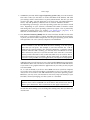
With this feature, if an application inside your virtual machine uses 3D features
through the OpenGL or Direct3D 8/9 programming interfaces, instead of emulating
them in software (which would be slow), VirtualBox will attempt to use your host’s
3D hardware. This works for all supported host platforms (Windows, Mac, Linux,
Solaris), provided that your host operating system can make use of your accelerated
3D hardware in the first place.
The 3D acceleration currently has the following preconditions:
1. It is only available for certain Windows, Linux and Solaris guests. In particular:
• For Windows guests, support is restricted to 32-bit versions of XP and Vista.
Both OpenGL and Direct3D 8/9 are supported (experimental).
• OpenGL on Linux requires kernel 2.6.27 and higher as well as X.org server
version 1.5 and higher. Ubuntu 8.10 and Fedora 10 have been tested and
confirmed as working.
• OpenGL on Solaris guests requires X.org server version 1.5 and higher.
2. The Guest Additions must be installed.
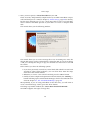
Note: For Direct 3D acceleration to work in a Windows Guest, VirtualBox
needs to replace Windows system files in the virtual machine. As a result, the
Guest Additions installation program offers Direct 3D acceleration as an option that must be explicitly enabled.Also, you must install the Guest Additions
in “Safe Mode”; see chapter 13, Known limitations, page 209 for details.
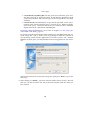
3. Because 3D support is still experimental at this time, it is disabled by default and
must be manually enabled in the VM settings (see chapter 3.3, General settings,
page 49).
Note: Enabling 3D acceleration may expose security holes to malicious software running the guest. The third-party code that VirtualBox uses for this
purpose (Chromium) is not hardened enough to prevent every risky 3D operation on the host.
Technically, VirtualBox implements this by installing an additional hardware 3D
driver inside your guest when the Guest Additions are installed. This driver acts as
a hardware 3D driver and reports to the guest operating system that the (virtual)
hardware is capable of 3D hardware acceleration. When an application in the guest
then requests hardware acceleration through the OpenGL or Direct3D programming
interfaces, these are sent to the host through a special communication tunnel implemented by VirtualBox, and then the host performs the requested 3D operation via the
host’s programming interfaces.
79