1
14. RESULTS & INTERPRETATIONS
Two amplification curves are displayed on the Truelab™ Uno Real Time micro PCR Analyzer screen
to indicate the progress of the test. Both the target and the internal positive control (IPC)* curves will
take a steep, exponential path when the fluorescence crosses the threshold value in case of positive
samples. The Ct will depend on the number of parasite genomes in the sample. The target curve will
remain horizontal throughout the test duration and the IPC curve will take an exponential path in case
of negative samples. In case the IPC curve remains horizontal in a negative sample, the test is
considered as Invalid. At the end of the test run, the results screen will display “DETECTED” for
Positive result or “NOT DETECTED” for Negative result. The result screen would also display the Ct
value and the parasites per µL (P/µL) for positive specimen. The result screen also displays the
validity of the test run as “VALID” or “INVALID”. Invalid samples have to be repeated with fresh
specimen from the sample preparation stage. *While IPC will co-amplify in most positive cases also, in
some specimen having a high target load, the IPC may not amplify, however the test run is still considered
valid.
15. QUALITY CONTROL PROCEDURES
To ensure that the Truelab™ Uno Real Time micro PCR Analyzer is working accurately, run positive
and negative controls from time to time. The Truenat™ Universal Control Kit containing Positive
Control and Negative Control must be ordered separately. It is advisable to run controls under the
following circumstances: ? Whenever a new shipment of test kits is received. ? When opening a new
test kit lot. ? If the temperature of the storage area falls outside of 2-30o C. ? By each new user prior to
performing testing on clinical specimen.
16. DISPOSAL AND DESTRUCTION
1. Submerge the used Truenat™ Malaria Pf chip-based Real Time PCR test in freshly prepared 1%
sodium hypochlorite solution for 20 minutes before disposal as per the standard medical waste
disposal guidelines.
2. Disinfect the solutions and/or solid waste containing biological samples before discarding them
according to local regulations.
3. Samples and reagents of human and animal origin, as well as contaminated materials,
disposables, neutralized acids and other waste materials must be discarded according to local
regulations after decontamination by immersion in a freshly prepared 0.5% of sodium hypochlorite
for 30 minutes (1 volume of 5% sodium hypochlorite for 10 volumes of contaminated fluid or water).
4. Do not autoclave materials or solutions containing sodium hypochlorite.
5. Chemicals should be handled in accordance with Good Laboratory Practice and disposed off
according to the local regulations.
17. SPECIFIC PERFORMANCE CHARACTERISTICS
ASSAY RANGE
Plasmids carrying cloned PCR amplicons were used as template DNA. The samples were quantified
by UV spectrophotometry to determine the copy number/microlitre. The plasmids were serially diluted
and tested using Truenat Malaria chips to obtain Ct values which were plotted against the plasmid
concentration per reaction to determine the range of the assay. The assay was found to have a broad
linear dynamic range (over 7 orders of magnitude). The Truenat™ Malaria Pf test was able to detect
as low as 2 parasites per µL equivalent of blood.
CLINICAL SENSITIVITY / CLINICAL SPECIFICITY: Truenat™ Malaria Pf was tested against a
nested PCR protocol (according to SOP: 5.8 of WHO; Methods Manual for Product Testing of Malaria
Rapid Diagnostic Tests, Version 2, 2009 ) and clinical sensitivity and specificity were both found to be
100%. Truenat™ Malaria Pf was tested with 50 archived Pf positive samples obtained from National
Institute of Malaria Research (NIMR), Bangalore and 50 Pf negative samples. The WHO Nested
PCR protocol was run in parallel to confirm the status of the samples. All the 50 Pf samples were
detected as positive and the 50 Pf negative samples were negative respectively by both Truenat™
Malaria Pf and the WHO nested PCR protocol.
REPRODUCIBILITY AND PRECISION : Truenat™ Malaria Pf kit was tested for reproducibility and
precision between users, analyzers and reagent lots. Pf DNA was extracted from a high titre clinical
specimen and serially diluted for this study. The same sample panel was provided to 3 users, who ran it
on 3 different Truelab™ micro PCR analyzers with 3 different lots of Truenat™ Malaria Pf. The tests
were run in triplicates.
High inter-user, inter-analyzer and inter-lot reproducibility was observed (average standard deviation
= 0.26 Ct) and no significant difference was noted in the Ct values obtained from different users or
analyzers or reagent lots.
METHOD CORRELATION
Validation at National Institute of Malarial Research (NIMR)-Bangalore: Results of Truenat™
Malaria Pf chip-based Real Time PCR test from 119 archived clinical specimens were correlated
with microscopy and a commercially available rapid diagnostic test (RDT). Relative clinical
sensitivity, normalized with the Truelab™ results as 100%, is tabulated below.
Summary of validation study using NIMR samples:
Parasite species
Plasmodium falciparum (Pf) n=119
Truenat™ Malaria Pf
Microscopy
RDT
100%
78.57%
77.14%
Truenat™ Malaria Pf reported more number of positives than the other methods.
INTERFERENCE
Effect of interferences of elevated serum parameters such as lipid, cholesterol and
triglycerides were evaluated in this study. Specimen (total 10 samples) showing higher level of
serum parameters were spiked with known amount of P. falciparum positive samples. These
spiked samples were tested using Truenat™ Malaria Pf.
The Ct values obtained were found not to be significantly impacted (Ct average = 27.93; standard
deviation = 1.7, variance = 2.89) by the presence of elevated biochemical parameters as described
above.
Carry Over Effect:
To determine whether the Truenat™ Malaria Pf microchip PCR assay showed any signs of carryover
of PCR products between runs, alternating runs of positive Pf high titre samples and negatives
samples were performed in triplicates. 10 positives samples and 10 negatives samples were used for
the study. Results of carry-over evaluation are below:
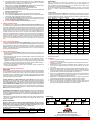
Sr. No. Sample I.D.
Ct Pf 1
Ct Pf 2
Ct Pf 3
Average
STDEV
1
Positive
23.5
23
23.2
23.23
0.25
2
Negative
-
-
-
-
-
3
Positive
21.8
22
22.3
22.03
0.25
4
Negative
-
-
-
-
-
5
6
Positive
Negative
22.1
-
22.4
-
22.5
-
22.33
-
0.21
0.15
7
Positive
23
23.1
23.3
23.13
8
Negative
-
-
-
-
-
9
Positive
23.1
23.4
23.5
23.33
0.21
10
Negative
-
-
-
-
-
11
12
Positive
Negative
21.9
-
22
-
22.2
-
22.03
-
0.15
0.80
13
Positive
21.6
21.8
22
21.80
14
Negative
-
-
-
-
-
15
16
17
18
19
20
Positive
Negative
Positive
Negative
Positive
Negative
21.4
23.2
22.1
-
21.6
23.4
22.3
-
21.5
23.6
22.6
-
21.50
23.40
22.33
-
0.10
0.20
0.25
-
All the positive samples were accurately detected and all negative samples were undetected
indicating absence of carryover of PCR products between runs using the Truenat™ Malaria Pf chipbased Real Time PCR test.
18. REFERENCES
1. Rich, S. M. et al (2009) "The origin of malignant malaria". Proceedings of the National Academy
of Sciences 106(35): 14902-14907.
2. Perlmann, P. et. al. (2000). "Malaria blood-stage infection and its control by the immune system".
Folia biologica 46 (6): 210-8.
3. Marchand RP, et. al. (2011) Co-infections of Plasmodium knowlesi, P. falciparum, and P. vivax
among Humans and Anopheles Mosquitoes, Southern Vietnam. Emerg Infect Dis. Jul 2011;
17(7):1232-9.
4. Moody A. (2002) Rapid diagnostic tests for malaria parasites. Clin Microbiol Rev 2002; 15:66-78.
5. Andrade et. al. (2010) .Towards a precise test for malaria diagnosis in the Brazilian Amazon:
comparison among field microscopy, a rapid diagnostic test, nested PCR, and a computational
expert system based on artificial neural networks. Malaria Journal 2010,9: 117.
6. Khairnar K, et al. (2009) Multiplex real-time quantitative PCR, microscopy and rapid diagnostic
immuno-chromatographic tests for the detection of Plasmodium spp: performance, limit of
detection analysis and quality assurance. Malar J 2009, 8:284.
7. Shokoples S.E. et al. (2009).Multiplexed real-time PCR assay for discrimination of Plasmodium
species with improved sensitivity for mixed infections. J Clin Microbiol 2009, 47:975-980.
8. WHO-FIND-CDC Malaria RDT Product Testing Methods Manual (Version 1)- 05/2008.
9. Adams JH et al. (1992) A family of erythrocyte binding proteins of malaria parasites. Proc Natl
Acad Sci USA 89, 7085-7089. Pascal Michon et. al (2002). Evolutionary Relationships of
Conserved Cysteine-Rich Motifs in Adhesive Molecules of Malaria Parasites.
SYMBOL KEYS:
Consult
Instructions
for use
Date of
Manufacture
IVD
In vitro Diagnostic
Medical Device
Date of
Expiry
LOT
0
30 C
Manufacturer
0
2C
Batch Number /
Lot Number
Store at
2-300C
Contains sufficient
for <n> tests
REF
2
Catalogue
Number
For single
use only
Manufactured by:
Molbio Diagnostics Pvt. Ltd.
M 46-47, Phase III B, Verna Industrial Estate,
Verna, Goa - 403 722, India. E-mail: [email protected]
TNMAL/0413/VER-01
10. Using the filter barrier tip provided in the pouch, pipette six (6) µL of the purified DNA from the
Elute Collection Tube into the centre of the white reaction well. Take care not to scratch the
internal well surface and not to spill elute on the outside of the well.
11. Slide the chip tray containing the Truenat™ Malaria Pf chip based Real Time PCR test loaded
with the sample, into the Truelab™ Uno Real Time micro PCR Analyzer.
12. Press the power button on the Analyzer to turn it on. The green LED should glow.
13. Press Done on the “Please Load Sample” Alert message.
14. At the end of the test, observe the optical plot for any irregularities (Refer to the Truelab™ Uno
Real Time micro PCR Analyzer manual).
15. Read the result from the screen.
16. Press the power button on the Analyzer to turn it off. The green LED should stop glowing.
17. Take out theTruenat™ Malaria Pf chip-based Real Time PCR test at end of the test and dispose
it off as per the section on “Disposal and Destruction” (Section 16).
18. Turn on Truelab™ micro PCR printer and select print on the screen for printing out hard copy of
the results. Test results are automatically stored and can be retrieved any time later. (Refer to the
Truelab™ Uno Real Time micro PCR Analyzer manual).
19. Switch off the Truelab™ Uno Real Time micro PCR Analyzer touch screen.