1
• Smoke detectors have certain obvious limitations: they
may not provide protection for someone smoking in
bed, for children playing with matches, or for sudden
and violent explosions. A smoke detector is a single
part of overall fire safety precautions; the smoke detector
should never be seen as a substitute for a complete fire
safety program.
Guidelines for Locating Smoke Detectors
On smooth ceilings, detectors may be spaced 30 feet
(9.1m) apart as a guide. Other spacing may be required
depending on ceiling height, air movement, the presence
of joists and uninsulated ceilings. Consult appropriate
national standards for installation recommendations.
• Do not locate smoke detectors at the top of peaked or
gabled ceilings; the dead air space in these locations
may prevent the unit from detecting smoke.
• Avoid areas with turbulent air flow, such as near doors,
fans or windows. Rapid air movement around the detector
may prevent smoke from entering the unit.
• Do not locate detectors in areas of high humidity.
• Do not locate detectors in areas where the temperature
rises above 100°F (38°C) or falls below 41°F (5°C).
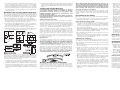
Bedroom
Bedroom
Bedroom
Bedroom
Living
Room
Kitchen
Bedroom
Dining
Room
Living Room
Basement
Smoke detectors should always be installed in
accordance with NFPA 72, the National Fire Alarm Code
and CAN/ULC-S553-02 standard for installation of smoke
alarms. Smoke detectors should always be located in
accordance with the following:
• “Smoke detectors shall be installed outside of each
separate sleeping area in the immediate vicinity of the
bedrooms and on each additional story of the family
living unit, including basements and excluding crawl
spaces and unfinished attics. In new construction, a
smoke detector also shall be installed in each sleeping
room.”
• “Split level arrangement. Smoke detectors are required
where shown. Smoke detectors are optional where a
door is not provided between living room and recreation
room.”
Testing Your Smoke Detector
Follow the test procedure described here or contact
your smoke detector dealer or installer for testing
instructions. Testing shall be in accordance with
CAN/ULC-S552-02 standard for maintenance and
testing of smoke alarms.
It is recommended that your entire alarm system be
tested at least once a week to verify the operation of
all system functions.
Smoke Detector Unit Test
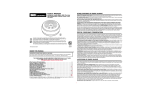
To test the smoke detector, press and hold the test button
on the front of the unit. When the button is pressed, the unit’s
alarm should sound. When the button is released, the alarm
should cease. If this does not occur, check that the batteries
are the correct type, in good condition and are installed
correctly (see the ‘Battery Installation’ section below).
Upon completing the functional testing of the smoke
detector, check the unit’s sensing chamber to ensure
proper operation. To test the sensing chamber, wave a lit
cotton wick or punk stick around the outside of the unit
until a generous amount of smoke enters the sensing
chamber or the unit alarms. If the smoke detector does
not function properly, call your smoke detector installer
or dealer for service.
System Test
To prepare your alarm system for a complete test, refer to
the testing instructions section of your system’s manual.
Observe carefully all instructions regarding notification
of the monitoring station in order to avoid an
unnecessary emergency response. When the system is
ready to be tested, hold the test magnet against the smoke
detector case as shown below. After activating the smoke
detector’s system test, an alarm should sound and the
LED indicator light should flash every 0.67 seconds.
When the magnet is removed, the alarm should cease.
See your system manual for further instructions
regarding completion of the alarm system test.
Owner’s Maintenance Instructions
The Meridian smoke detector is designed to require
minimum maintenance. If the case becomes dusty, then
wipe the case gently with a soft dry cloth. If the case is
greasy, wipe the case gently with a soft cloth slightly
dampened with soapy water.
Never disassemble the smoke detector; there are no
user serviceable parts inside the unit. Never paint the
unit, paint may prevent smoke from entering the unit.
If you are planning renovations or repainting, contact
your installer and ask that the unit be temporarily
removed until work is complete.
If the unit is located in an area where it is exposed to high
levels of dust or insects and causes false alarms, it may
require service; contact your smoke detector installer or
dealer.
Fire Safety In The Home
Most fires occur in the home, and to minimize this danger,
it is recommended that a household fire safety audit be
conducted and a family escape plan be developed.
Household Fire Safety Audit
1 Are all electrical appliances and outlets in safe
condition? Check for frayed cords, overloaded lighting
circuits, etc. If you are uncertain about the condition of
your electrical appliances or household service, have
a professional evaluation.
2 Are all flammable liquids safely stored in closed containers,
and in a cool and well ventilated area? Cleaning the unit
with flammable liquids should be avoided.
3 Are hazardous materials such as matches out of the
reach of children?
4 Are furnaces and wood burning appliances properly
installed, clean, and in good working order? If in doubt,
have a professional evaluation.
Family Escape Planning
There is often very little time between the detection of a
fire and the time it becomes deadly. Because of this, it is
very important that a family escape plan be developed
and rehearsed.
1 Every family member should participate in developing
the escape plan.
2 Study the possible escape routes from each location
within the house. Since many fires occur at night,
special attention should be given to the escape routes
from sleeping quarters.
3 It is essential that escape from a bedroom be possible
without opening the interior door. Consider the following
when making your escape plans:
• Make sure that doors and windows that open to the outside
are easily opened. Ensure that they are not painted shut
and that the locking mechanisms operate smoothly.
• If opening the exit or using the exit is too difficult for
children, the elderly or handicapped, plans for their
rescue should be developed. This plan includes making
sure that those who are to perform the rescue can
promptly hear the fire warning signal.
• If the exit is above the ground level, an approved fire
ladder or rope should be provided, as well as training
in its use.
• Exits on the ground level should be kept clear. Be sure to
remove snow from exterior patio doors in the winter and
that outdoor furniture or equipment does not block exits.
• The family should have a predetermined assembly
point where everyone can be accounted for; for
example, across the street or at a neighbour’s house.
• Once everyone is out of the house, call the Fire
Department.
• A good plan emphasizes a quick escape. Do not
investigate first or attempt to fight the fire, and do not
attempt to rescue belongings or valuables as this takes
up time. Once outside, do not re-enter the house; wait
for the Fire Department.
• Write the plan down and rehearse it frequently so that
should an emergency ever arise, everyone will know
what to do. Revise the plan as conditions change; for
example, when there are more or fewer family members
in the home or if there are changes to the house.
• Make sure your fire warning system is operational by
conducting weekly tests. If you are unsure about system
operation, contact your smoke detector installer or dealer.
• It is recommended that you contact your local Fire
Department and request further information on home
fire safety and escape planning. If available, have your
local fire prevention officer conduct an in-house fire
safety inspection.
Enrolling a WLS906
On the back of the smoke detector housing, there is a five
digit and/or six digit serial number. Please refer to your
receiver installation manual for information on which
serial number should be enrolled.
Installation Instructions
Specifications
• Operating Voltage: 9V (six AA alkaline batteries)
• Smoke Sensitivity:
2.3±0.5 %/ft - UL
2.5±0.5 %/ft - ULC
• Ambient Installation Operating Range:
32°F - 100°F / 0°C - 37.8°C
5% - 95% RH, non-condensing
• Field Test: Magnet-activated reed switch or pushbutton
and Gemini 501 Smoke Detector Analyser
Battery Installation
Remove the mounting plate from the detector by pushing the
locking tab and turning the mounting plate counter-clockwise.
Hold the unit with the battery compartment facing you, and
the imprinted wording right-side up. Install the first two
batteries in the row nearest to you, with the + terminals
facing left. Next, install the middle two batteries with the +
terminals facing to the right. Place your thumb over the
centre of these four batteries to keep them in place. Install
the last two batteries, with their + terminals facing to the
left, by snapping them past the nylon retainer.