1
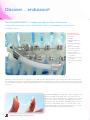
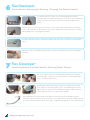
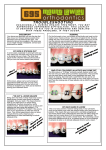
Close the preformed bypass arches hooklet with pointed Weingart-pliers from the occlusai side. This
way, a ring is formed that can slide loosely on the main full arch wire.
Tip: A small drop of light curing resin on the preformed arches hooklet may take away vertical movements while it is stili able to move horizontally. Avoid contact with canine bracket!
On completion, the bypass arch should run approx. 3-4mm underneath the premolar brackets. There
should also be enough space between the premolar bracket and the bayonet bend of the bypass arch
(important, other-wise the FD could get caught here!).
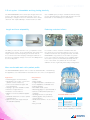
According to the desired application, the preformed bypass arch is now pulled back and its end bent
upward (!) behind the buccal tube, (stop bend). This way molars or entire posterior tooth segments are
mesialized and hence spaces (aplasia, etc.) can be closed towards mesial.
Or: It touches the canine bracket and is not bent up at the rear. Now without bending, lower canine
and front teeth are protruded. (Note: in this case, the lower full arch wire should also not be bent
distally!). Space will be created.
4
Flex Developer™
Elastic Mini Rod - Shortening and Adjusting
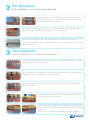
After the decision whether to bend the preformed bypass arch distal or to leave it straight, we must
now consider a possible distal stop-bend of the upper main arch. If it stays straight distally, the force
of the elastic mini rod triggers a distalization of the corresponding upper molar (like a headgear).
In this way, space is created in the upper tooth arch. If you decide to bend the upper arch wire behind
the molar attachment upward (stop bend), the whole upper dental arch is distalized en bloc or used
as an anchorage.
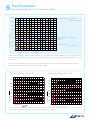
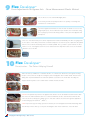
In order to know the length of the minirod please measure the distance between entrance of upper
headgear-tube and labial end of preformed bypass arch. (“Smiley side = measuring side”). In this
60°
case 20mm.
Now shift the anterior hooklet module along the mini rod towards posterior attachment module.
Note: The hooklet must be inclined towards its tube with approx. 60°. The hook must never be bent
severly forwards and backwards as this might lead to immediate or delayed fracture.
MORE Pre-cut lengths available!
INFO
Bringing German Engineering to Orthodontics