1
A.2 A Glossary of Terms
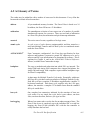
The reader may be unfamiliar with a number of terms used in this document. Every effort has
been made to include all such terms here.
address
A byte-numbered memory location. The Zorro II bus is based on a 24
bit address, the Zorro III bus on a 32 bit address.
arbitration
The unambiguous selection of one request out of a number of possible
simultaneous requests for a resource. There are two kinds of arbitration
in a Zorro III system; bus arbitration and quick interrupt arbitration.
asserted
The active state of a state, regardless of its logic sense.
atomic cycle
A cycle or set of cycles that are uninterruptable, and thus treated as a
unit; both Multiple Transfer and LOCKed cycles are considered atomic
under the Zorro III bus.
AUTOCONFIG®
From "automatic configuration", the Zorro bus specification for how
software and hardware cooperate to permit PIC addresses to be set by
software and PIC type information to be determined by software. This is
explained in Chapter 8, and in the A500/A2000 Technical Reference
Manual, available from Commodore-Amiga.
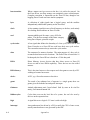
backplane
The cage or motherboard subsection into which PICs are inserted. The
Amiga 2000 and Amiga 3000 computers have integral backplanes, the
Amiga 500 and Amiga 1000 computers require add-on backplane cages
for Zorro II compatibility.
burst
A short name for Multiple Transfer Cycle mode. Essentially, within one
full Zorro III cycle there can be any number of Multiple Transfer Cycles.
Each full cycle has a complete 32 bit address supplied and a complete 32
bit datum transferred. Each burst cycle supplies only the 8 bit page
address, but transfers a complete 32 bit datum faster than the standard
full cycle would allow.
bus cycle
One complete bus transaction, indicated by the assertion of least one
cycle strobe For any single bus cycle, there is one address, one data
value, one data direction, and one cycle type in effect.
bus hogging
When a bus master takes over the bus for an undue amount of time. The
Zorro II bus leaves it completely up to the individual PIC to avoid bus
hogging; the Zorro III bus schedules PICs with the bus controller to
evenly distribute the bus load.
The Zorro III Bus Specification
A-5